


Influence of dapivirine vaginal ring use on cervicovaginal immunity and functional microbiome in adolescent girls
- PMID: 33181534
- PMCID: PMC7924934
- DOI: 10.1097/QAD.0000000000002751
Influence of dapivirine vaginal ring use on cervicovaginal immunity and functional microbiome in adolescent girls
Abstract
Objective: The antiretroviral-based dapivirine vaginal ring reduced HIV risk among women in phase III clinical trials. However, limited data exists on the impact of dapivirine on the vaginal microenvironment in adolescents.
Design: A comprehensive metaproteomics approach was used to assess host proteome and microbiome changes in cervicovaginal mucus with dapivirine ring use in adolescents enrolled in the MTN-023/IPM 030 (MTN-023) trial.
Methods: Participants were randomized 3 : 1 to use dapivirine or placebo vaginal rings monthly for 6 months. Cervicovaginal samples from a subset of 35 participants (8 placebo, 27 dapivirine) were analyzed.
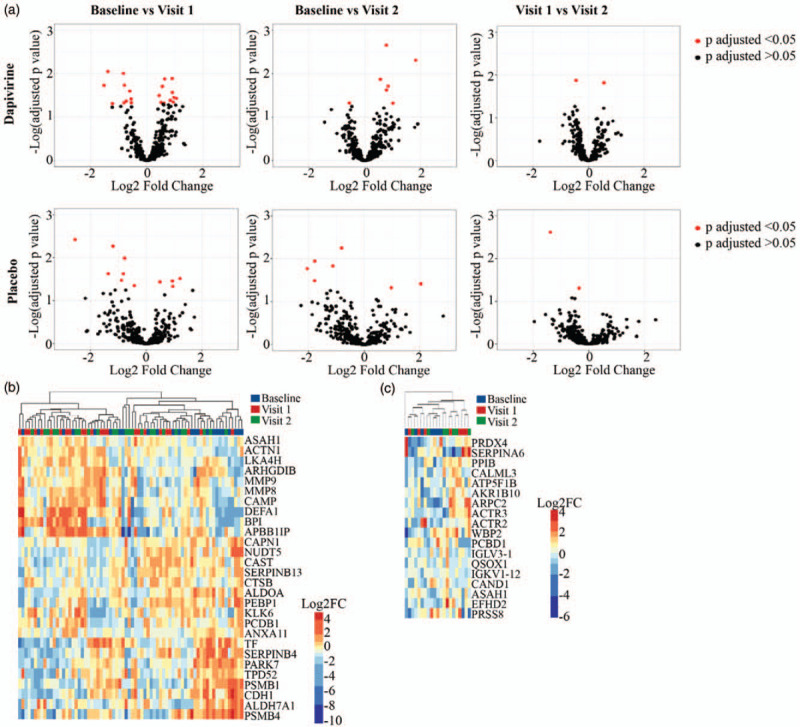
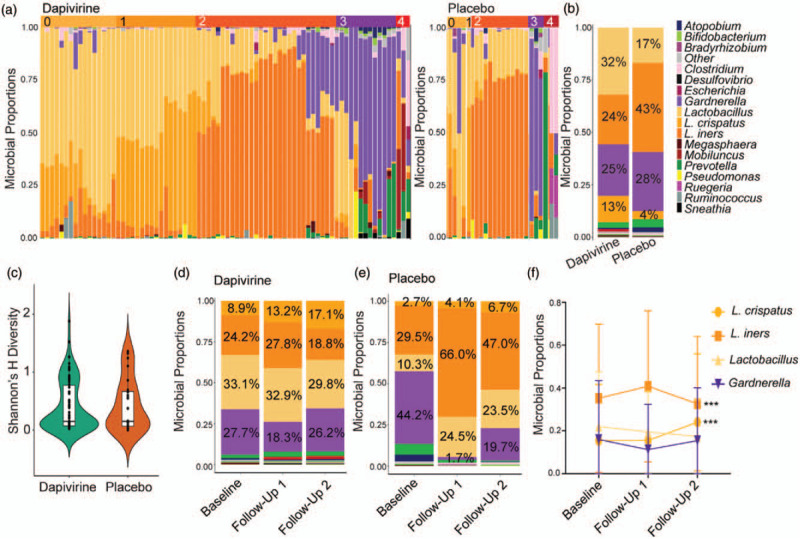
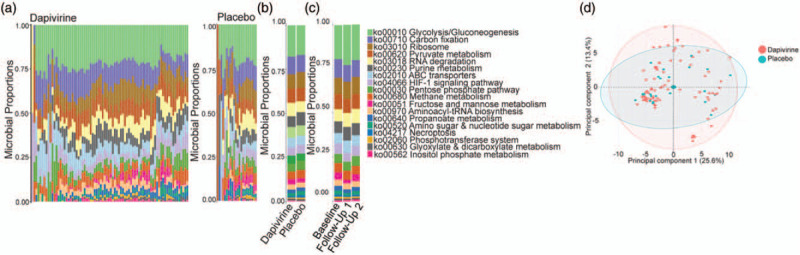
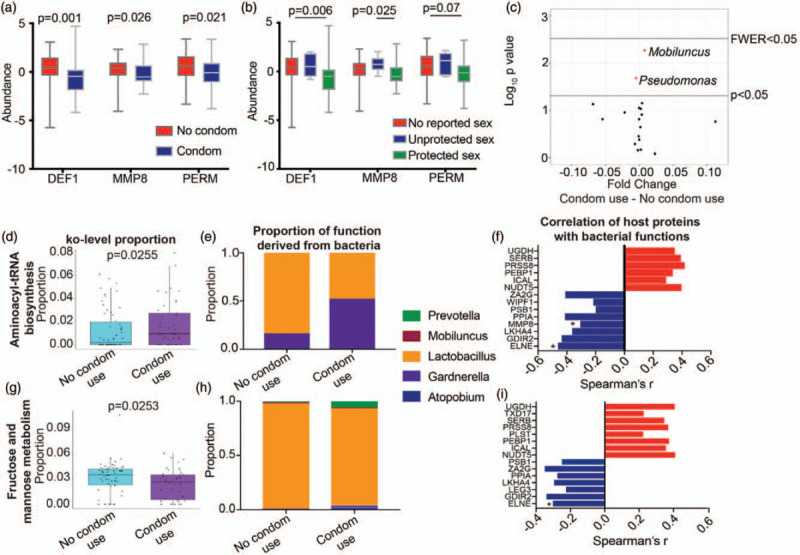
Results: Mass spectrometry analysis identified 405 human and 2467 bacterial proteins belonging to 15 unique genera. The host proteome belonged to many functional pathways primarily related to inflammation. When stratified by study treatment arm, 18 (4.4%) and 28 (6.9%) human proteins were differentially abundant (adjusted P < 0.05) between baseline and follow-up in the placebo and dapivirine arms, respectively. The vaginal microbiome was predominantly composed of Lactobacillus, Gardnerella, and Prevotella. Although bacterial taxa did not differ by arm or change significantly, Lactobacillus crispatus increased (P < 0.001) and Lactobacillus iners decreased (P < 0.001) during the 6-month follow-up. There were no significant differences in bacterial functions by arm or time in the trial. Protected vaginal sex significantly associated with decreased neutrophil inflammatory biomarkers and may be associated with changes in bacterial taxa and metabolism.
Conclusion: Condom use may associate with differences to inflammation and bacterial function but dapivirine ring use does not, thereby supporting the mucosal safety profile of this vaginal ring for adolescents.
Copyright © 2020 The Author(s). Published by Wolters Kluwer Health, Inc.
Conflict of interest statement
The MTN-023/IPM 030 trial was designed and implemented by the Microbicide Trials Network (MTN) in conjunction with the Adolescent Medicine Trials Network for HIV/AIDS Interventions (ATN). The content is solely the responsibility of the authors and does not necessarily represent the official views of the National Institutes of Health. The vaginal rings used in this study were developed and supplied by the International Partnership for Microbicides (IPM).
Figures
References
-
- 2016, U.F.S.N. http://www.unaids.org/en/resources/fact-sheet (2016).
-
- Glynn JR, Carael M, Auvert B, Kahindo M, Chege J, Musonda R, et al. Why do young women have a much higher prevalence of HIV than young men? A study in Kisumu, Kenya and Ndola, Zambia. AIDS 2001; 15: Suppl 4: S51–S60. - PubMed
-
- Delany-Moretlwe S, Lombard C, Baron D, Bekker LG, Nkala B, Ahmed K, et al. Tenofovir 1% vaginal gel for prevention of HIV-1 infection in women in South Africa (FACTS-001): a phase 3, randomised, double-blind, placebo-controlled trial. Lancet Infect Dis 2018; 18:1241–1250. - PubMed
Publication types
MeSH terms
Substances
Supplementary concepts
Grants and funding
LinkOut - more resources
Full Text Sources
Medical
