


Effect of magnesium sulfate on renal colic pain: A PRISMA-compliant meta-analysis
- PMID: 33181719
- PMCID: PMC7668463
- DOI: 10.1097/MD.0000000000023279
Effect of magnesium sulfate on renal colic pain: A PRISMA-compliant meta-analysis
Abstract
Background: Magnesium sulfate (MgSO4) is widely used in analgesia for different conditions. Recent randomized controlled trials (RCTs) have evaluated the effects of MgSO4 on renal colic; however, this new evidence has not been synthesized. Thus, we conducted a systematic review and meta-analysis to assess the efficacy and safety of MgSO4 in comparison with control for renal colic.
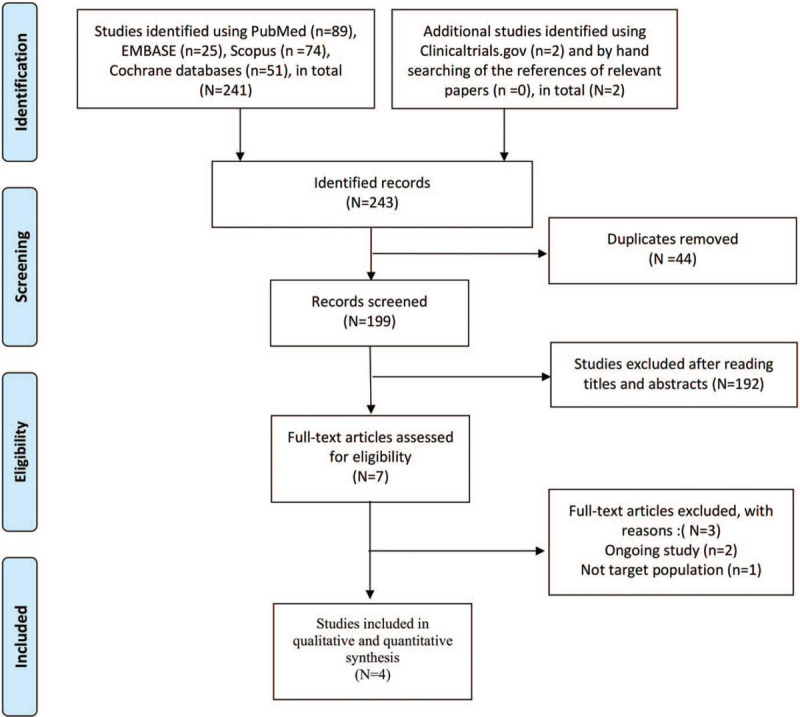
Methods: PubMed, EMBASE, and Scopus databases were searched from inception to February 2020. We included RCTs that evaluated MgSO4 vs control for patients with renal colic. Data were independently extracted by 2 reviewers and synthesized using a random-effects model.
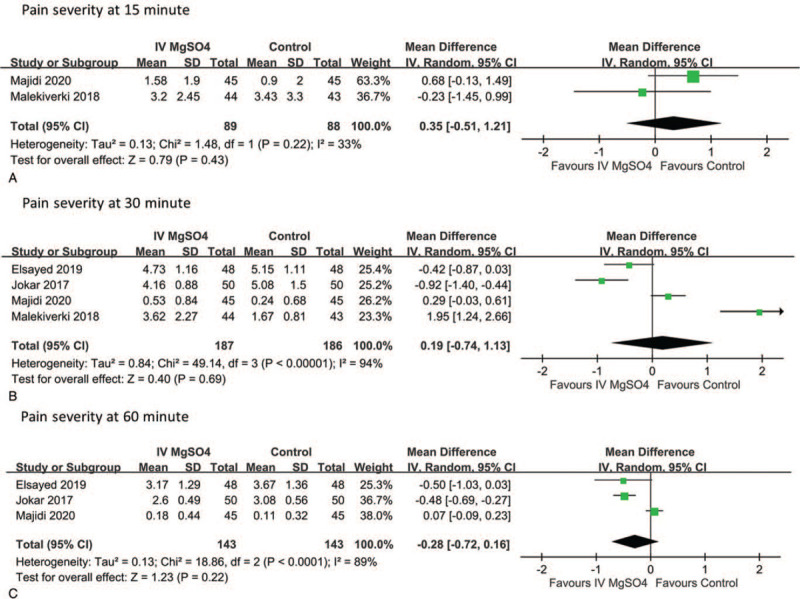
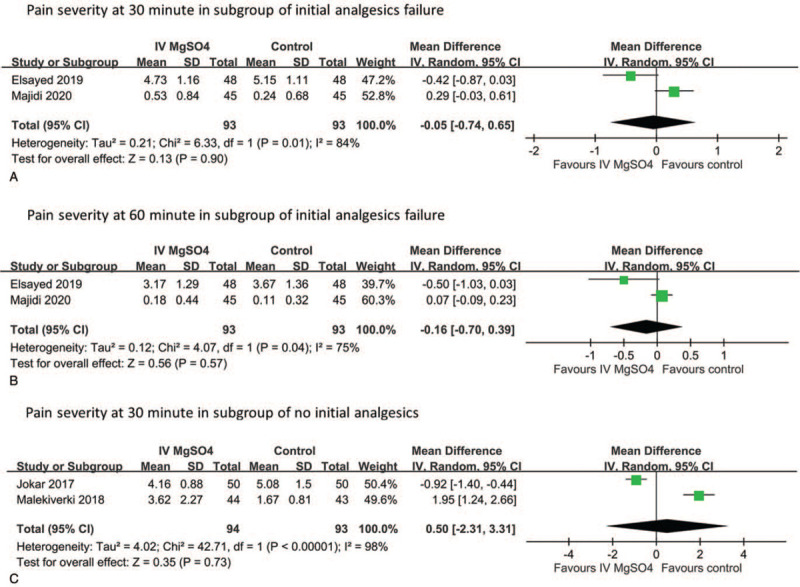
Results: Four studies with a total of 373 patients were analyzed. Intravenous MgSO4 15 to 50 mg/kg did not significantly reduce renal colic pain severity at 15 minutes (mean difference [MD] = 0.35, 95% confidence interval [CI] -0.51 to 1.21; 2 RCTs), 30 minutes (MD = 0.19, 95% CI -0.74 to 1.13; 4 RCTs), and 60 minutes (MD = -0.28, 95% CI -0.72 to 0.16; 3 RCTs) in comparison with controls. In patients who failed to respond to initial analgesics, intravenous MgSO4 15 mg/kg or 2 ml of 50% solution provided similar pain relief to ketorolac or morphine at 30 minutes (P = .90) and 60 minutes (P = .57). No significant hemodynamic changes were observed with short-term use of MgSO4 in these studies.
Conclusion: MgSO4 provides no superior therapeutic benefits in comparison with control treatments. MgSO4 may be used as a rescue medication in patients not responding to initial analgesics. The short-term use of MgSO4 did not affect hemodynamic values.
Conflict of interest statement
The authors have no conflicts of interest to disclose.
Figures
References
-
- Hesse A, Brändle E, Wilbert D, et al. Study on the prevalence and incidence of urolithiasis in germany comparing the years 1979 vs. 2000. Eur Urol 2004;44:709–13. - PubMed
-
- Ramello A, Vitale C, Marangella M. Epidemiology of nephrolithiasis. J Nephrol 2000;13: Suppl 3: S45–50. - PubMed
-
- Shokeir AA. Renal colic: pathophysiology, diagnosis and treatment. Eur Urol 2001;39:241–9. - PubMed
Publication types
MeSH terms
Substances
LinkOut - more resources
Full Text Sources
Medical
