


Long-term Follow-up of Glycemic and Neurological Outcomes in an International Series of Patients With Sulfonylurea-Treated ABCC8 Permanent Neonatal Diabetes
- PMID: 33184150
- PMCID: PMC7783935
- DOI: 10.2337/dc20-1520
Long-term Follow-up of Glycemic and Neurological Outcomes in an International Series of Patients With Sulfonylurea-Treated ABCC8 Permanent Neonatal Diabetes
Abstract
Objective: ABCC8 mutations cause neonatal diabetes mellitus that can be transient (TNDM) or, less commonly, permanent (PNDM); ∼90% of individuals can be treated with oral sulfonylureas instead of insulin. Previous studies suggested that people with ABCC8-PNDM require lower sulfonylurea doses and have milder neurological features than those with KCNJ11-PNDM. However, these studies were short-term and included combinations of ABCC8-PNDM and ABCC8-TNDM. We aimed to assess the long-term glycemic and neurological outcomes in sulfonylurea-treated ABCC8-PNDM.
Research design and methods: We studied all 24 individuals with ABCC8-PNDM diagnosed in the U.K., Italy, France, and U.S. known to transfer from insulin to sulfonylureas before May 2010. Data on glycemic control, sulfonylurea dose, adverse effects including hypoglycemia, and neurological features were analyzed using nonparametric statistical methods.
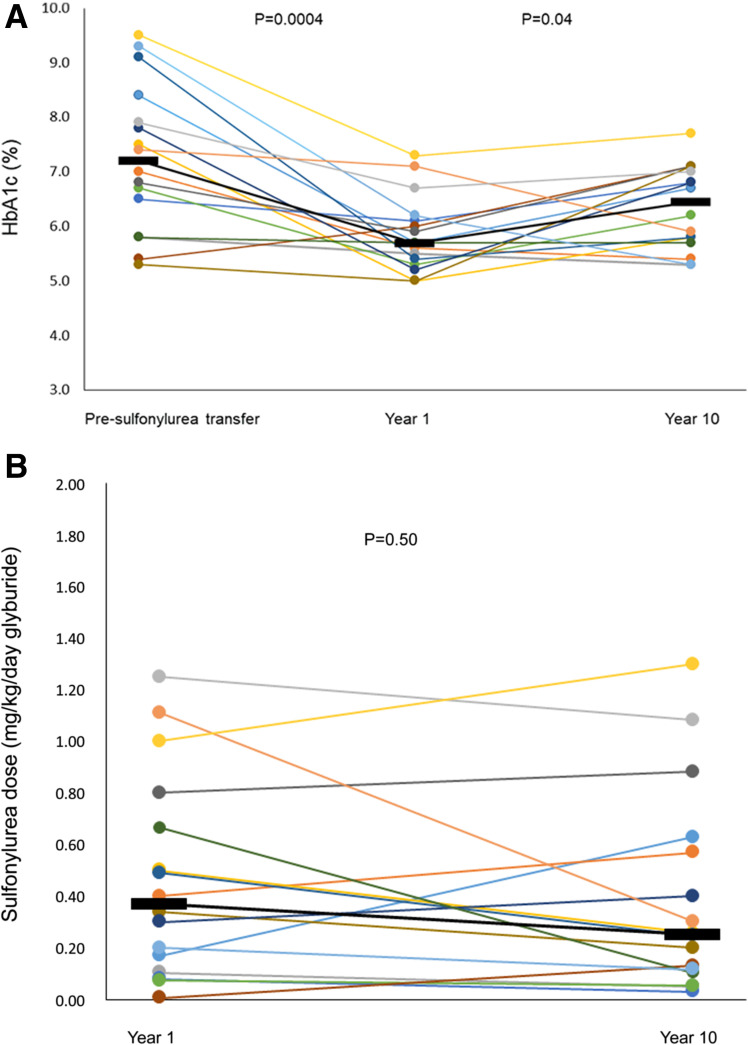
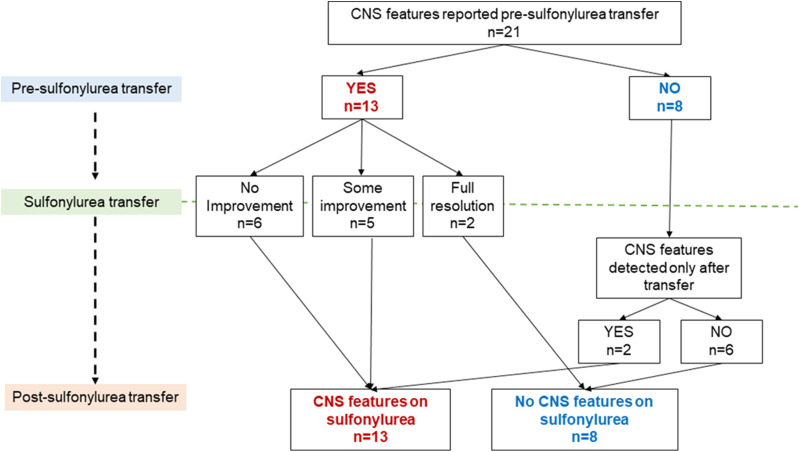
Results: Long-term data were obtained for 21 of 24 individuals (median follow-up 10.0 [range 4.1-13.2] years). Eighteen of 21 remained on sulfonylureas without insulin at the most recent follow-up. Glycemic control improved on sulfonylureas (presulfonylurea vs. 1-year posttransfer HbA1c 7.2% vs. 5.7%, P = 0.0004) and remained excellent long-term (1-year vs. 10-year HbA1c 5.7% vs. 6.5%, P = 0.04), n = 16. Relatively high doses were used (1-year vs. 10-year dose 0.37 vs. 0.25 mg/kg/day glyburide, P = 0.50) without any severe hypoglycemia. Neurological features were reported in 13 of 21 individuals; these improved following sulfonylurea transfer in 7 of 13. The most common features were learning difficulties (52%), developmental delay (48%), and attention deficit hyperactivity disorder (38%).
Conclusions: Sulfonylurea treatment of ABCC8-PNDM results in excellent long-term glycemic control. Overt neurological features frequently occur and may improve with sulfonylureas, supporting early, rapid genetic testing to guide appropriate treatment and neurodevelopmental assessment.
Trial registration: ClinicalTrials.gov NCT02624830.
© 2020 by the American Diabetes Association.
Figures
References
-
- Aguilar-Bryan L, Nichols CG, Wechsler SW, et al. . Cloning of the beta cell high-affinity sulfonylurea receptor: a regulator of insulin secretion. Science 1995;268:423–426 - PubMed
-
- Clement JP IV, Kunjilwar K, Gonzalez G, et al. . Association and stoichiometry of K(ATP) channel subunits. Neuron 1997;18:827–838 - PubMed
-
- Busiah K, Drunat S, Vaivre-Douret L, et al. .; French NDM study group . Neuropsychological dysfunction and developmental defects associated with genetic changes in infants with neonatal diabetes mellitus: a prospective cohort study [corrected]. Lancet Diabetes Endocrinol 2013;1:199–207 - PubMed
Publication types
MeSH terms
Substances
Associated data
Grants and funding
LinkOut - more resources
Full Text Sources
Medical
Miscellaneous
