


Obsessive-compulsive disorder during COVID-19: Turning a problem into an opportunity?
- PMID: 33190017
- PMCID: PMC7644184
- DOI: 10.1016/j.janxdis.2020.102329
Obsessive-compulsive disorder during COVID-19: Turning a problem into an opportunity?
Abstract
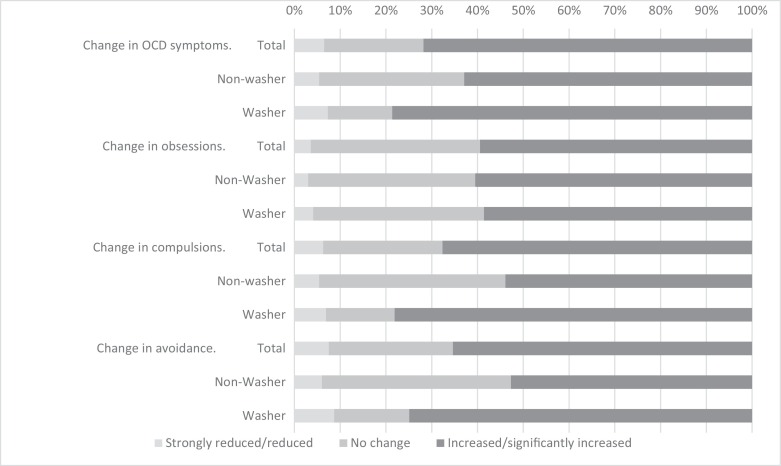
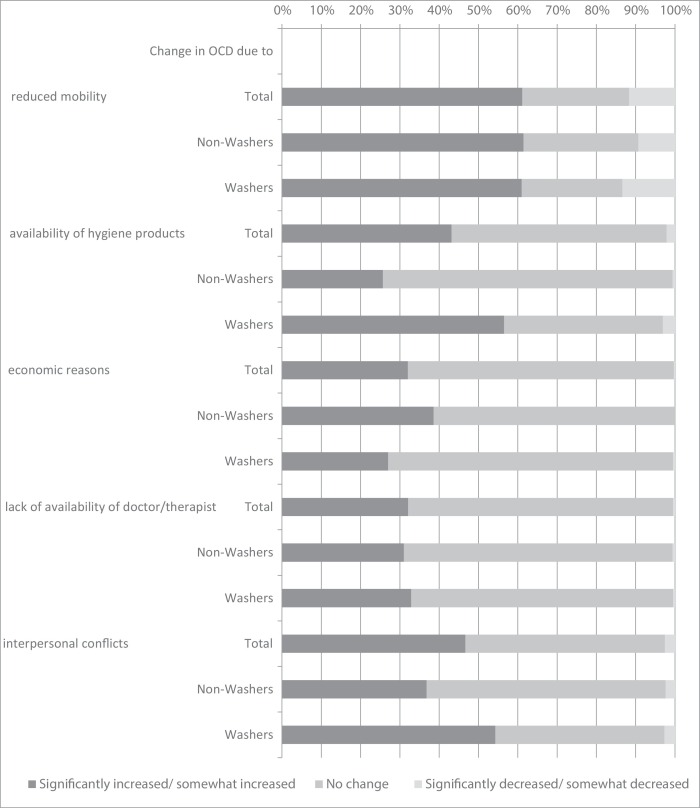
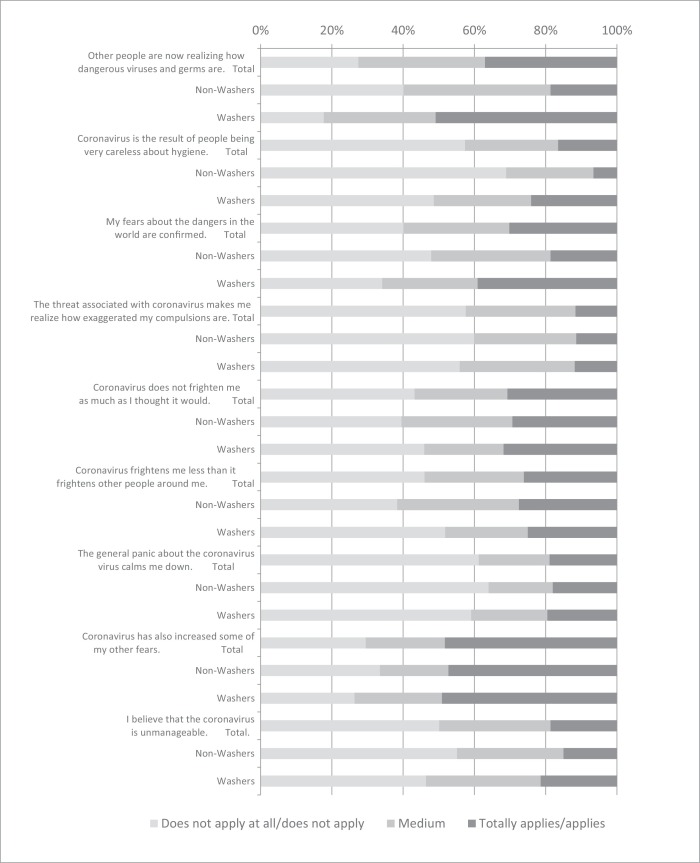
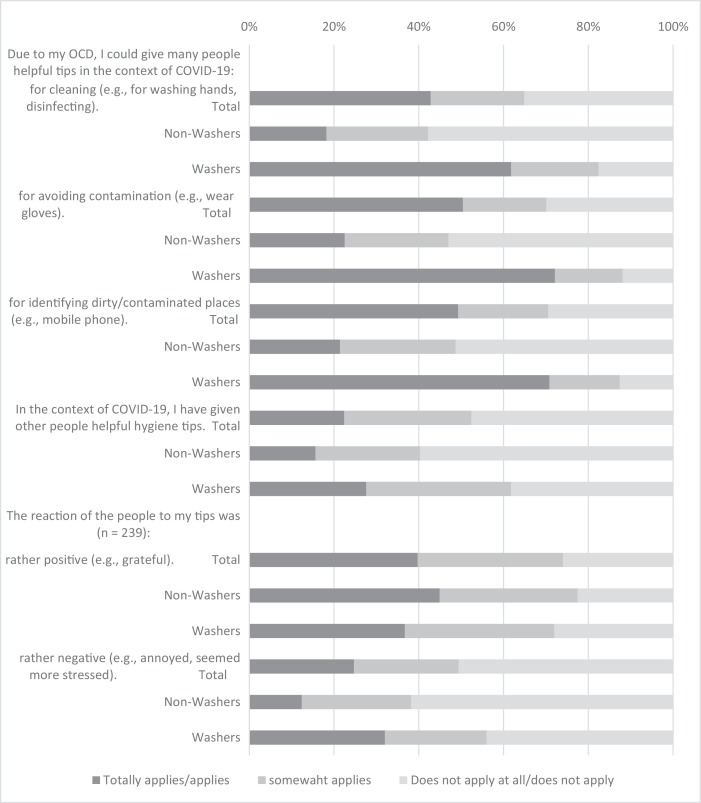
The COVID-19 pandemic has prompted global measures to prevent infection. Experts assume that it is particularly affecting people with obsessive-compulsive disorder (OCD), especially those with washing compulsions. Data, however, are currently lacking. 394 participants with OCD (n = 223 washers) participated in an online survey. Change in severity of OCD symptoms, reasons participants reported for the change (e.g., reduced mobility, reduced availability of cleaning products, economic factors, interpersonal conflicts), as well as participants' beliefs and experience associated with COVID-19 were assessed. 72 % of the participants reported an increase in OCD. This increase was significantly stronger in washers compared to non-washers. The worsening of symptoms was primarily associated with reduced mobility and interpersonal conflicts. Dysfunctional hygiene-related beliefs were significantly higher in washers than non-washers and were associated with greater symptom progression. Washers were more confident than non-washers about providing other people with helpful advice related to infection preventions. Washers, however, received more negative feedback from others in response to the advice they provided than non-washers. The majority of participants with OCD were negatively affected by the COVID-19 pandemic, and the negative effects were more pronounced in washers than in non-washers. Rapid interventions for OCD should be implemented to prevent long-term deterioration.
Keywords: COVID-19; Contamination fear; Obsessive-compulsive disorder; Pandemic; SARS-CoV-2.
Copyright © 2020 Elsevier Ltd. All rights reserved.
Figures
References
-
- Aardema F., Wong S.F. Feared possible selves in cognitive-behavioral theory: An analysis of its historical and empirical context, and introduction of a working model. Journal of Obsessive-Compulsive and Related Disorders. 2020;24:100479. doi: 10.1016/j.jocrd.2019.100479. - DOI
-
- Abramovitch A., Abramowitz J., Riemann B., McKay D. Severity benchmarks and contemporary clinical norms for the Obsessive-Compulsive Inventory-Revised (OCI-R) Journal of Obsessive-compulsive and elated disorders. 2020;27(July):100557. doi: 10.1016/j.jocrd.2020.100557. - DOI
-
- Abramowitz J.S., Jacoby R.J. Obsessive-compulsive disorder in the DSM-5. Clinical Psychology Science and Practice. 2014;21(3):221–235. doi: 10.1111/cpsp.12076. - DOI
-
- American Psychiatric Association . In: Diagnostisches und statistisches manual psychischer störungen - DSM-5 [diagnostic and statistical manual of mental dsisorders - DSM-5] Falkai P., Wittchen H.-U., editors. Hogrefe Verlag; 2014.
MeSH terms
LinkOut - more resources
Full Text Sources
Other Literature Sources
Medical
Miscellaneous
