


Diagnostic Accuracy of Biomarkers of Alcohol Use in Patients With Liver Disease: A Systematic Review
- PMID: 33190239
- PMCID: PMC7898850
- DOI: 10.1111/acer.14512
Diagnostic Accuracy of Biomarkers of Alcohol Use in Patients With Liver Disease: A Systematic Review
Abstract
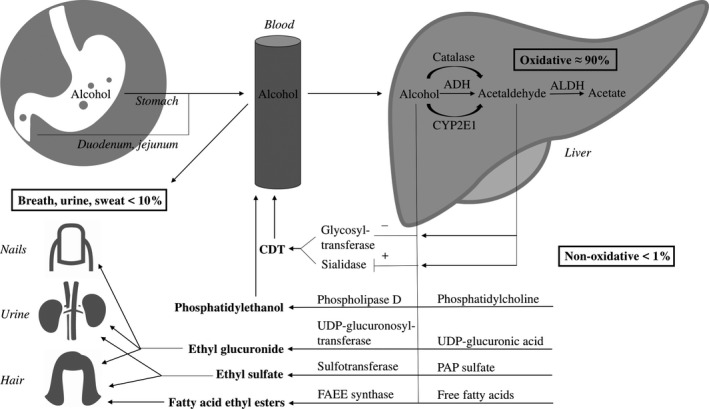
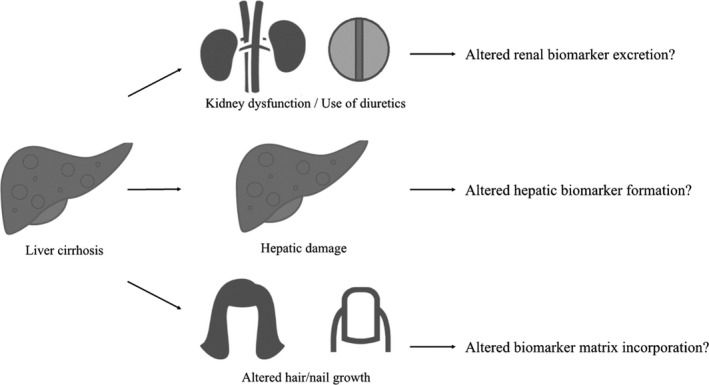
Background and aims: Alcohol-related liver disease is the most frequent cause of cirrhosis and a major indication for liver transplantation. Several alcohol use biomarkers have been developed in recent years and are already in use in several centers. However, in patients with liver disease their diagnostic performance might be influenced by altered biomarker formation by hepatic damage, altered excretion by kidney dysfunction and diuretics use, and altered deposition in hair and nails. We systematically reviewed studies on the diagnostic accuracy of biomarkers of alcohol use in patients with liver disease and performed a detailed study quality assessment.
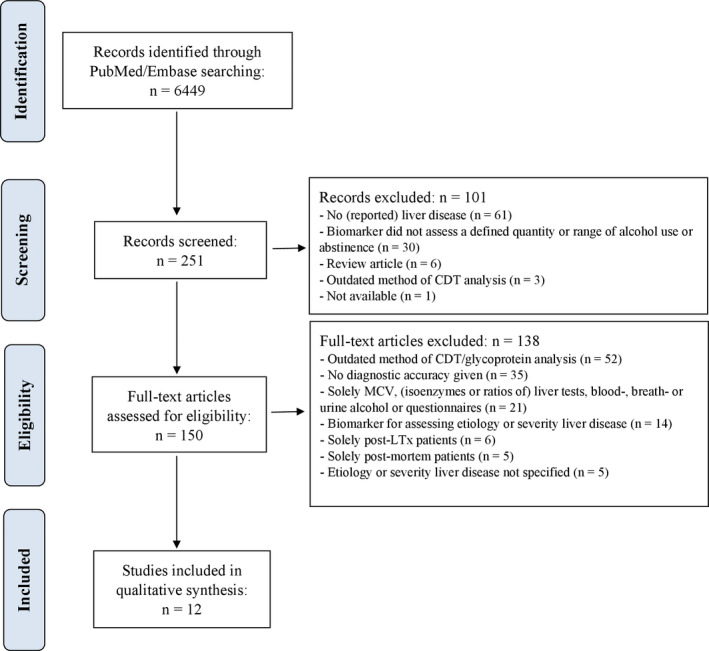
Methods: A structured search in PubMed/Medline/Embase databases was performed for relevant studies, published until April 28, 2019. The risk of bias and applicability concerns was assessed according to the adapted quality assessment of diagnostic accuracy studies-2 (QUADAS-2) checklist.
Results: Twelve out of 6,449 studies met inclusion criteria. Urinary ethyl glucuronide and urinary ethyl sulfate showed high sensitivity (70 to 89 and 73 to 82%, respectively) and specificity (93 to 99 and 86 to 89%, respectively) for assessing any amount of alcohol use in the past days. Serum carbohydrate-deficient transferrin showed low sensitivity but higher specificity (40 to 79 and 57 to 99%, respectively) to detect excessive alcohol use in the past weeks. Whole blood phosphatidylethanol showed high sensitivity and specificity (73 to 100 and 90 to 96%, respectively) to detect any amount of alcohol use in the previous weeks. Scalp hair ethyl glucuronide showed high sensitivity (85 to 100%) and specificity (97 to 100%) for detecting chronic excessive alcohol use in the past 3 to 6 months. Main limitations of the current evidence are the lack of an absolute gold standard to assess alcohol use, heterogeneous study populations, and the paucity of studies.
Conclusions: Urinary and scalp hair ethyl glucuronide are currently the most validated alcohol use biomarkers in patients with liver disease with good diagnostic accuracies. Phosphatidylethanol is a highly promising alcohol use biomarker, but so far less validated in liver patients. Alcohol use biomarkers can complement each other regarding diagnostic time window. More validation studies on alcohol use biomarkers in patients with liver disease are needed.
Keywords: Alcohol Use Biomarkers; Diagnostic Accuracy; Liver Disease.
© 2020 The Authors. Alcoholism: Clinical & Experimental Research published by Wiley Periodicals LLC on behalf of Research Society on Alcoholism.
Conflict of interest statement
The authors declare no conflict of interest with this study.
Figures
Comment in
-
Biomarker: Akkurate Alkoholzeugen.MMW Fortschr Med. 2021 Jul;163(13):37. doi: 10.1007/s15006-021-0147-6. MMW Fortschr Med. 2021. PMID: 34240366 German. No abstract available.
References
-
- Andresen‐Streichert H, Beres Y, Weinmann W, Schrock A, Muller A, Skopp G, Pischke S, Vettorazzi E, Lohse A, Nashan B, Sterneck M (2017) Improved detection of alcohol consumption using the novel marker phosphatidylethanol in the transplant setting: results of a prospective study. Transpl Int 30:611–620. - PubMed
-
- Arndt T (2001) Carbohydrate‐deficient transferrin as a marker of chronic alcohol abuse: a critical review of preanalysis, analysis, and interpretation. Clin Chem 47:13–27. - PubMed
-
- Bortolotti F, Sorio D, Bertaso A, Tagliaro F (2018) Analytical and diagnostic aspects of carbohydrate deficient transferrin (CDT): a critical review over years 2007–2017. J Pharm Biomed Anal 147:2–12. - PubMed
-
- Borucki K, Schreiner R, Dierkes J, Jachau K, Krause D, Westphal S, Wurst FM, Luley C, Schmidt‐Gayk H (2005) Detection of recent ethanol intake with new markers: comparison of fatty acid ethyl esters in serum and of ethyl glucuronide and the ratio of 5‐hydroxytryptophol to 5‐hydroxyindole acetic acid in urine. Alcohol Clin Exp Res 29:781–787. - PubMed
-
- Cappelle D, Neels H, de Keukeleire S, Fransen E, Dom G, Vermassen A, Covaci A, Crunelle CL, van Nuijs ALN (2017) Ethyl glucuronide in keratinous matrices as biomarker of alcohol use: a correlation study between hair and nails. Forensic Sci Int 279:187–191. - PubMed
Publication types
MeSH terms
Substances
LinkOut - more resources
Full Text Sources
Medical
Miscellaneous
