


A higher protein intake at breakfast and lunch is associated with a higher total daily protein intake in older adults: a post-hoc cross-sectional analysis of four randomised controlled trials
- PMID: 33190355
- PMCID: PMC8048646
- DOI: 10.1111/jhn.12838
A higher protein intake at breakfast and lunch is associated with a higher total daily protein intake in older adults: a post-hoc cross-sectional analysis of four randomised controlled trials
Abstract
Background: A protein intake of 30-40 g per meal is suggested to maximally stimulate muscle protein synthesis in older adults and could therefore contribute to the prevention of sarcopenia. Protein intake at breakfast and lunch is often low and offers a great opportunity to improve daily protein intake. Protein, however, is known for its satiating effects. Therefore, we explored the association between the amount of protein intake at breakfast and lunch and total daily protein intake in older adults.
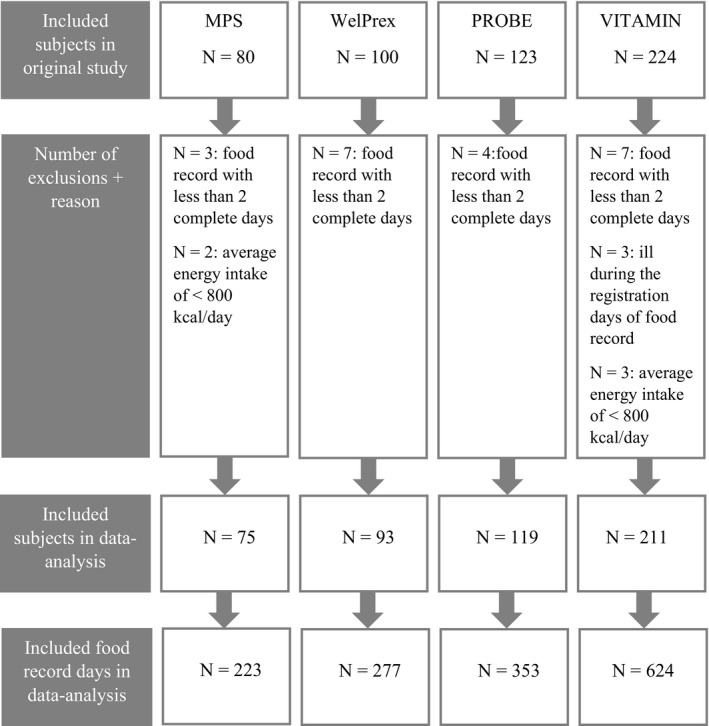
Methods: Protein intake was assessed by a 3-day food record in 498 community dwelling older adults (≥55 years) participating different lifestyle interventions. Linear mixed model analysis was used to examine the association between protein intake at breakfast or lunch and total daily protein intake, adjusted for sex, age, body mass index, smoking status, study and total energy intake.
Results: After adjustment for potential confounders, a 10 g higher protein intake at breakfast was associated with a 3.2 g higher total daily protein intake (P = 0.008) for males and a 4.9 g (P < 0.001) higher total daily protein intake for females. A 10 g higher protein intake at lunch was associated with a 3.7 g higher total daily protein intake (P < 0.001) for males, and a 5.8 g higher total daily protein intake (P < 0.001) for females.
Conclusions: A higher protein intake at breakfast and lunch is associated with a higher total daily protein intake in community dwelling older adults. Stimulating a higher protein intake at breakfast and lunch might represent a promising nutritional strategy to optimise the amount of protein per meal without compromising total daily protein intake.
Keywords: breakfast; dietary protein intake; lunch; older adults; sarcopenia; satiety.
© 2020 The Authors. Journal of Human Nutrition and Dietetics published by John Wiley & Sons Ltd on behalf of British Dietetic Association.
Figures
References
-
- Ageing and health (2018) Available at: https://www.who.int/news‐room/fact‐sheets/detail/ageing‐and‐health
-
- Naseeb MA & Volpe SL (2017) Protein and exercise in the prevention of sarcopenia and aging. Nutr Res 40, 1–20. - PubMed
Publication types
MeSH terms
Substances
LinkOut - more resources
Full Text Sources
