


National Consumption of Antimicrobials in Tanzania: 2017-2019
- PMID: 33192526
- PMCID: PMC7662556
- DOI: 10.3389/fphar.2020.585553
National Consumption of Antimicrobials in Tanzania: 2017-2019
Abstract
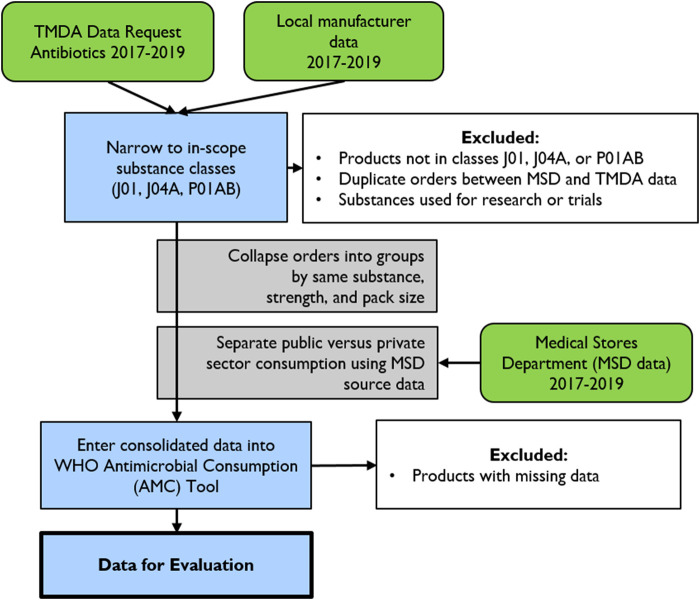
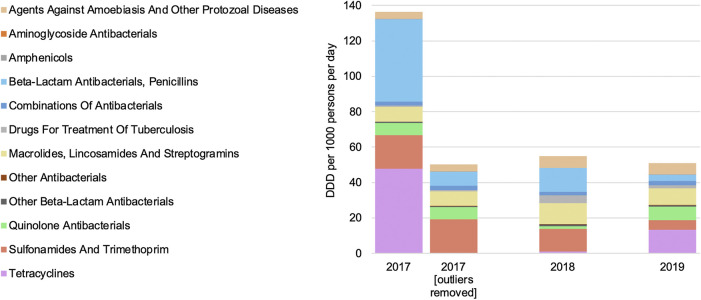
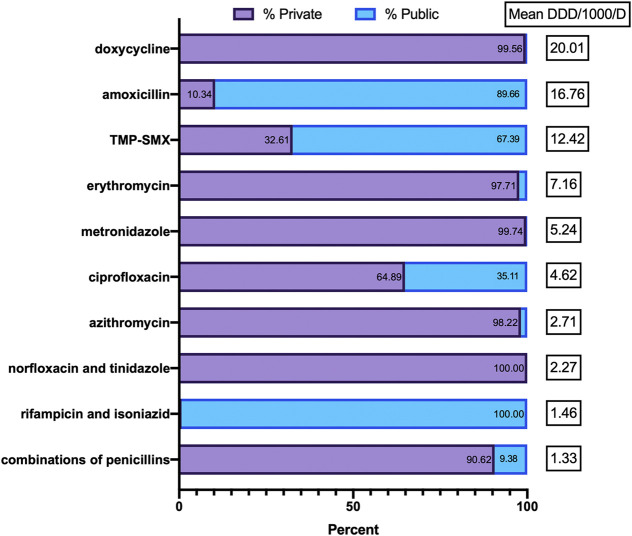
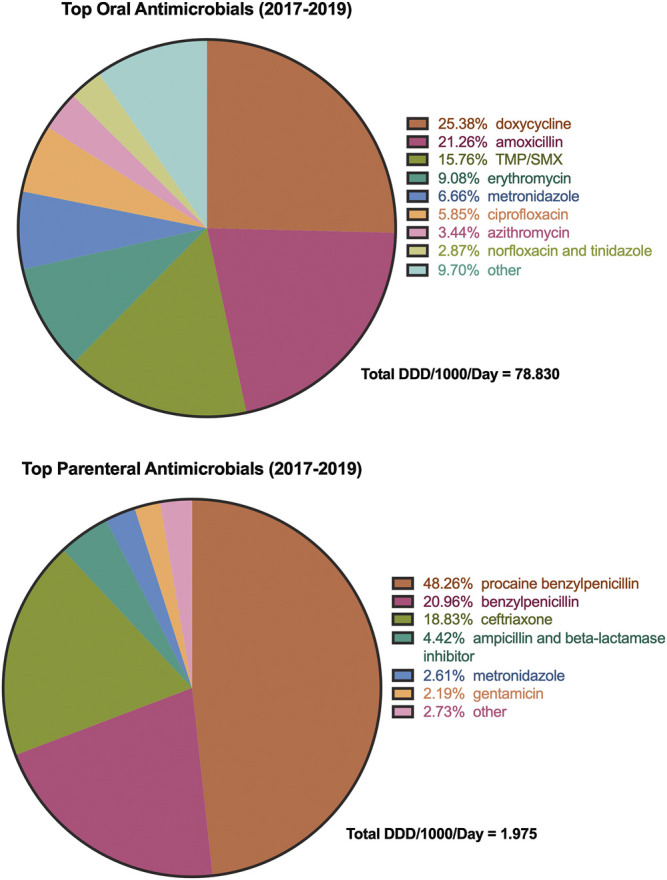
Objective: Surveillance of antimicrobial consumption is essential to the national action plan for antimicrobial resistance (AMR) as stipulated in the Global Action Plan on AMR and the Tanzanian National Action Plan on AMR. Given the paucity of antimicrobial consumption data in sub-Saharan Africa region, the objective of this study was to measure antimicrobial consumption in Tanzania. Methods: From 2017 to 2019, data on all antimicrobials imported into Tanzania were obtained from the Tanzania Medicines and Medical Devices Authority Data, augmented with purchasing data from the Medical Stores Department and data from local manufacturers. Data were collected and analyzed in accordance with the World Health Organization Anatomical Therapeutic Chemical and defined daily doses (DDD) methodology. Results: The average DDD per 1,000 inhabitants per day (DDD/1,000/D) for all antimicrobials was 80.8 ± 39.35. The DDD/1,000/D declined from 136.41 in 2017 to 54.98 in 2018 and 51.02 in 2019. Doxycycline, amoxicillin, and trimethoprim-sulfamethoxazole were the most frequently consumed antibiotics during these years, accounting for 20.01, 16.75, and 12.42 DDD/1,000/D, respectively. The majority of antimicrobial consumption in Tanzania occurred in the private sector, with the proportion of private-sector antibiotic consumption increasing annually from 2017 to 2019. Based on AWaRe classification >90% of antimicrobial consumption was Access class medications, with Watch and Reserve class medications accounting for <10% and <1%, respectively. Conclusion: The private sector use of antimicrobials is significantly increasing and should be carefully monitored in accordance with national policies. Future work is necessary to increase reporting of antimicrobial consumption patterns in sub-Saharan Africa.
Keywords: Sub-Saharan Africa; Tanzania; antibiotic consumption; antimicrobial consumption; defined daily doses; private sector; surveillance.
Copyright © 2020 Mbwasi, Mapunjo, Wittenauer, Valimba, Msovela, Werth, Khea, Nkiligi, Lusaya, Stergachis and Konduri.
Figures
References
-
- European Centre for Disease Prevention and Control (2019). Antimicrobial consumption in the EU/EEA, annual epidemiological report for 2018. Stockholm: ECDC; Available at: https://www.ecdc.europa.eu/en/publications-data/surveillance-antimicrobi... (Accessed July 20, 2020).
-
- Global Health Security Agenda. Antimicrobial resistance action package. Accessible at: https://ghsagenda.org/home/action-packages/antimicrobial-resistance/ (Accessed July 20, 2020).
-
- Hall J. W., Bouchard J., Bookstaver P. B., Haldeman M. S., Kishimbo P., Mbwanji G., et al. (2020). The Mbeya Antimicrobial Stewardship Team: implementing antimicrobial stewardship at a zonal-level hospital in Southern Tanzania. Infect. Control Hosp. Epidemiol. 40 (7), 780–786. 10.1017/ice.2019.108 - DOI - PMC - PubMed
-
- Lee B., Tarimo K. (2018) Analysis of the Government of Tanzania’s budget allocation to the health sector for fiscal year 2017/18. Available at: http://www.healthpolicyplus.com/ns/pubs/7183-7323_TanzaniaBudgetAllocati... (Accessed July 20, 2020) [Internet].
LinkOut - more resources
Full Text Sources
Research Materials
