


Rapid Review and Meta-Meta-Analysis of Self-Guided Interventions to Address Anxiety, Depression, and Stress During COVID-19 Social Distancing
- PMID: 33192837
- PMCID: PMC7655981
- DOI: 10.3389/fpsyg.2020.563876
Rapid Review and Meta-Meta-Analysis of Self-Guided Interventions to Address Anxiety, Depression, and Stress During COVID-19 Social Distancing
Abstract
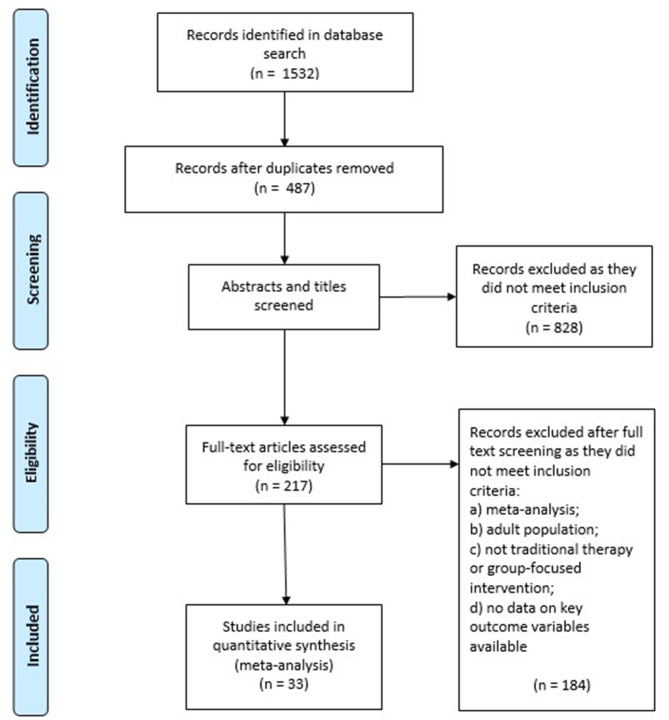
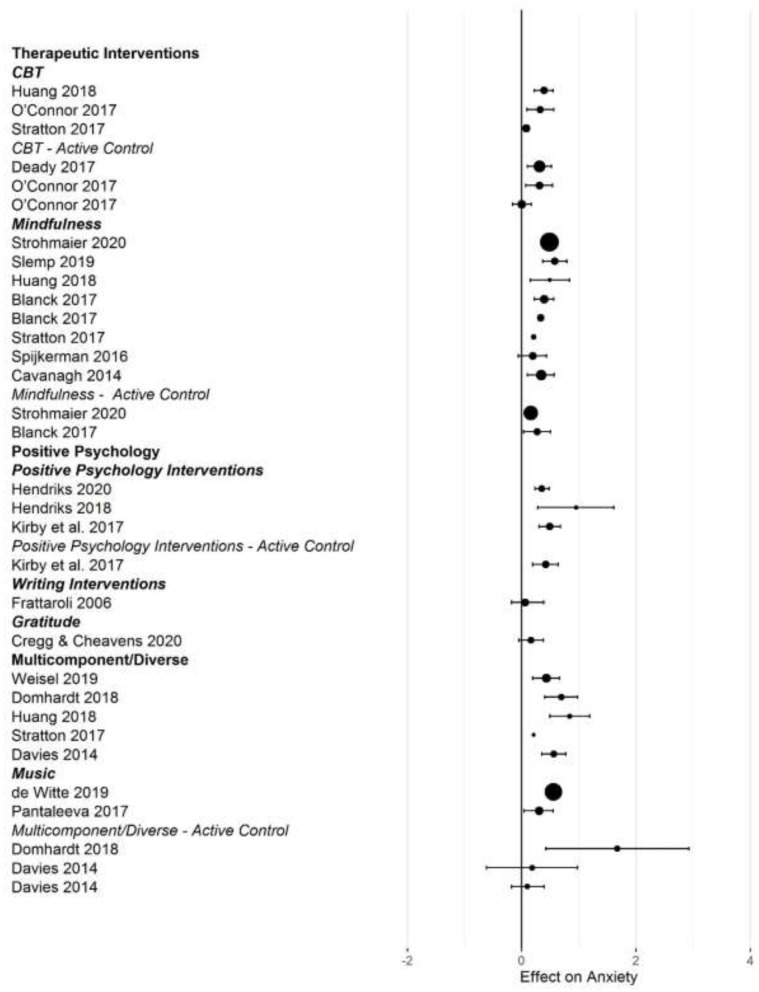
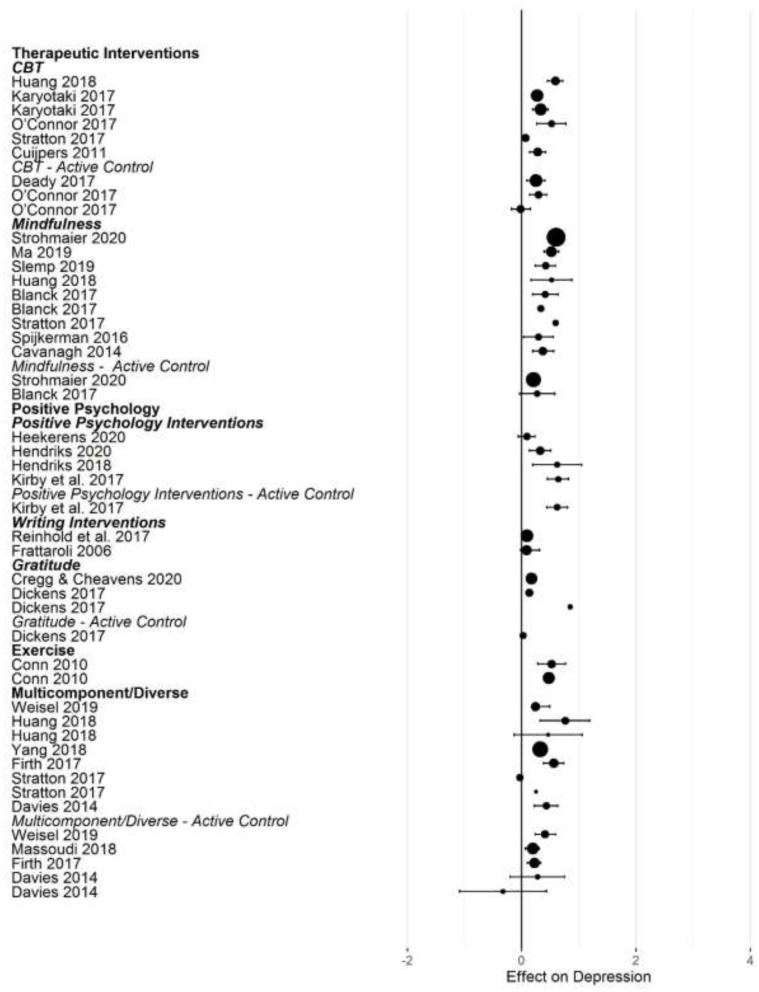
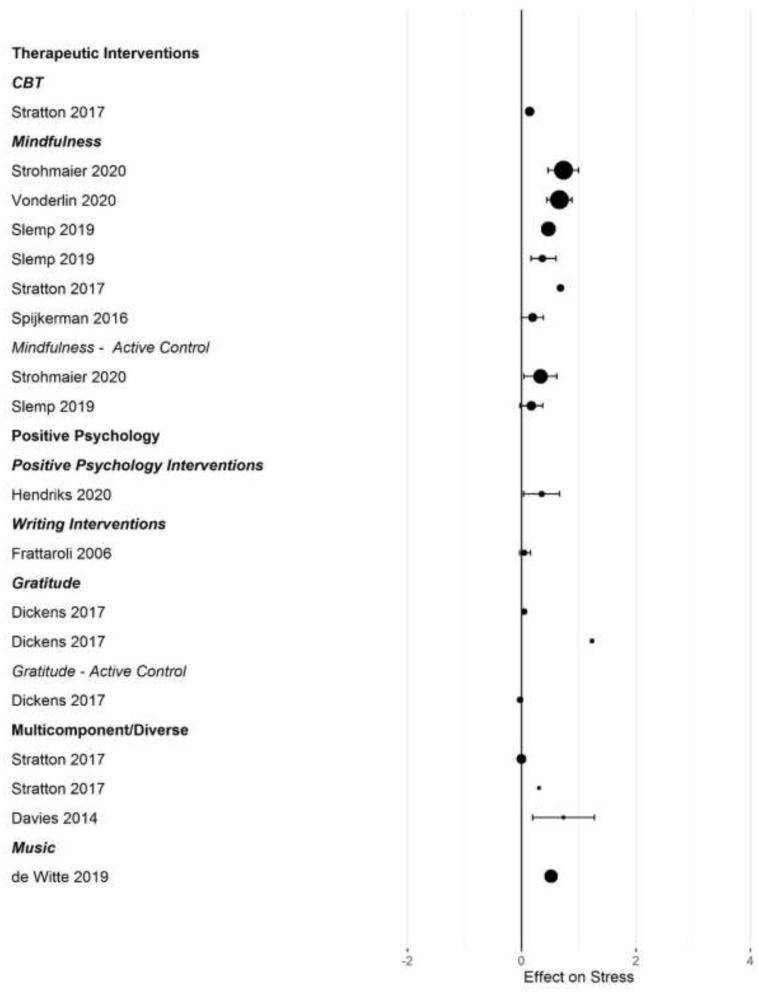
We conducted a rapid review and quantitative summary of meta-analyses that have examined interventions which can be used by individuals during quarantine and social distancing to manage anxiety, depression, stress, and subjective well-being. A literature search yielded 34 meta-analyses (total number of studies k = 1,390, n = 145,744) that were summarized. Overall, self-guided interventions showed small to medium effects in comparison to control groups. In particular, self-guided therapeutic approaches (including cognitive-behavioral, mindfulness, and acceptance-based interventions), selected positive psychology interventions, and multi-component and activity-based interventions (music, physical exercise) showed promising evidence for effectiveness. Overall, self-guided interventions on average did not show the same degree of effectiveness as traditional guided individual or group therapies. There was no consistent evidence of dose effects, baseline differences, and differential effectiveness of eHealth interventions. More research on the effectiveness of interventions in diverse cultural settings is needed.
Keywords: COVID-19; anxiety; culture; depression; meta-analysis; self-guided interventions; stress; subjective well-being.
Copyright © 2020 Fischer, Bortolini, Karl, Zilberberg, Robinson, Rabelo, Gemal, Wegerhoff, Nguyễn, Irving, Chrystal and Mattos.
Figures
References
-
- *. Chu S. T. W., Mak W. W. S. (2020). How mindfulness enhances meaning in life: a meta-analysis of correlational studies and randomized controlled trials. Mindfulness 11, 177–193. 10.1007/s12671-019-01258-9 - DOI
Publication types
LinkOut - more resources
Full Text Sources
