


Giving Researchers a Headache - Sex and Gender Differences in Migraine
- PMID: 33192977
- PMCID: PMC7642465
- DOI: 10.3389/fneur.2020.549038
Giving Researchers a Headache - Sex and Gender Differences in Migraine
Abstract
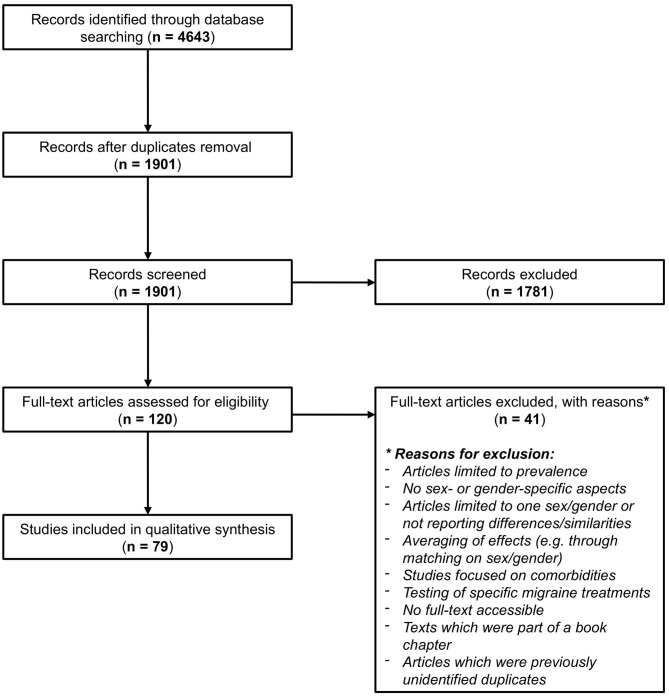
Migraine is a common neurovascular disorder affecting ~15% of the general population. Ranking second in the list of years lived with disability (YLD), people living with migraine are greatly impacted by this especially burdensome primary headache disorder. In ~30% of individuals with migraine, transient neurological symptoms occur (migraine aura) that further increase migraine burden. However, migraine burden is differential with respect to sex. Though one-year prevalences in childhood are similar, starting with puberty, migraine incidence increases at a much higher rate in females than males. Thus, migraine over the life course occurs in women three to four times more often than in men. Attacks are also more severe in women, leading to greater disability and a longer recovery period. The sex disparity in migraine is believed to be partly mediated through fluctuations in ovarian steroid hormones, especially estrogen and progesterone, although the exact mechanisms are not yet completely understood. The release of the neuropeptide calcitonin gene-related peptide (CGRP), followed by activation of the trigeminovascular system, is thought to play a key role in the migraine pathophysiology. Given the burden of migraine and its disproportionate distribution, the underlying cause(s) for the observed differences between sexes in the incidence, frequency, and intensity of migraine attacks must be better understood. Relevant biological as well as behavioral differences must be taken into account. To evaluate the scope of the existing knowledge on the issue of biological sex as well as gender differences in migraine, we conducted a systematized review of the currently available research. The review seeks to harmonize existing knowledge on the topic across the domains of biological/preclinical, clinical, and population-level research, which are traditionally synthesized and interpreted in isolation. Ultimately, we identify knowledge gaps and set priorities for further interdisciplinary and informed research on sex and gender differences as well as gender-specific therapies in migraine.
Keywords: aura; gender; headache; migraine; primary headache; review (article); sex.
Copyright © 2020 Al-Hassany, Haas, Piccininni, Kurth, Maassen Van Den Brink and Rohmann.
Figures
References
-
- Institute for Health Metrics and Evaluation GBD Results Tool. IHME, University of Washington Seattle (WA) (2020). Available online at: http://ghdx.healthdata.org/gbd-results-tool (accessed March 19, 2020).
-
- Buse DC, Loder EW, Gorman JA, Stewart WF, Reed ML, Fanning KM, et al. Sex differences in the prevalence, symptoms, and associated features of migraine, probable migraine and other severe headache: results of the American migraine prevalence and prevention (AMPP) study. Headache. (2013) 53:1278–99. 10.1111/head.12150 - DOI - PubMed
Publication types
LinkOut - more resources
Full Text Sources
Research Materials
Miscellaneous
