


Y-Chromosome Genetic Analysis of Modern Polish Population
- PMID: 33193657
- PMCID: PMC7644898
- DOI: 10.3389/fgene.2020.567309
Y-Chromosome Genetic Analysis of Modern Polish Population
Abstract
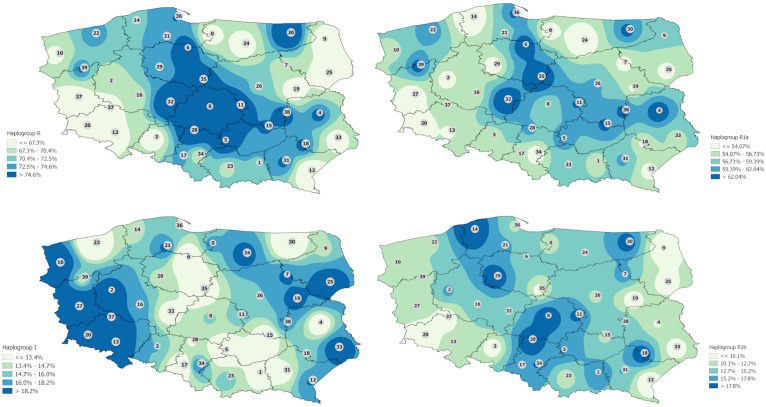
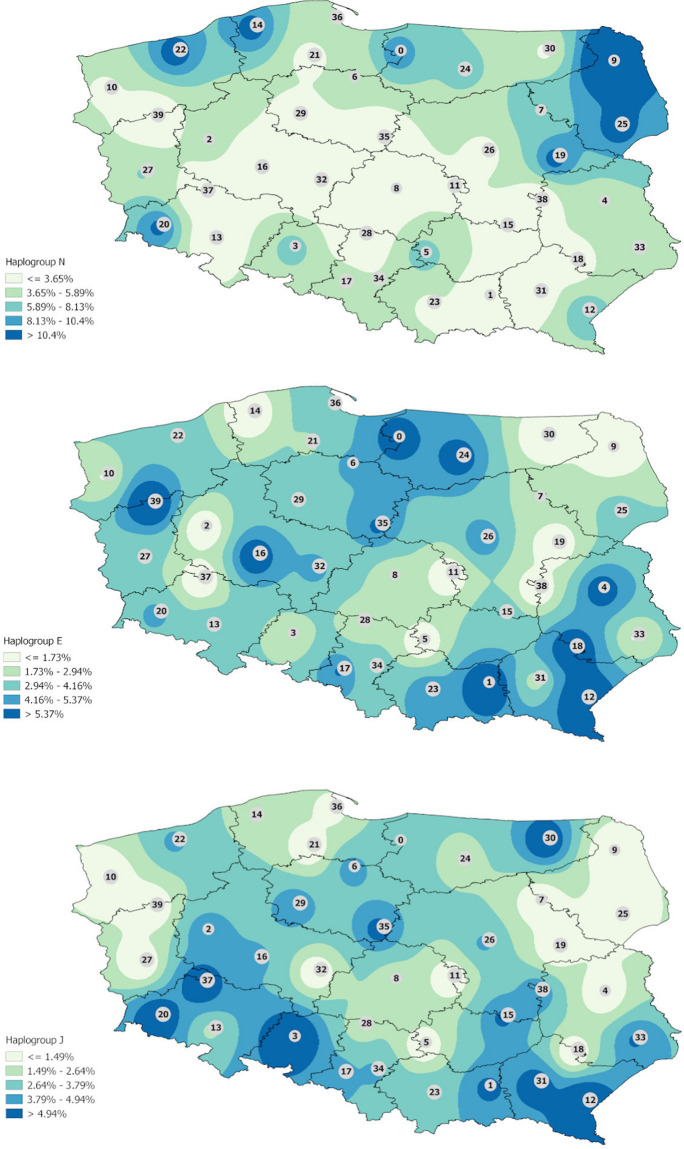
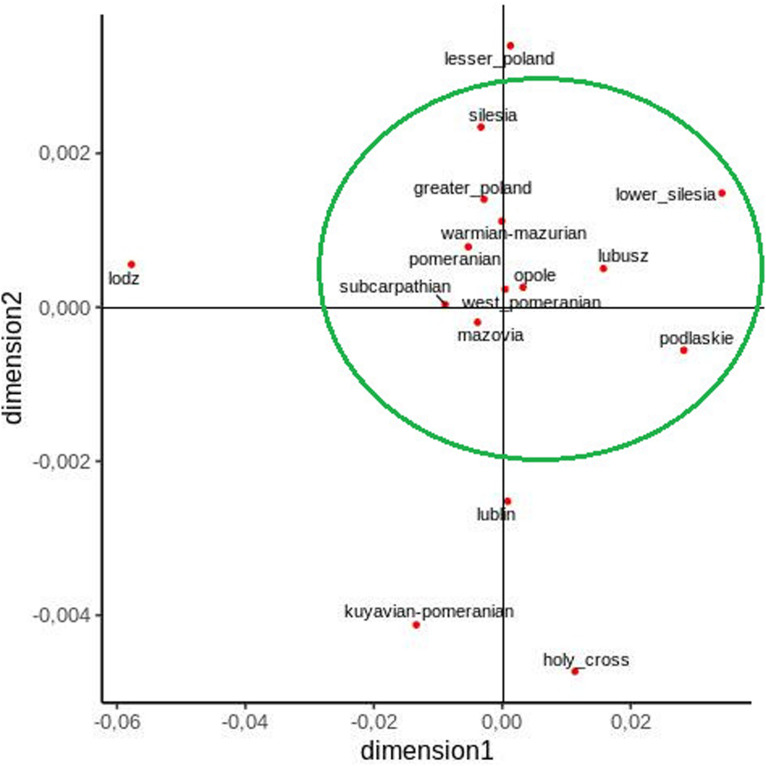
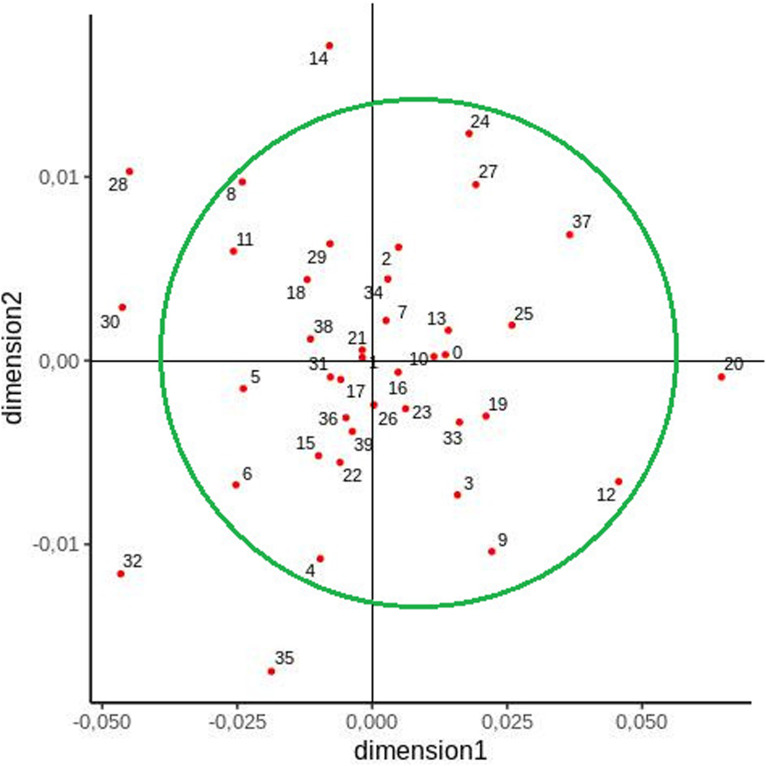
The study presents a full analysis of the Y-chromosome variability of the modern male Polish population. It is the first study of the Polish population to be conducted with such a large set of data (2,705 individuals), which includes genetic information from inhabitants of all voivodeships, i.e., the first administrative level, in the country and the vast majority of its counties, i.e., the second level. In addition, the available data were divided into clusters corresponding to more natural geographic regions. Genetic analysis included the estimation of F ST distances, the visualization with the use of multidimensional scaling plots and analysis of molecular variance. Y-chromosome binary haplogroups were classified and visualized with the use of interpolation maps. Results showed that the level of differentiation within Polish population is quite low, but some differences were indicated. It was confirmed that the Polish population is characterized by a high degree of homogeneity, with only slight genetic differences being observed at the regional level. The use of regional clustering as an alternative to counties and voivodeships provided a more detailed view of the genetic structure of the population. Those regional differences identified in the present study highlighted the need for additional division of the population by cultural and ethnic criteria in such studies rather than just by geographical or administrative regionalization.
Keywords: Polish population; SNPs; Y-chromosome; haplogroups; microarray analysis; regions of Poland.
Copyright © 2020 Grochowalski, Jarczak, Urbanowicz, Słomka, Szargut, Borówka, Sobalska-Kwapis, Marciniak, Ossowski, Lorkiewicz and Strapagiel.
Figures
References
-
- Branicki W., Kalista K., Kupiec T., Wolanska-Nowak P., Zoledziewska M., Lessig R. (2005). Distribution of mtDNA haplogroups in a population sample from Poland. J. Forensic Sci. 50 732–733. - PubMed
-
- Czerniakiewicz J. (1987). Repatriacja Ludności Polskiej z ZSRR 1944-1948. Warsaw: PWN.
LinkOut - more resources
Full Text Sources
