Review
. 2020 Oct 15:8:829.
doi: 10.3389/fchem.2020.00829. eCollection 2020.

Apigenin as Tumor Suppressor in Cancers: Biotherapeutic Activity, Nanodelivery, and Mechanisms With Emphasis on Pancreatic Cancer

Affiliations
Review

Apigenin as Tumor Suppressor in Cancers: Biotherapeutic Activity, Nanodelivery, and Mechanisms With Emphasis on Pancreatic Cancer

Milad Ashrafizadeh et al. Front Chem. .

Abstract

Pancreatic cancer is the most lethal malignancy of the gastrointestinal tract. Due to its propensity for early local and distant spread, affected patients possess extremely poor prognosis. Currently applied treatments are not effective enough to eradicate all cancer cells, and minimize their migration. Besides, these treatments are associated with adverse effects on normal cells and organs. These therapies are not able to increase the overall survival rate of patients; hence, finding novel adjuvants or alternatives is so essential. Up to now, medicinal herbs were utilized for therapeutic goals. Herbal-based medicine, as traditional biotherapeutics, were employed for cancer treatment. Of them, apigenin, as a bioactive flavonoid that possesses numerous biological properties (e.g., anti-inflammatory and anti-oxidant effects), has shown substantial anticancer activity. It seems that apigenin is capable of suppressing the proliferation of cancer cells via the induction of cell cycle arrest and apoptosis. Besides, apigenin inhibits metastasis via down-regulation of matrix metalloproteinases and the Akt signaling pathway. In pancreatic cancer cells, apigenin sensitizes cells in chemotherapy, and affects molecular pathways such as the hypoxia inducible factor (HIF), vascular endothelial growth factor (VEGF), and glucose transporter-1 (GLUT-1). Herein, the biotherapeutic activity of apigenin and its mechanisms toward cancer cells are presented in the current review to shed some light on anti-tumor activity of apigenin in different cancers, with an emphasis on pancreatic cancer.

Keywords: apigenin; apoptosis; oxidative stress; pancreatic cancer; therapy.


Figures

Figure 1
Figure 1
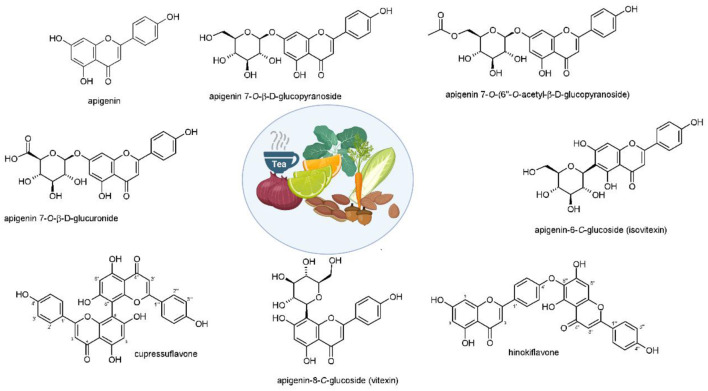
Structures and sources of apigenin and its glycosidic, glucuronide, acetylated, and methyl ester derivatives. Reprinted with modification from Salehi et al. (2019).
Figure 2
Figure 2
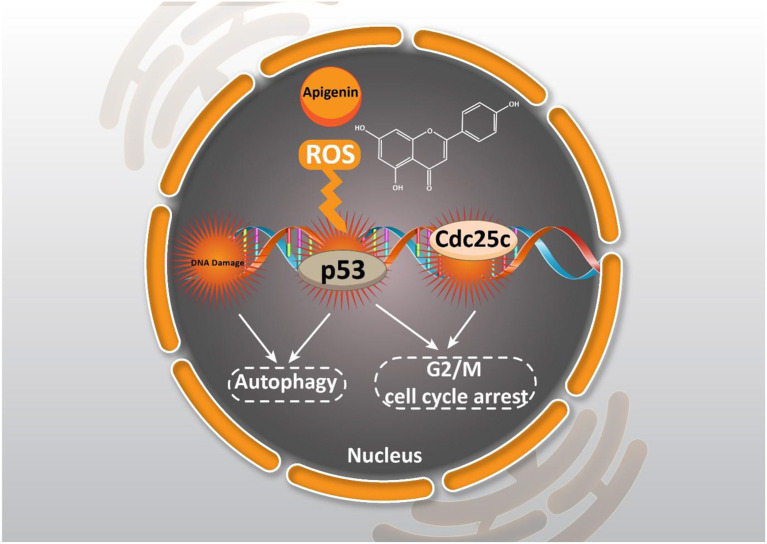
Effect of apigenin on autophagy in cancer. Apigenin affecting ROS generation, DNA damage, and cell cycle arrest could induce autophagy and cell cycle arrest.
Figure 3
Figure 3
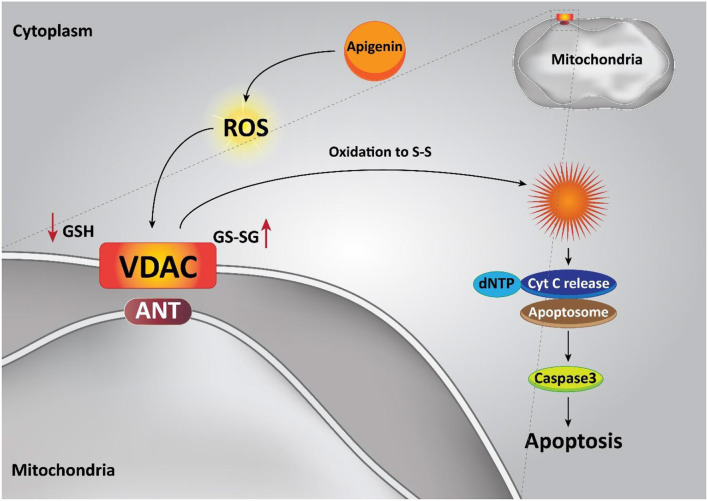
Effect of apigenin on the intrinsic pathway of apoptosis in cancer cells.
Figure 4
Figure 4
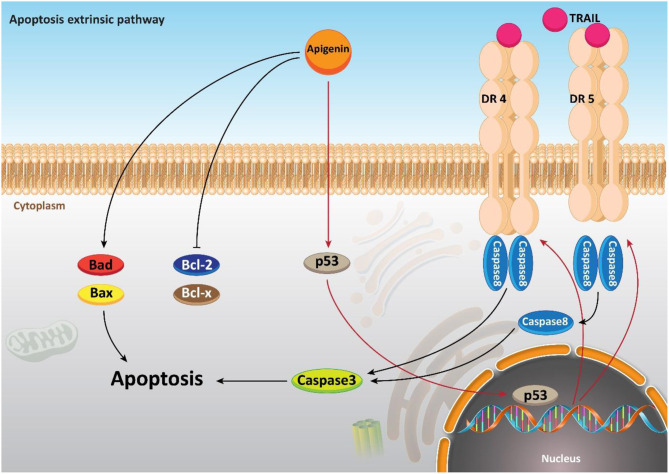
The effect of apigenin on extrinsic pathway of apoptosis.
Figure 5
Figure 5
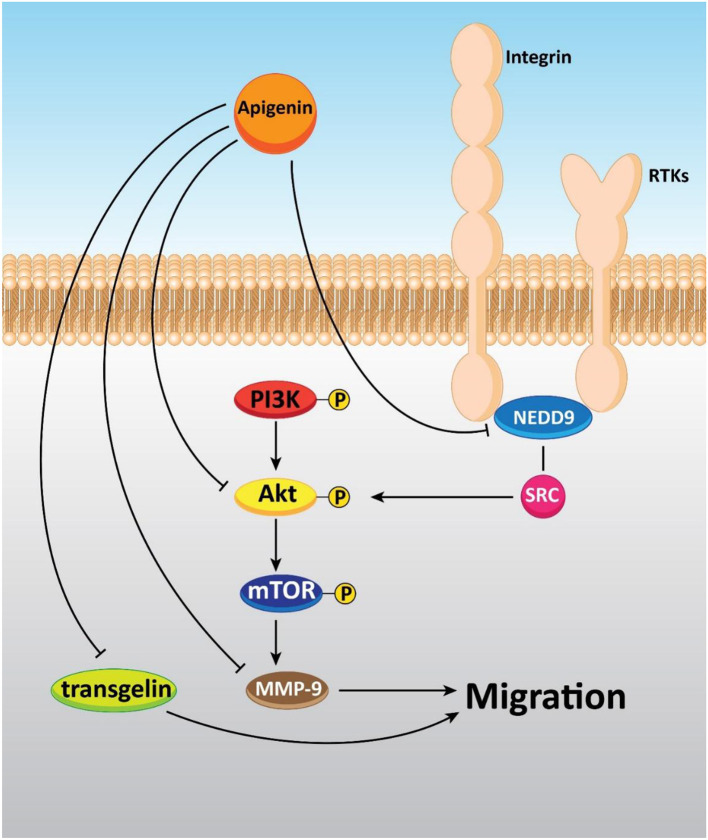
The inhibitory effect of apigenin on the metastasis of cancer cells.
Figure 6
Figure 6
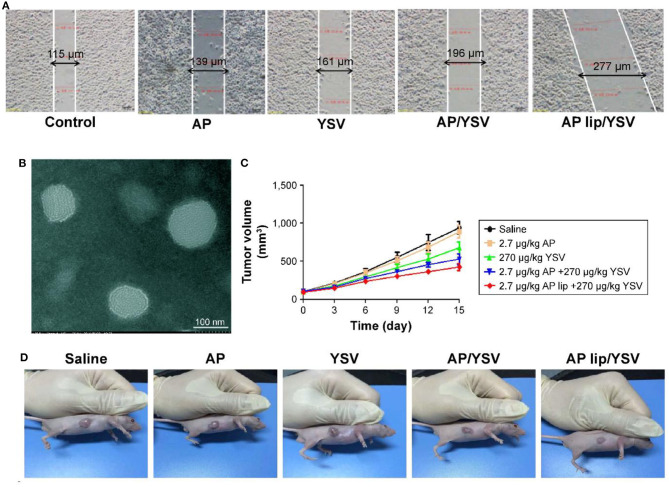
(A) Synergistic effects of apigenin-loaded TPGS liposomes and tyroservatide (YSV) in A549 cells. (B) Transmission electron microscopy (TEM) image of apigenin-loaded D-alpha-tocopheryl polyethylene glycol (TPGS) liposomes. Diagram of tumor volumes (C) and morphology (D) after 15 days. Reprinted with permission from Jin et al. (2017).
Figure 7
Figure 7
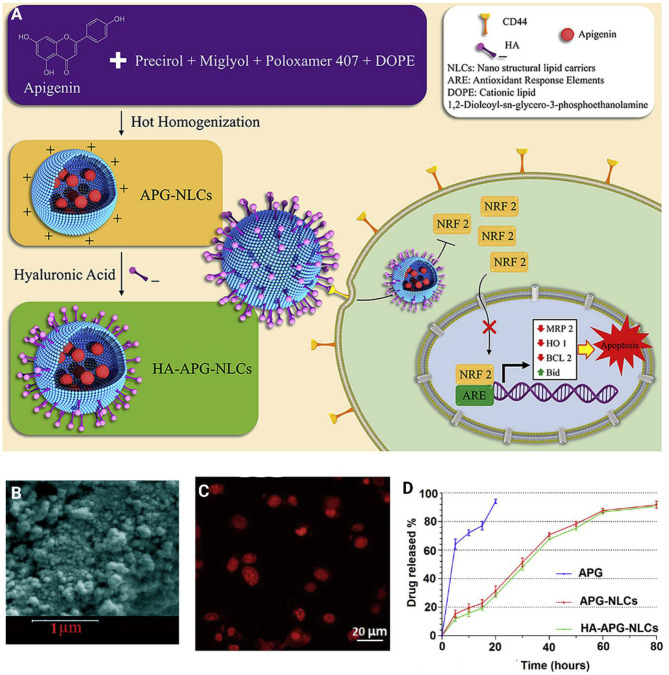
(A) Schematic illustration of hyaluronic acid-functionalized nanostructured lipid carriers (HA-NLCs) containing apigenin. (B) SEM images HA-NLCs. (C) In vitro internalization of Rhodamine B encapsulated apigenin-nanostructured lipid carriers. (D) In vitro drug release of apigenin solution (APG), APG encapsulated-NLCs, and HA-NLCs. Reprinted with permission from Mahmoudi et al. (2019).
Figure 8
Figure 8
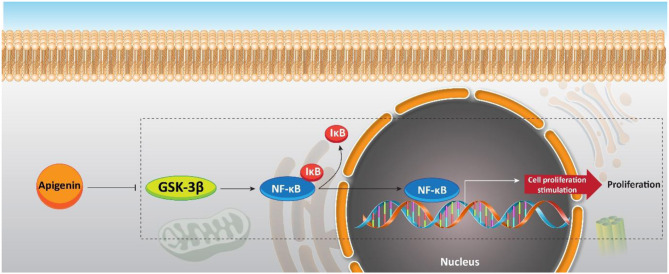
Effect of apigenin on NF-κB signaling, and its upstream mediator GSK-3β in sensitizing pancreatic cancer cells to chemotherapy.
Figure 9
Figure 9
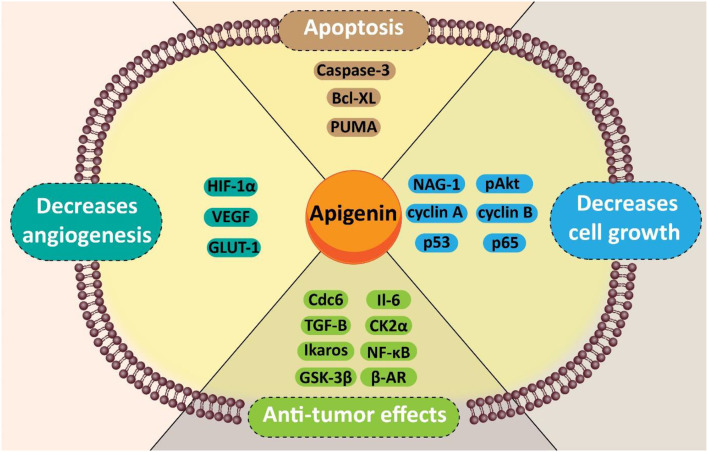
An overview of molecular pathways targeted by apigenin in pancreatic cancer therapy.

References

    1. Abotaleb M., Liskova A., Kubatka P., Büsselberg D. (2020). Therapeutic potential of plant phenolic acids in the treatment of cancer. Biomolecules 10:221. 10.3390/biom10020221 - DOI - PMC - PubMed
    1. Abu-Yousif A. O., Smith K. A., Getsios S., Green K. J., Van Dross R. T., Pelling J. C. (2008). Enhancement of UVB-induced apoptosis by apigenin in human keratinocytes and organotypic keratinocyte cultures. Cancer Res. 68, 3057–3065. 10.1158/0008-5472.CAN-07-2763 - DOI - PubMed
    1. Aggarwal V., Tuli H. S., Tania M., Srivastava S., Ritzer E. E., Pandey A., et al. (2020). Molecular mechanisms of action of epigallocatechin gallate in cancer: recent trends and advancement. Semin. Cancer Biol. 10.1016/j.semcancer.2020.05.011. [Epub ahead of print]. - DOI - PubMed
    1. Agrawal A., Yang J., Murphy R. F., Agrawal D. K. (2006). Regulation of the p14ARF-Mdm2-p53 pathway: an overview in breast cancer. Exp. Mol. Pathol. 81, 115–122. 10.1016/j.yexmp.2006.07.001 - DOI - PubMed
    1. Alexandrova E. M., Yallowitz A. R., Li D., Xu S., Schulz R., Proia D. A., et al. (2015). Improving survival by exploiting tumour dependence on stabilized mutant p53 for treatment. Nature 523, 352–356. 10.1038/nature14430 - DOI - PMC - PubMed