


Assessment of a computerized quantitative quality control tool for whole slide images of kidney biopsies
- PMID: 33197281
- PMCID: PMC8392148
- DOI: 10.1002/path.5590
Assessment of a computerized quantitative quality control tool for whole slide images of kidney biopsies
Abstract
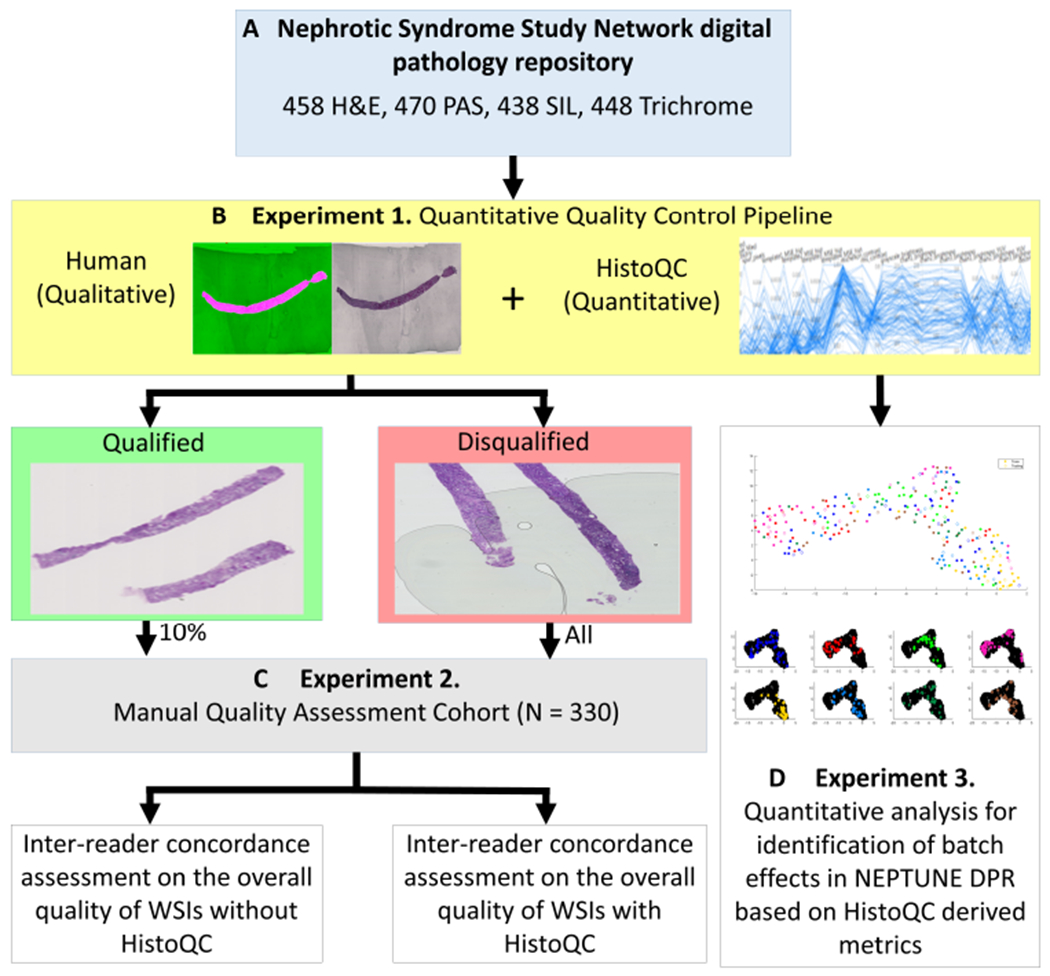
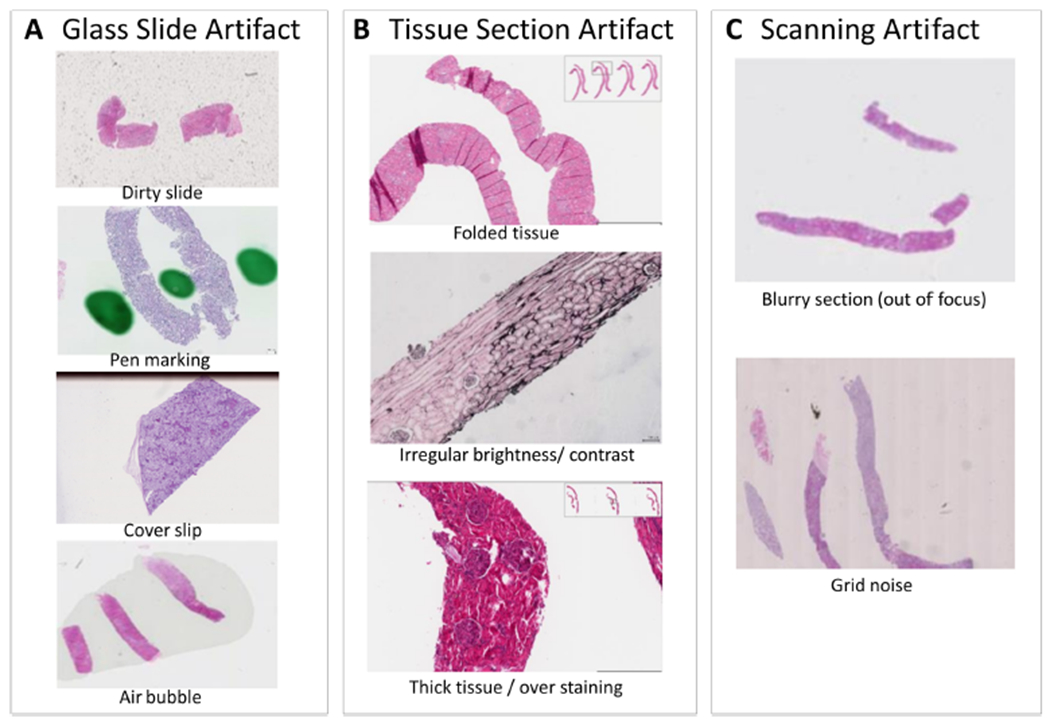
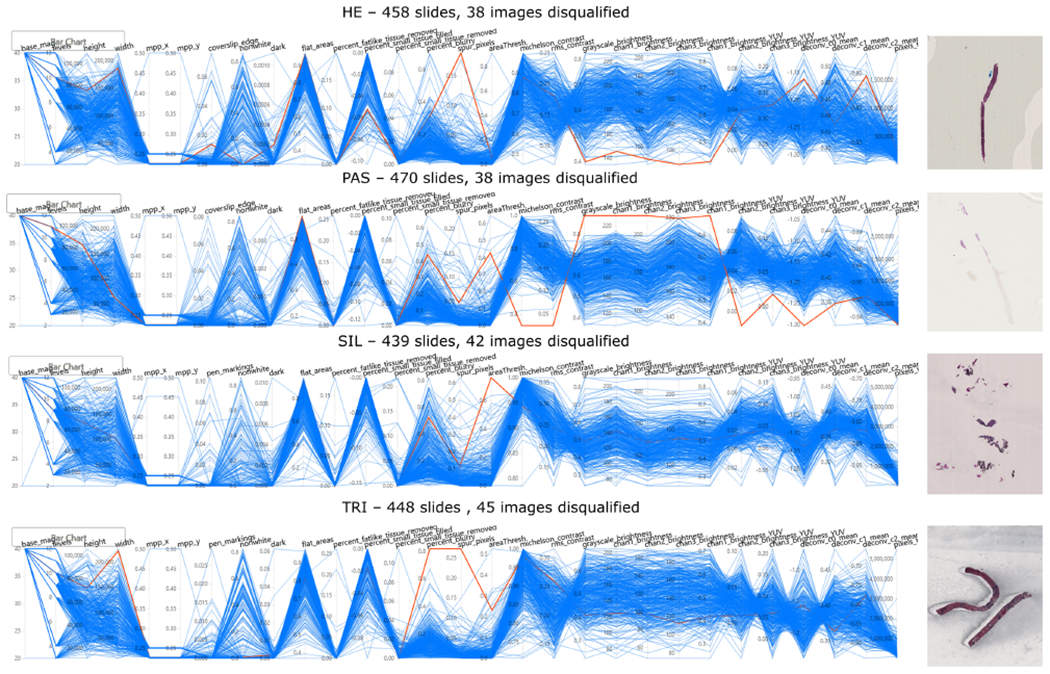
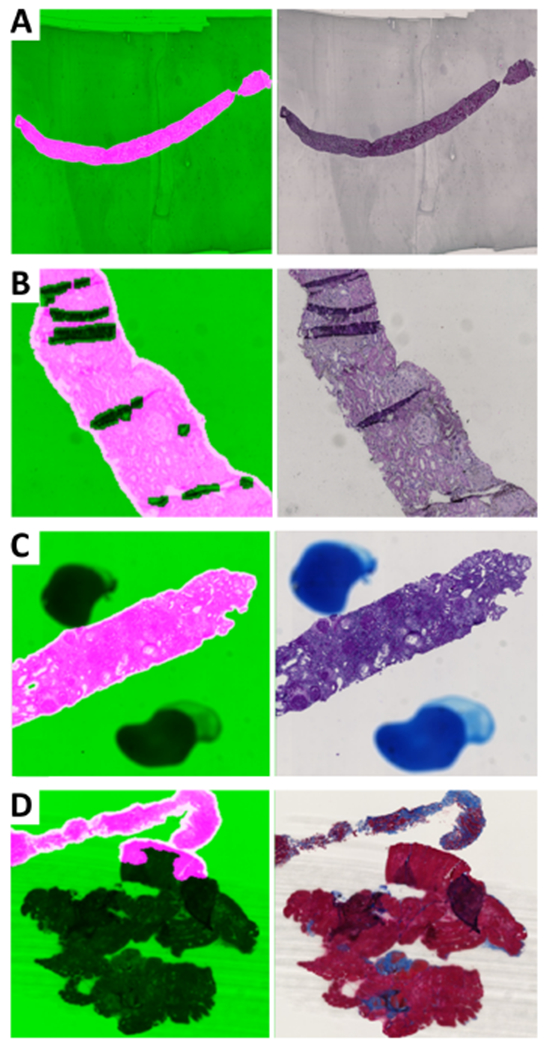
Inconsistencies in the preparation of histology slides and whole-slide images (WSIs) may lead to challenges with subsequent image analysis and machine learning approaches for interrogating the WSI. These variabilities are especially pronounced in multicenter cohorts, where batch effects (i.e. systematic technical artifacts unrelated to biological variability) may introduce biases to machine learning algorithms. To date, manual quality control (QC) has been the de facto standard for dataset curation, but remains highly subjective and is too laborious in light of the increasing scale of tissue slide digitization efforts. This study aimed to evaluate a computer-aided QC pipeline for facilitating a reproducible QC process of WSI datasets. An open source tool, HistoQC, was employed to identify image artifacts and compute quantitative metrics describing visual attributes of WSIs to the Nephrotic Syndrome Study Network (NEPTUNE) digital pathology repository. A comparison in inter-reader concordance between HistoQC aided and unaided curation was performed to quantify improvements in curation reproducibility. HistoQC metrics were additionally employed to quantify the presence of batch effects within NEPTUNE WSIs. Of the 1814 WSIs (458 H&E, 470 PAS, 438 silver, 448 trichrome) from n = 512 cases considered in this study, approximately 9% (163) were identified as unsuitable for subsequent computational analysis. The concordance in the identification of these WSIs among computational pathologists rose from moderate (Gwet's AC1 range 0.43 to 0.59 across stains) to excellent (Gwet's AC1 range 0.79 to 0.93 across stains) agreement when aided by HistoQC. Furthermore, statistically significant batch effects (p < 0.001) in the NEPTUNE WSI dataset were discovered. Taken together, our findings strongly suggest that quantitative QC is a necessary step in the curation of digital pathology cohorts. © 2020 The Pathological Society of Great Britain and Ireland. Published by John Wiley & Sons, Ltd.
Keywords: NEPTUNE; batch effects; computational pathology; computer vision; digital pathology; inter-reader variability; kidney biopsies; machine learning; quality control; whole-slide image.
© 2020 The Pathological Society of Great Britain and Ireland. Published by John Wiley & Sons, Ltd.
Figures
References
Publication types
MeSH terms
Grants and funding
- R01 CA216579/CA/NCI NIH HHS/United States
- R01-DK-118431./DK/NIDDK NIH HHS/United States
- R01CA208236-01A1/CA/NCI NIH HHS/United States
- U54 DK083912/DK/NIDDK NIH HHS/United States
- C06 RR012463/RR/NCRR NIH HHS/United States
- IK6 BX006185/BX/BLRD VA/United States
- R01 CA220581-01A1/CA/NCI NIH HHS/United States
- U24 CA199374/CA/NCI NIH HHS/United States
- 1U01 CA239055-01/CA/NCI NIH HHS/United States
- R43 EB028736/EB/NIBIB NIH HHS/United States
- U01 CA239055/CA/NCI NIH HHS/United States
- T32 DK007470/DK/NIDDK NIH HHS/United States
- R01 HL151277/HL/NHLBI NIH HHS/United States
- R01 CA220581/CA/NCI NIH HHS/United States
- 1U24CA199374-01/CA/NCI NIH HHS/United States
- R01 CA202752/CA/NCI NIH HHS/United States
- R01 CA208236/CA/NCI NIH HHS/United States
- U01 CA248226/CA/NCI NIH HHS/United States
- R01 CA216579-01A1/CA/NCI NIH HHS/United States
- 1R43EB028736-01/National Institute for Biomedical Imaging and Bioengineering
- I01 BX004121/BX/BLRD VA/United States
- 1U01 CA248226-01/CA/NCI NIH HHS/United States
- R01CA202752-01A1/CA/NCI NIH HHS/United States
- 5T32DK747033/Neptune Career Development Award
- 1 C06 RR12463-01/RR/NCRR NIH HHS/United States
LinkOut - more resources
Full Text Sources
Other Literature Sources
Medical
Molecular Biology Databases
