


Food insecurity and hypertension: A systematic review and meta-analysis
- PMID: 33201873
- PMCID: PMC7671545
- DOI: 10.1371/journal.pone.0241628
Food insecurity and hypertension: A systematic review and meta-analysis
Abstract
Background: Food insecurity (FIS) is an important public health issue associated with cardiovascular risk. Given the association of FIS with diets of poorer nutritional quality and higher salt intake as well as chronic stress, numerous studies have explored the link between FIS and hypertension. However, no systematic review or meta-analysis has yet to integrate or analyze the existing literature.
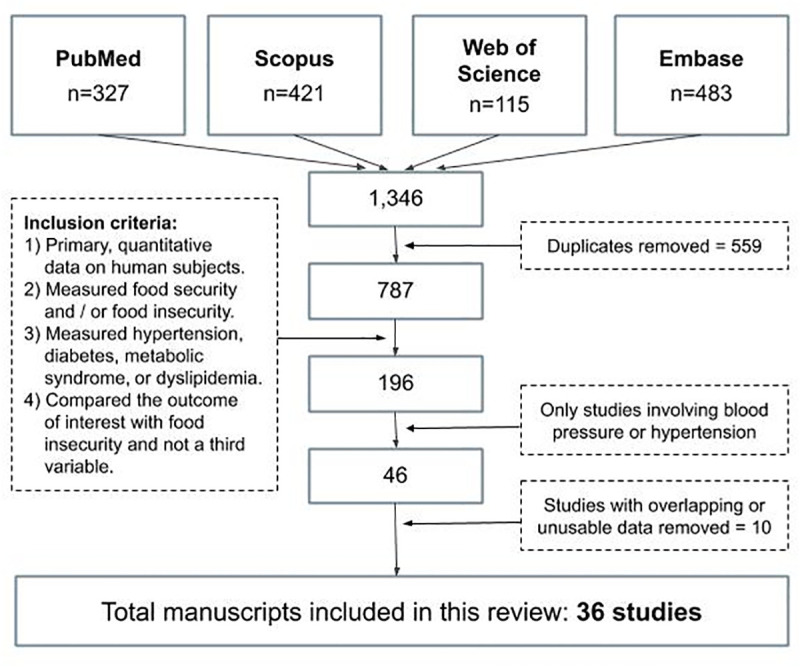
Methods: We performed a wide and inclusive search of peer-reviewed quantitative data exploring FIS and hypertension. A broad-terms, systematic search of the literature was conducted in PubMed, Embase, Scopus, and Web of Science for all English-language, human studies containing primary data on the relationship between FIS and hypertension. Patient population characteristics, study size, and method to explore hypertension were extracted from each study. Effect sizes including odds ratios and standardized mean differences were extracted or calculated based on studies' primary data. Comparable studies were combined by the random effects model for meta-analyses along with assessment of heterogeneity and publication bias.
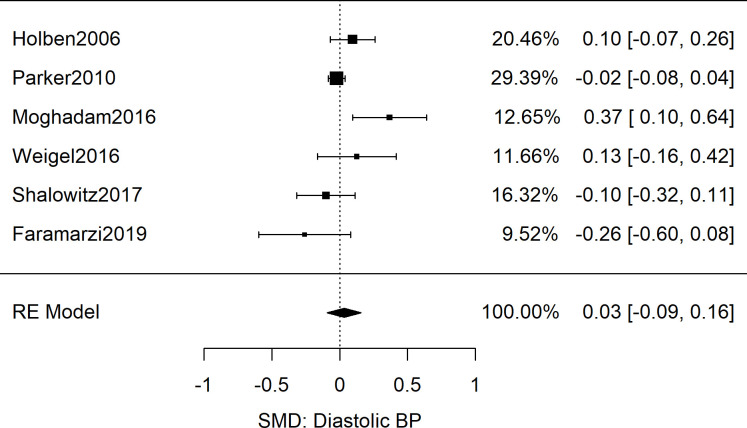
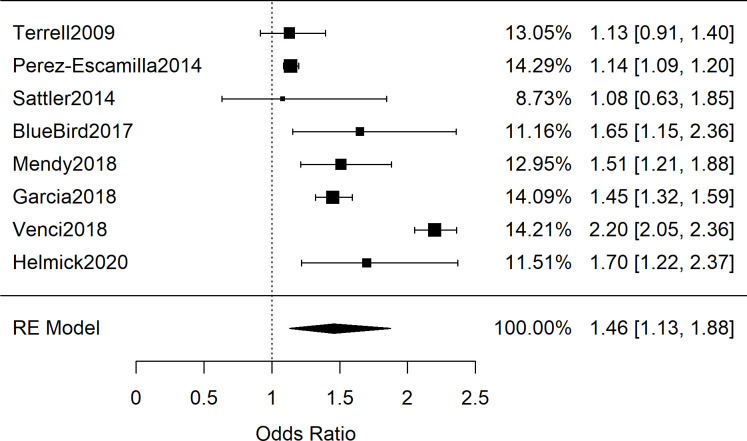
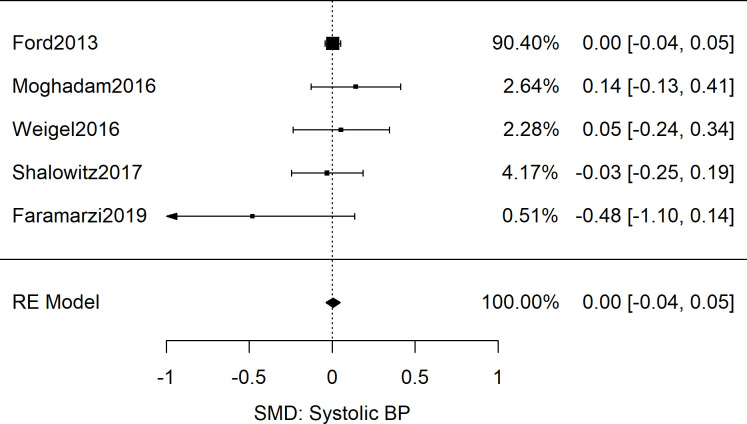
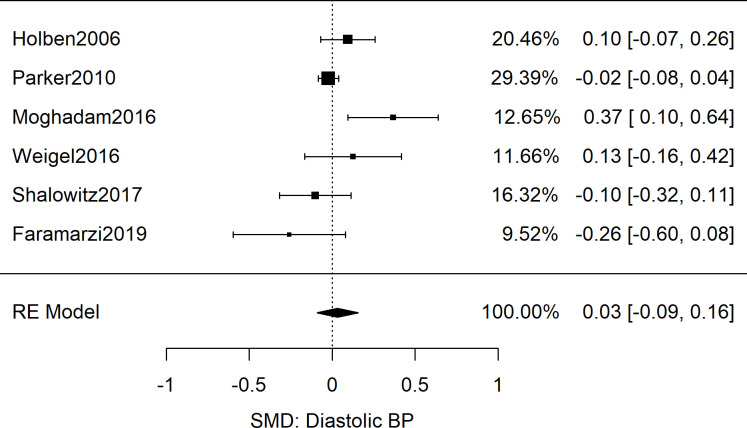
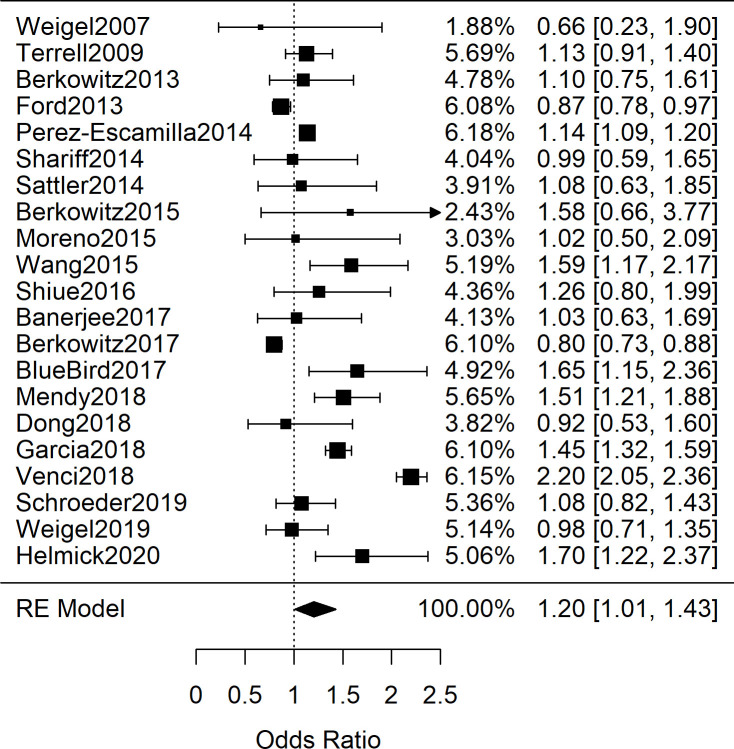
Results: A total of 36 studies were included in the final analyses. The studies were combined into different subgroups for meta-analyses as there were important differences in patient population characteristics, methodology to assess hypertension, and choice of effect size reporting (or calculability from primary data). For adults, there were no significantly increased odds of elevated blood pressures for food insecure individuals in studies where researchers measured the blood pressures: OR = 0.91 [95%CI: 0.79, 1.04; n = 29,781; Q(df = 6) = 7.6; I2 = 21%]. This remained true upon analysis of studies which adjusted for subject BMI. Similarly, in studies for which the standardized mean difference was calculable, there was no significant difference in measured blood pressures between food secure and FIS individuals: g = 0.00 [95%CI: -0.04, 0.05; n = 12,122; Q(df = 4) = 3.6; I2 = 0%]. As for retrospective studies that inspected medical records for diagnosis of hypertension, there were no significantly increased odds of hypertension in food insecure adults: OR = 1.11 [95%CI: 0.86, 1.42; n = 2,887; Q(df = 2) = 0.7; I2 = 0%]. In contrast, there was a significant association between food insecurity and self-reports of previous diagnoses of hypertension: 1.46 [95%CI: 1.13, 1.88; n = 127,467; Q(df = 7) = 235; I2 = 97%]. Only five pediatric studies were identified which together showed a significant association between FIS and hypertension: OR = 1.44 [95%CI: 1.16, 1.79; n = 19,038; Q(df = 4) = 5.7; I2 = 30%]. However, the small number of pediatric studies were not sufficient for subgroup meta-analyses based on individual study methodologies.
Discussion: In this systematic review and meta-analysis, an association was found between adult FIS and self-reported hypertension, but not with hypertension determined by blood pressure measurement or chart review. Further, while there is evidence of an association between FIS and hypertension among pediatric subjects, the limited number of studies precluded a deeper analysis of this association. These data highlight the need for more rigorous and longitudinal investigations of the relationship between FIS and hypertension in adult and pediatric populations.
Conflict of interest statement
The authors have declared that no competing interests exist.
Figures

References
-
- Maxwell DG. Measuring food insecurity: the frequency and severity of “coping strategies.” Food Policy. 1996;21: 291–303.
-
- Coleman-Jensen A. Household Food Security in the United States in 2016. 2016; 44.
Publication types
MeSH terms
LinkOut - more resources
Full Text Sources
Medical
Research Materials
Miscellaneous
