Review
. 2020 Nov 13;10(11):2106.
doi: 10.3390/ani10112106.

Secondary Functions of Arginine and Sulfur Amino Acids in Poultry Health: Review

Affiliations
Review

Secondary Functions of Arginine and Sulfur Amino Acids in Poultry Health: Review

Fernanda Lima de Souza Castro et al. Animals (Basel). .

Abstract

Amino acids such as arginine, methionine, and cysteine are the precursors of essential molecules that regulate growth and health, being classified as functional amino acids. This review describes the metabolism of arginine and the sulfur amino acids and how they modulate, directly or indirectly, different tissues. Emphasis is placed on their effects in supporting health during challenging conditions, such as heat stress and Eimeria infection. The use of arginine has been shown to reduce abdominal fat pad in ducks and increase lean tissue and bone mineral density in broilers. Additionally, the sulfur amino acids have been shown to improve bone development and are beneficial during heat stress. The use of L-methionine increased the cortical and trabecular bone mineral densities, in laying hens. Moreover, the dietary inclusion of these amino acids could reduce the damage caused by Eimeria spp. infection by regulating the antioxidant system and cell repair. Understanding how these amino acids can mitigate stressful conditions may provide us novel insights of their use as nutritional strategies to modulate the health status of chickens.

Keywords: arginine; coccidiosis; functional amino acids; health; poultry; sulfur amino acids.


Conflict of interest statement

The authors declare no conflict of interest.

Figures
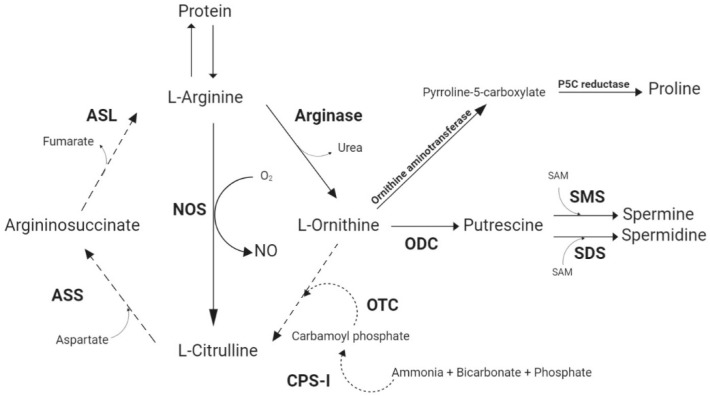
Figure 1
Figure 1
Arginine metabolism. Dotted lines represent pathways that are inactive or less active in birds than in mammals. CPS-I—carbamoyl phosphate synthase I; OTC—ornithine transcarbamylase; ASS—argininosuccinate synthetase; ASL—argininosuccinate lyase; NOS—nitric oxide synthase; ODC—ornithine decarboxylase; SMS—spermine synthase; SDS—spermidine synthase.
Figure 2
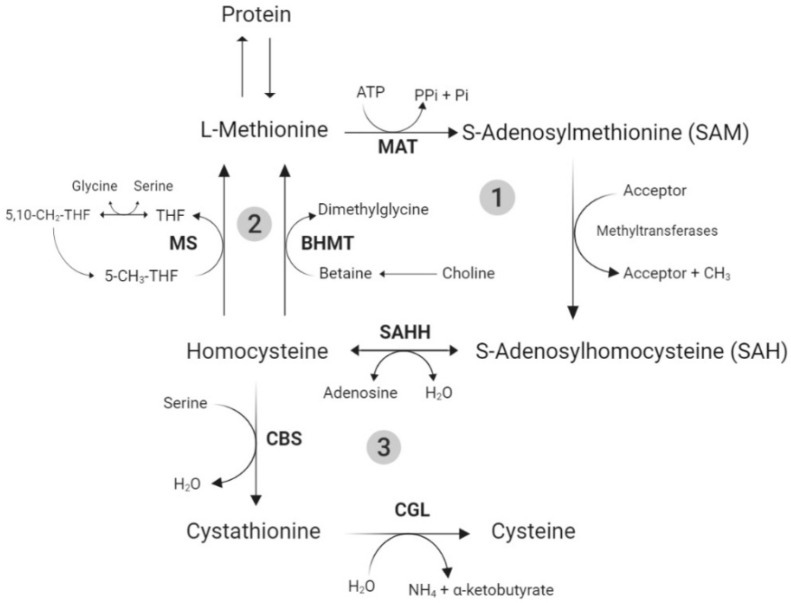
Figure 2
Methionine metabolism. 1—transmethylation, 2—remethylation, 3—transsulfuration. MAT—methionine adenosyltransferase; SAHH—S-adenosylhomocysteine hydrolase; MS—methionine synthase; BHMT—betaine: homocysteine methyltransferase; CBS—cystathionine β-synthase; CGL—cystathionine-γ-lyase (adapted from Brosnan and Brosnan [54]).

References

    1. Wu G. Amino acids: Metabolism, functions, and nutrition. Amino Acids. 2009;37:1–17. doi: 10.1007/s00726-009-0269-0. - DOI - PubMed
    1. Wu G. Dietary requirements of synthesizable amino acids by animals: A paradigm shift in protein nutrition. J. Anim. Sci. Biotechnol. 2014;5:34. doi: 10.1186/2049-1891-5-34. - DOI - PMC - PubMed
    1. Wu G., Bazer F.W., Davis T.A., Kim S.W., Li P., Marc Rhoads J., Carey Satterfield M., Smith S.B., Spencer T.E., Yin Y. Arginine metabolism and nutrition in growth, health and disease. Amino Acids. 2009;37:153–168. doi: 10.1007/s00726-008-0210-y. - DOI - PMC - PubMed
    1. Wu G. Functional amino acids in growth, reproduction, and health. Adv. Nutr. 2010;1:31–37. doi: 10.3945/an.110.1008. - DOI - PMC - PubMed
    1. Ball R.O., Urschel K.L., Pencharz P.B. Nutritional consequences of interspecies differences in arginine and lysine metabolism. J. Nutr. 2007;137:1626S–1641S. doi: 10.1093/jn/137.6.1626S. - DOI - PubMed

LinkOut - more resources