


Health of Newborns and Infants Born to Women With Disabilities: A Meta-analysis
- PMID: 33203648
- PMCID: PMC7786829
- DOI: 10.1542/peds.2020-1635
Health of Newborns and Infants Born to Women With Disabilities: A Meta-analysis
Abstract
Context: Women with disabilities are at elevated risk for pregnancy, delivery, and postpartum complications. However, there has not been a synthesis of literature on the neonatal and infant health outcomes of their offspring.
Objective: We examined the association between maternal disability and risk for adverse neonatal and infant health outcomes.
Data sources: Cumulative Index to Nursing and Allied Health Literature, Embase, Medline, and PsycINFO were searched from database inception to January 2020.
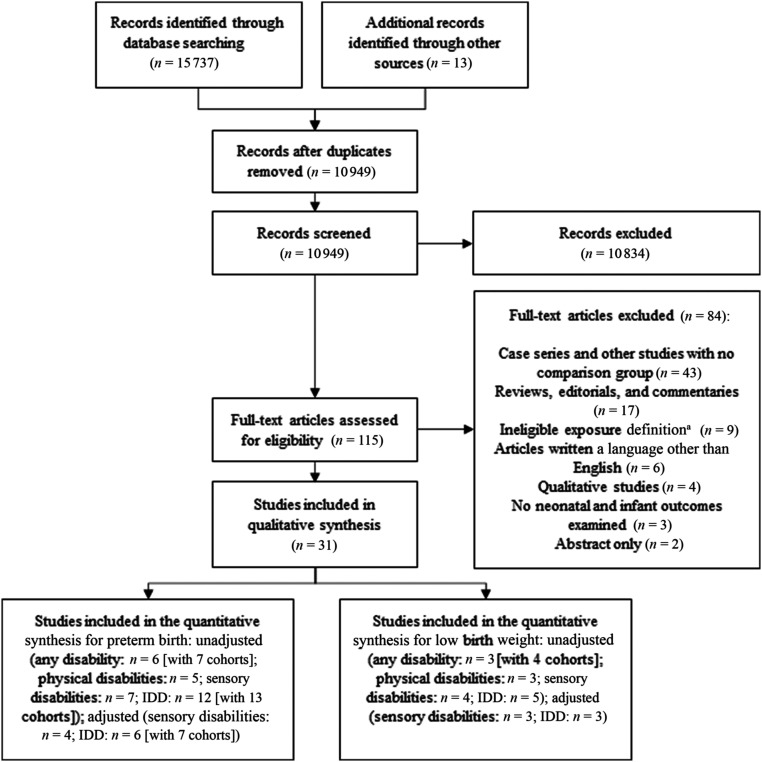
Study selection: Studies were included if they reported original data on the association between maternal physical, sensory, or intellectual and/or developmental disabilities and neonatal or infant health outcomes; had a referent group of women with no disabilities; were peer-reviewed journal articles or theses; and were written in English.
Data extraction: We used standardized instruments to extract data and assess study quality. DerSimonian and Laird random effects models were used for pooled analyses.
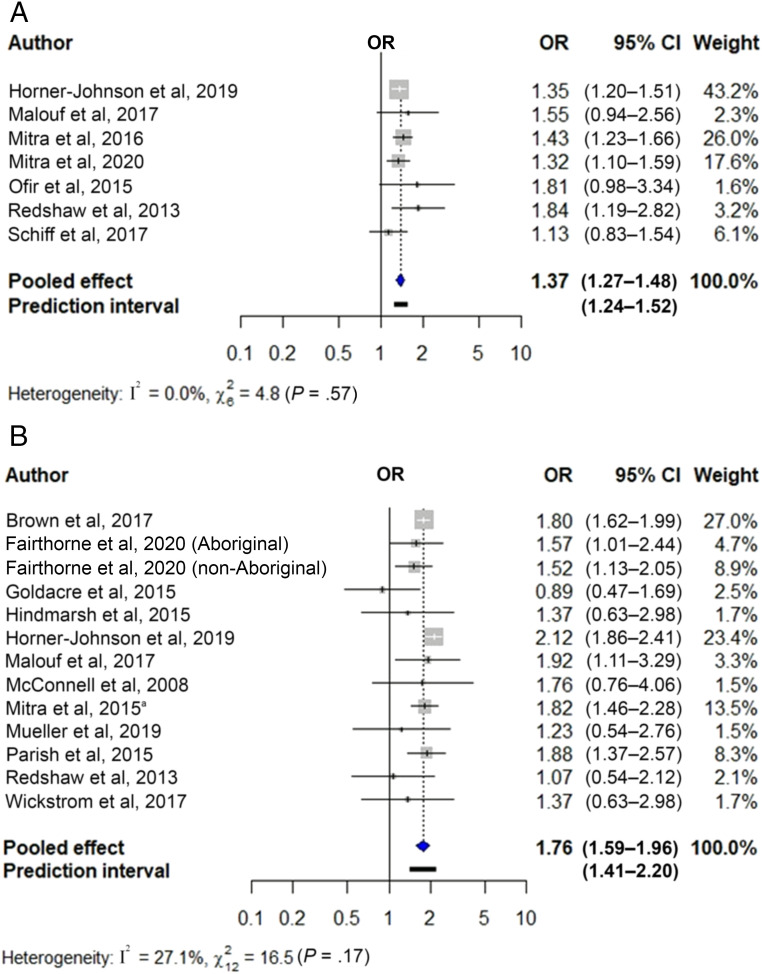
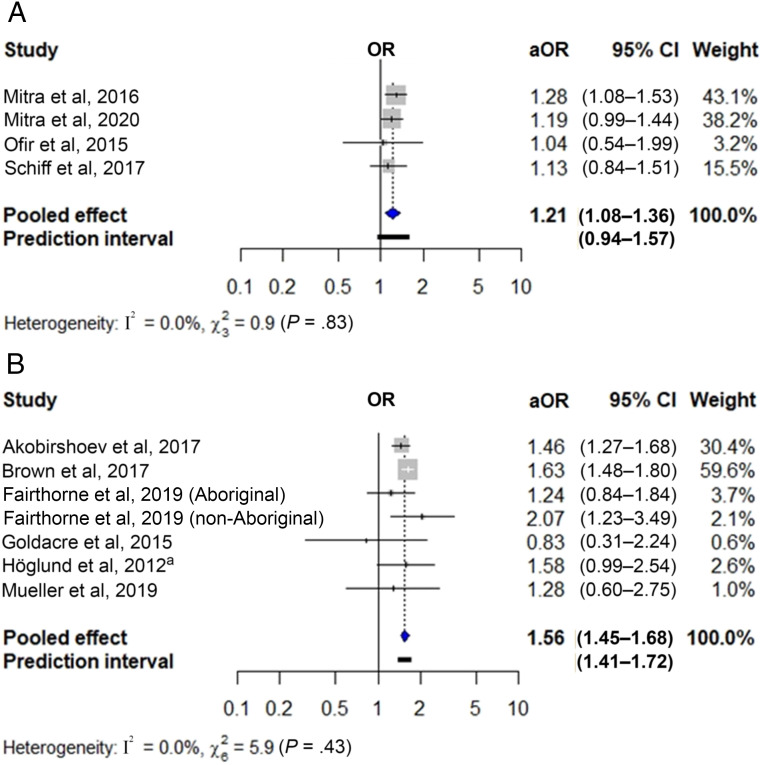
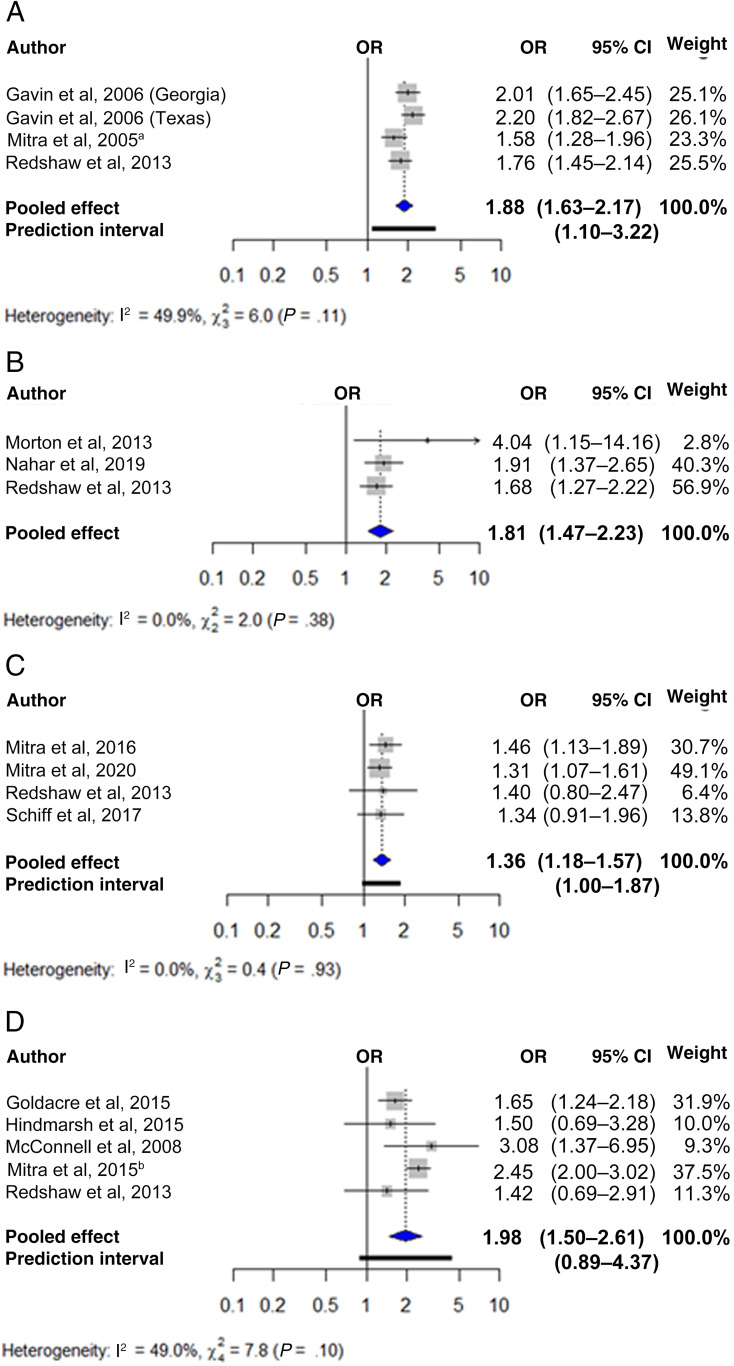
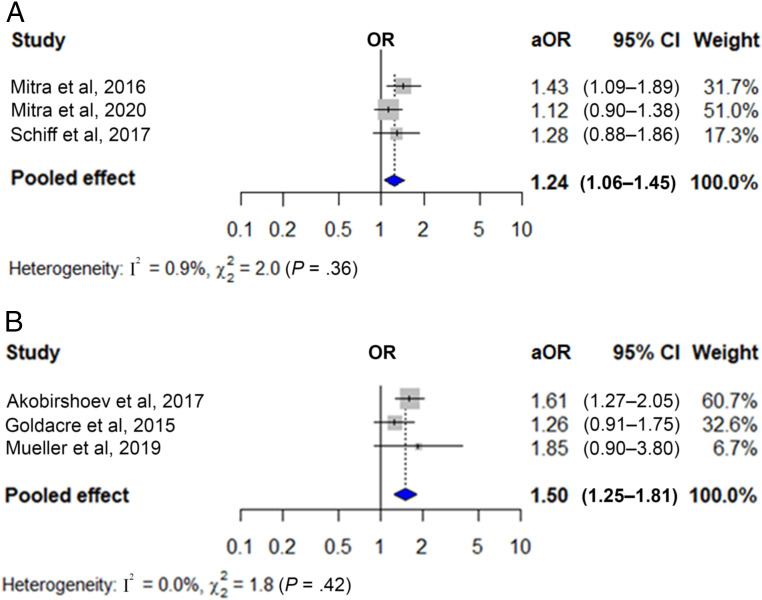
Results: Thirty-one studies, representing 20 distinct cohorts, met our inclusion criteria. Meta-analyses revealed that newborns of women with physical, sensory, and intellectual and/or developmental disabilities were at elevated risk for low birth weight and preterm birth, with smaller numbers of studies revealing elevated risk for other adverse neonatal and infant outcomes.
Limitations: Most studies had moderate (n = 9) or weak quality (n = 17), with lack of control for confounding a common limitation.
Conclusions: In future work, researchers should explore the roles of tailored preconception and perinatal care, along with family-centered pediatric care particularly in the newborn period, in mitigating adverse outcomes among offspring of women with disabilities.
Copyright © 2020 by the American Academy of Pediatrics.
Conflict of interest statement
POTENTIAL CONFLICT OF INTEREST: The authors have indicated they have no potential conflicts of interest to disclose.
Figures
Comment in
-
Health of Newborns and Infants Born to Women With Disabilities: The Life Course Perspective.Pediatrics. 2020 Dec;146(6):e2020032607. doi: 10.1542/peds.2020-032607. Epub 2020 Nov 17. Pediatrics. 2020. PMID: 33203647 No abstract available.
References
-
- World Health Organization International Classification of Functioning, Disability and Health (ICF). Geneva, Switzerland: World Health Organization; 2001
-
- The Eunice Kennedy Shriver National Institute of Child Health and Human Development. Intellectual and developmental disabilities (IDDs): condition information. 2016. Available at: https://www.nichd.nih.gov/health/topics/idds/conditioninfo/default. Accessed March 10, 2020
-
- Silver MG. Eugenics and compulsory sterilization laws: providing redress for victims of a shameful era in United States history. George Washington Law Rev. 2004;72(4):862–892 - PubMed
Publication types
MeSH terms
Grants and funding
LinkOut - more resources
Full Text Sources
Medical
Miscellaneous
