


Use of a Mortality Prediction Model in Children on Mechanical Ventilation: A 5-Year Experience in a Tertiary University Hospital
- PMID: 33204099
- PMCID: PMC7667207
- DOI: 10.2147/JMDH.S282108
Use of a Mortality Prediction Model in Children on Mechanical Ventilation: A 5-Year Experience in a Tertiary University Hospital
Abstract
Purpose: Currently, several scoring systems for predicting mortality in severely ill children who require treatment in a pediatric intensive care unit (PICU) have been established. However, despite providing high-quality care, children might develop complications that can cause rapid deterioration in health status and can lead to death. Hence, this study aimed to establish a simple early predictive mortality (SEPM) model with high specificity in identifying severely ill children who would possibly benefit from extensive mechanical ventilation during PICU admission.
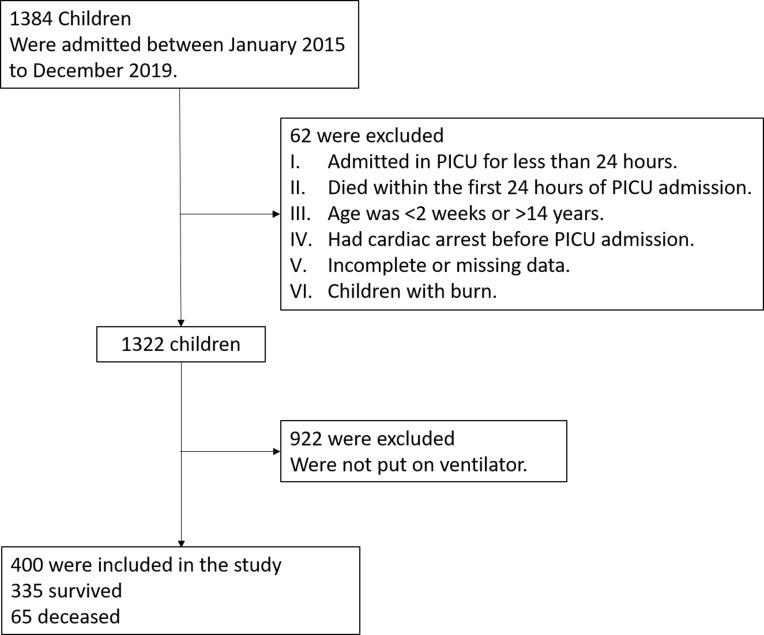
Patients and methods: This is a retrospective longitudinal study that included pediatric patients aged older than two weeks who were on mechanical ventilation and were admitted to the PICU of King Fahd Hospital of the University from January 2015 to December 2019.
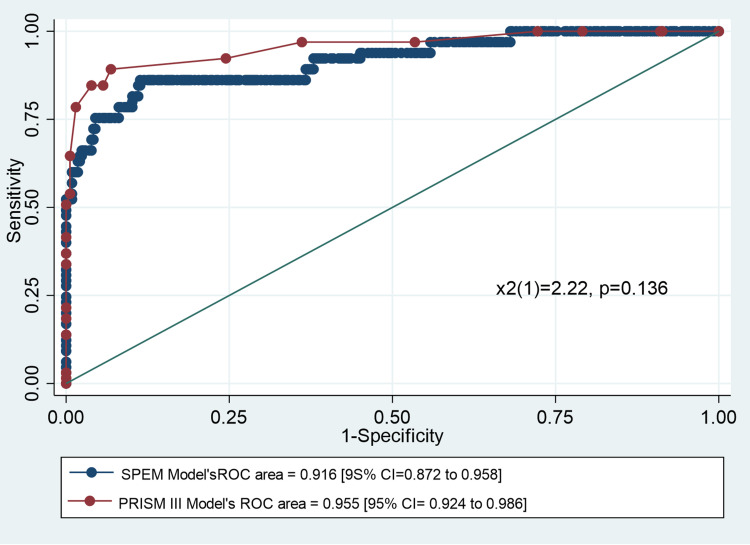
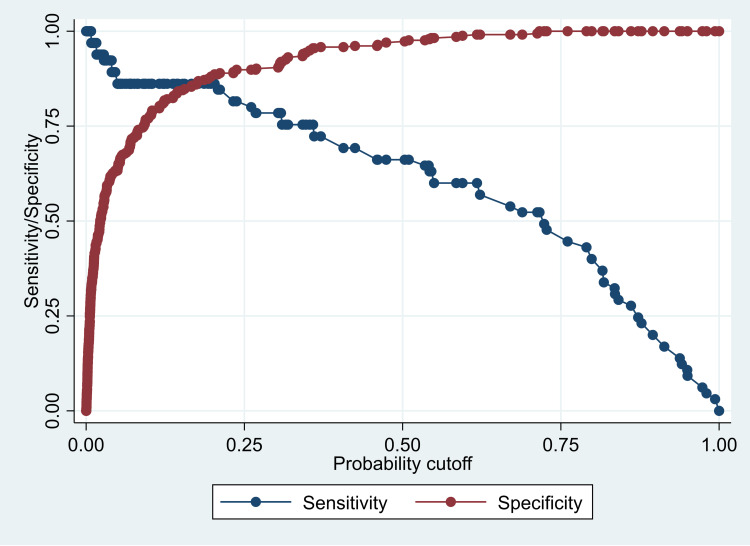
Results: In total, 400 pediatric patients were included in this study. The mortality rate of children on mechanical ventilation was 28.90%, and most deaths were associated with respiratory (n = 124 [31%]), cardiovascular (n = 76 [19%]), and neurological (n = 68 [17%]) causes. The SEPM model was reported to be effective in predicting mortality, with an accuracy, specificity, and sensitivity of 92.5%, 97.31%, and 66.15%, respectively. Moreover, the accuracy, specificity, and sensitivity of the Pediatric Risk of Mortality (PRISM) III score in predicting mortality was 95.25%, 98.51%, and 78.46%, respectively.
Conclusion: The SEPM model had a high specificity for mortality prediction. In this model, only six clinical predictors were used, which might be easily obtained in the early period of PICU admission. The ability of the SEPM model and the PRISM III score in predicting mortality in severely ill children was comparable. However, the accuracy of the newly established model in other settings should be validated, and a prospective longitudinal study that considers the effect of the treatment on the model's predictive ability must be conducted.
Keywords: mortality; pediatric intensive care unit; pediatric risk of mortality score; ventilation.
© 2020 Albuali et al.
Conflict of interest statement
The authors report no conflicts of interest in this work.
Figures
References
-
- Adoria P, Bhagwat AG. Severity scoring systems in paediatric intensive care units. Indian J Anaesth. 2008;52(5):663–675.
LinkOut - more resources
Full Text Sources
