. 2020 Nov 2:2020:2468320.
doi: 10.1155/2020/2468320. eCollection 2020.

Hemangiopericytoma: Incidence, Treatment, and Prognosis Analysis Based on SEER Database

Affiliations

Hemangiopericytoma: Incidence, Treatment, and Prognosis Analysis Based on SEER Database

Kewei Wang et al. Biomed Res Int. .

Abstract

Background: Hemangiopericytomas are rare tumors derived from pericytes surrounding the blood vessels. The clinicopathological characteristics and prognosis of hemangiopericytoma patients remain mostly unknown. In this retrospective cohort study, we assessed the clinicopathological characteristics of hemangiopericytoma patients, as well as the clinical usefulness of different treatment modalities. Material and Methods. We collected the clinicopathological data (between 1975 and 2016) of hemangiopericytoma and hemangioendothelioma patients from the Surveillance, Epidemiology, and End Results (SEER) database. Incidence, treatment, and patient prognosis were assessed.

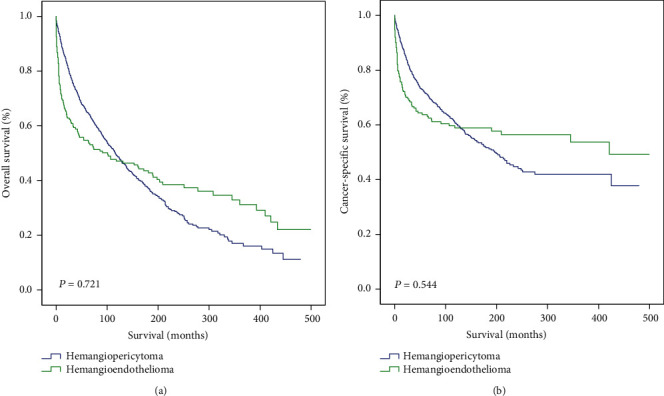
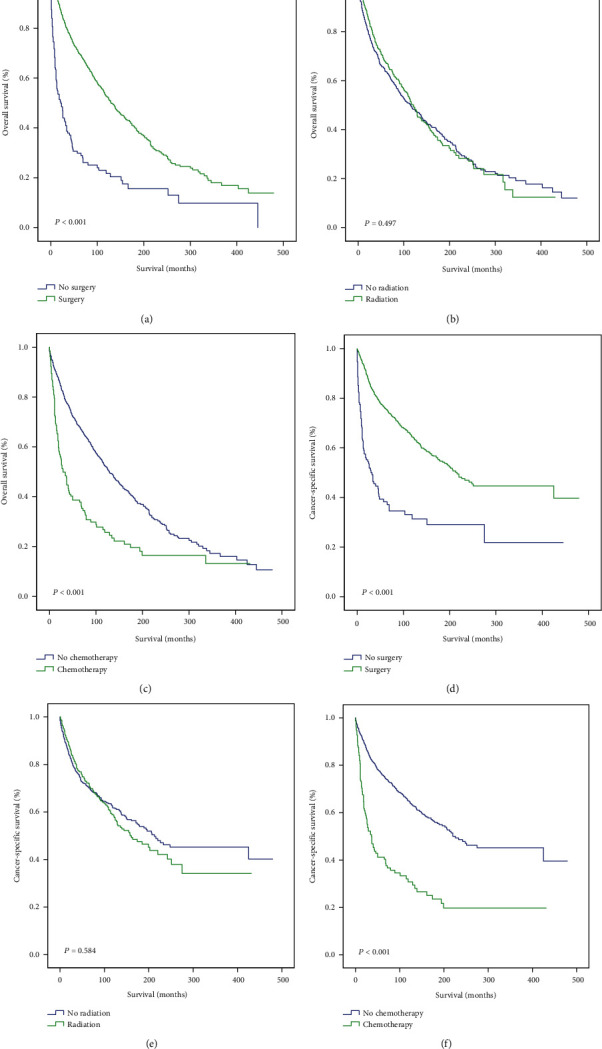
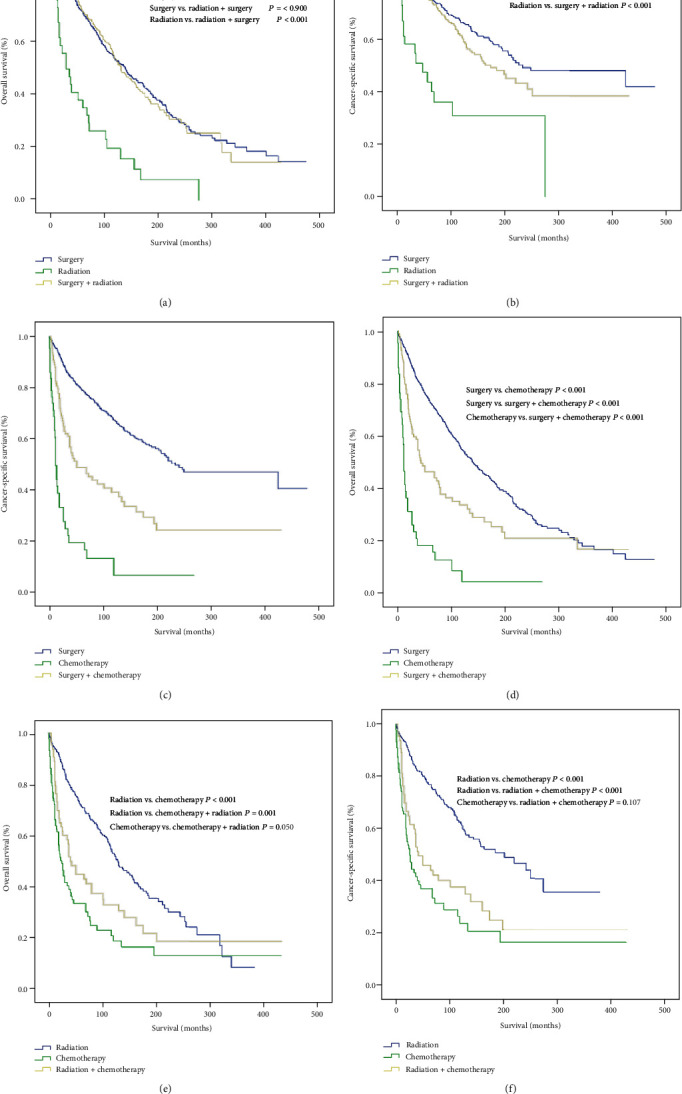
Results: Data from 1474 patients were analyzed in our study cohort (hemangiopericytoma: n = 1243; hemangioendothelioma: n = 231). The incidence of hemangiopericytoma in 2016 was 0.060 per 100,000 individuals. The overall survival (OS) and cancer-specific survival (CSS) did not differ between patients with hemangioendothelioma and those with hemangiopericytoma (P = 0.721, P = 0.544). The tumor grade had no effect on the OS of hemangiopericytoma patients. Multivariate analysis revealed the clinical usefulness of surgery in hemangiopericytoma patients (HR = 0.15, 95% confidence interval: 0.05-0.41, P < 0.001). In contrast, radiotherapy did not improve OS (P = 0.497) or CSS (P = 0.584), and chemotherapy worsened patient survival (P < 0.001). Additionally, the combination of surgery and radiotherapy had a similar effect with surgery alone on hemangiopericytoma patient survival (OS: P = 0.900; CSS: P = 0.156). Surgery plus chemotherapy provided a worse clinical benefit than surgery alone (P < 0.001).

Conclusions: Our findings suggested that hemangiopericytoma had a similar prognosis with hemangioendothelioma. Surgery was the only effective treatment that provided survival benefits in hemangiopericytoma patients, while the clinical usefulness of adjuvant chemotherapy or radiotherapy was limited.


Conflict of interest statement

There is no potential conflict of interest.

Figures
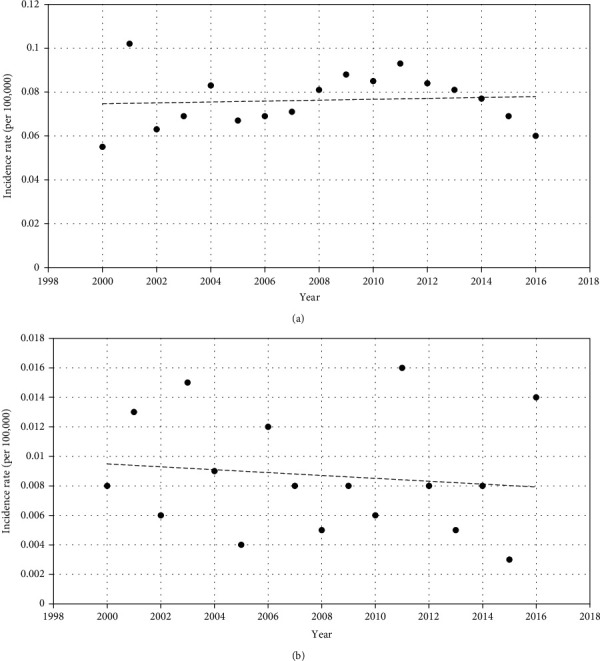
Figure 1
Figure 1
(a, b) Incidence of hemangiopericytoma (a) and hemangioendothelioma (b). Rates per 100,000 individuals are provided, and patient ages are adjusted as per the 2000 US Standard Population standard.
Figure 2
Figure 2
(a, b) Overall survival (a) and cancer-specific survival (b) of hemangiopericytoma and hemangioendothelioma patients. P values < 0.05 were considered statistically significant.
Figure 3
Figure 3
Outcomes of different treatments in hemangiopericytoma patients. OS (a–c) and CSS (d–f) of hemangiopericytoma patients treated with surgery vs. no surgery (a, d), radiotherapy vs. no radiotherapy (b, e), and chemotherapy vs. no chemotherapy (c, f). OS: overall survival; CSS: cancer-specific survival. P values < 0.05 were considered statistically significant.
Figure 4
Figure 4
Outcomes of different monotherapies and combination therapies in hemangiopericytoma patients. OS and CSS of patients treated with surgery, radiotherapy, and surgery plus radiotherapy (a, b); surgery, chemotherapy, and surgery plus chemotherapy (c, d); radiotherapy, chemotherapy, and radiotherapy plus chemotherapy (e, f). OS: overall survival; CSS: cancer-specific survival. P values < 0.05 were considered statistically significant.

References

    1. Stout A. P. Hemangiopericytoma; a study of 25 cases. Cancer. 1949;2(6):1027–1054. doi: 10.1002/1097-0142(194911)2:6<1027::AID-CNCR2820020609>3.0.CO;2-R. - DOI - PubMed
    1. Lee P., Malik D., Perkons N., et al. Targeting glutamine metabolism slows soft tissue sarcoma growth. Nature Communications. 2020;11(1):p. 498. doi: 10.1038/s41467-020-14374-1. - DOI - PMC - PubMed
    1. Blay J. Y., Honoré C., Stoeckle E., et al. Surgery in reference centers improves survival of sarcoma patients: a nationwide study. Annals of Oncology. 2019;30(7):1143–1153. doi: 10.1093/annonc/mdz124. - DOI - PMC - PubMed
    1. Fritchie K., Jensch K., Moskalev E. A., et al. The impact of histopathology and NAB2-STAT6 fusion subtype in classification and grading of meningeal solitary fibrous tumor/hemangiopericytoma. Acta Neuropathologica. 2019;137(2):307–319. doi: 10.1007/s00401-018-1952-6. - DOI - PMC - PubMed
    1. Kim B. S., Kim Y., Kong D. S., et al. Clinical outcomes of intracranial solitary fibrous tumor and hemangiopericytoma: analysis according to the 2016 WHO classification of central nervous system tumors. Journal of Neurosurgery. 2018;129(6):1384–1396. doi: 10.3171/2017.7.JNS171226. - DOI - PubMed

MeSH terms

LinkOut - more resources