


Severe acute respiratory syndrome coronavirus-2 natural animal reservoirs and experimental models: systematic review
- PMID: 33206434
- PMCID: PMC7744864
- DOI: 10.1002/rmv.2196
Severe acute respiratory syndrome coronavirus-2 natural animal reservoirs and experimental models: systematic review
Abstract
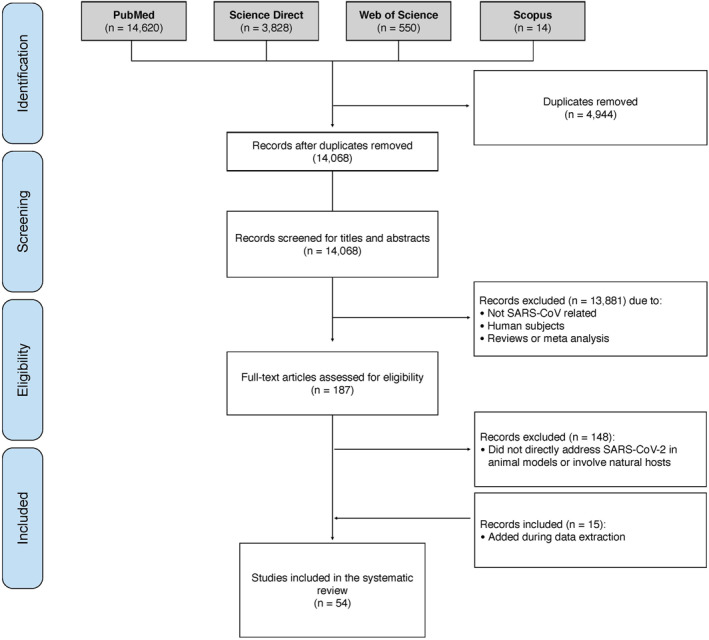
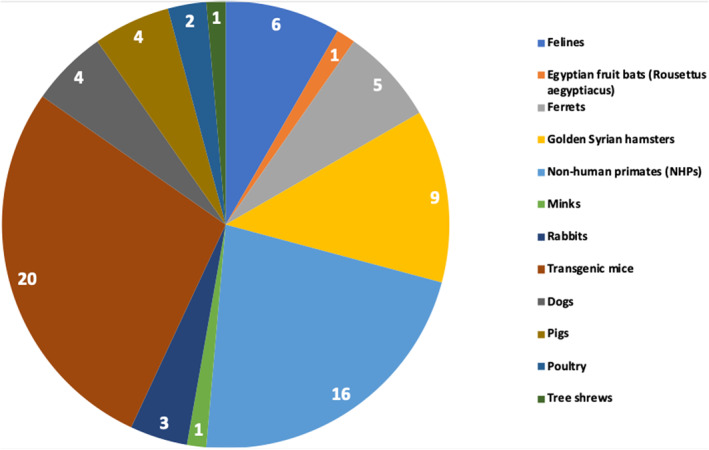
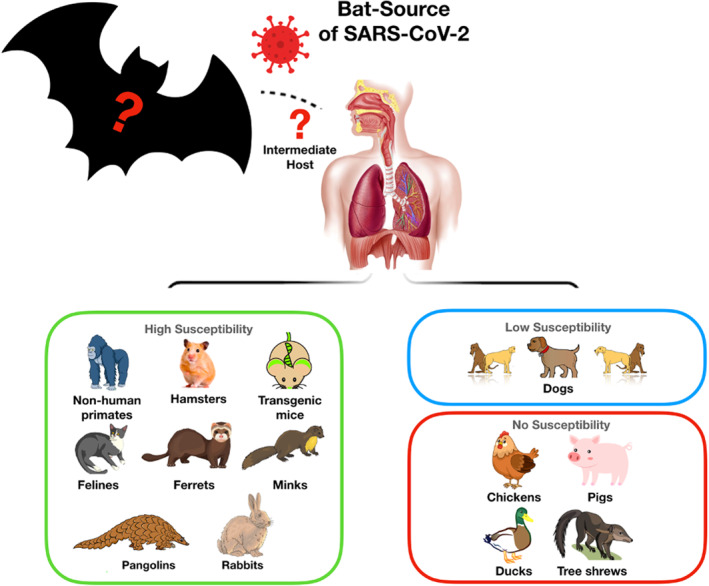
The current severe acute respiratory syndrome coronavirus-2 (SARS-CoV-2) outbreak has been rapidly spreading worldwide, causing serious global concern. The role that animal hosts play in disease transmission is still understudied and researchers wish to find suitable animal models for fundamental research and drug discovery. In this systematic review, we aimed to compile and discuss all articles that describe experimental or natural infections with SARS-CoV-2, from the initial discovery of the virus in December 2019 through to October 2020. We systematically searched four databases (Scopus, PubMed, Science Direct and Web of Science). The following data were extracted from the included studies: type of infection (natural or experimental), age, sample numbers, dose, route of inoculation, viral replication, detection method, clinical symptoms and transmission. Fifty-four studies were included, of which 34 were conducted on animal reservoirs (naturally or experimentally infected), and 20 involved models for testing vaccines and therapeutics. Our search revealed that Rousettus aegyptiacus (fruit bats), pangolins, felines, mink, ferrets and rabbits were all susceptible to SARS-CoV-2, while dogs were weakly susceptible and pigs, poultry, and tree shrews were not. In addition, virus replication in mice, mink, hamsters and ferrets resembled subclinical human infection, so these animals might serve as useful models for future studies to evaluate vaccines or antiviral agents and to study host-pathogen interactions. Our review comprehensively summarized current evidence on SARS-CoV-2 infection in animals and their usefulness as models for studying vaccines and antiviral drugs. Our findings may direct future studies for vaccine development, antiviral drugs and therapeutic agents to manage SARS-CoV-2-caused diseases.
Keywords: Covid-19; SARS-CoV-2; animal hosts; animal models; therapeutic agents; vaccines.
© 2020 The Authors. Reviews in Medical Virology published by John Wiley & Sons Ltd.
Conflict of interest statement
The authors declare that they have no competing interests.
Figures
References
-
- WHO . WHO Coronavirus disease (COVID‐19) [Online; WHO; cited 28 Jun 2020]. 2020. Available from https://covid19.who.int.
-
- Liu DX, Liang JQ, Fung TS. Human coronavirus‐229E, ‐OC43, ‐NL63, and ‐HKU1. Life Sci. 2020. B978‐0‐12‐809633‐8.21501‐X.
Publication types
MeSH terms
Grants and funding
LinkOut - more resources
Full Text Sources
Medical
Miscellaneous
