


Effects of Dog-Based Animal-Assisted Interventions in Prison Population: A Systematic Review
- PMID: 33207818
- PMCID: PMC7697666
- DOI: 10.3390/ani10112129
Effects of Dog-Based Animal-Assisted Interventions in Prison Population: A Systematic Review
Abstract
Background: Animal-assisted interventions, in concrete dog-assisted intervention, have been introduced in prisons to reduce recidivism as well as to improve the well-being of prisoners. Therefore, the aim of the present systematic review is to provide an up-to-date analysis of the research on the effects of dog-based animal-assisted therapy in prison population.
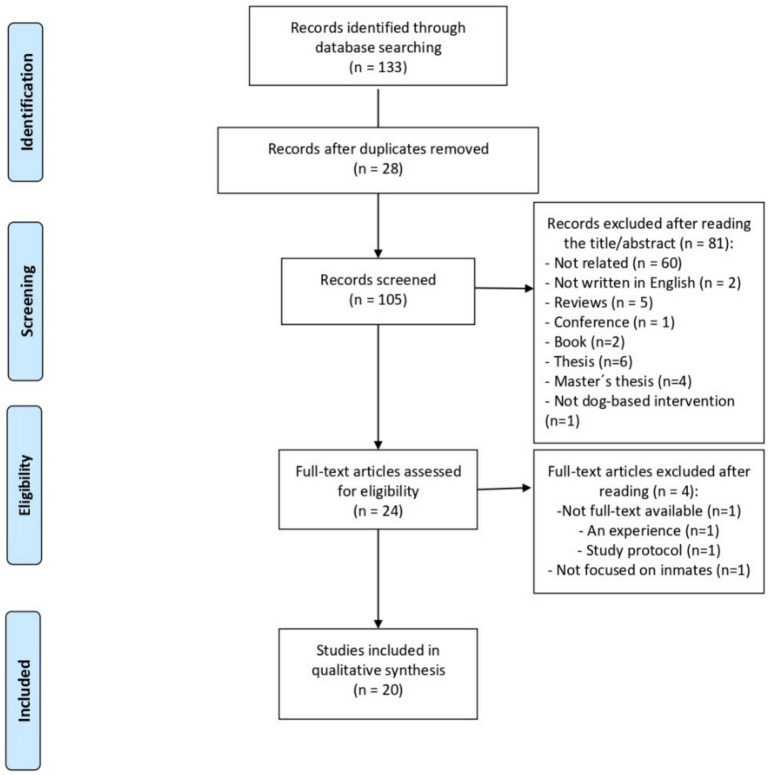
Methods: An electronic search of the literature was performed, and 20 articles were included. The PRISMA guideline methodology was employed.
Results: Included studies involved a total of 1577 participants. The vast majority of protocols included activities related with dog training, dog caring, or activities, which included vocational or educational components. Duration of dog-based therapies ranged between 60 and 120 min, with the frequency being between 1 and 3 days/week. Statistically significant improvements in prisoners were observed in 13 studies.
Conclusions: Dog-based animal-assisted therapy may improve anxiety, stress, recidivism, and other social variables in male or female inmates.
Keywords: animal-assisted therapy; anxiety; dog therapy; inmates; prison; recidivism; stress.
Conflict of interest statement
The authors declare no conflict of interest.
Figures
References
-
- Hockenberry S., Puzzanchera C. Juvenile Court Statistics. [(accessed on 16 November 2020)];2015 Available online: http://hdl.handle.net/11212/1194.
-
- Lahey B.B., Waldman I.D., McBurnett K. Annotation: The development of antisocial behavior: An integrative causal model. J. Child Psychol. Psychiatry Allied Discip. 1999;40:669–682. - PubMed
-
- Leskelä U., Rytsälä H., Komulainen E., Melartin T., Sokero P., Lestelä-Mielonen P., Isometsä E. The influence of adversity and perceived social support on the outcome of major depressive disorder in subjects with different levels of depressive symptoms. Psychol. Med. 2006;36:779–788. - PubMed
-
- Armistead L., Wierson M., Forehand R., Frame C. Psychopathology in incarcerated juvenile delinquents: Does it extend beyond externalizing problems? Adolescence. 1992;27:309. - PubMed
Publication types
LinkOut - more resources
Full Text Sources
