


Trained Immunity and Cardiometabolic Disease: The Role of Bone Marrow
- PMID: 33207931
- PMCID: PMC7769996
- DOI: 10.1161/ATVBAHA.120.314215
Trained Immunity and Cardiometabolic Disease: The Role of Bone Marrow
Abstract
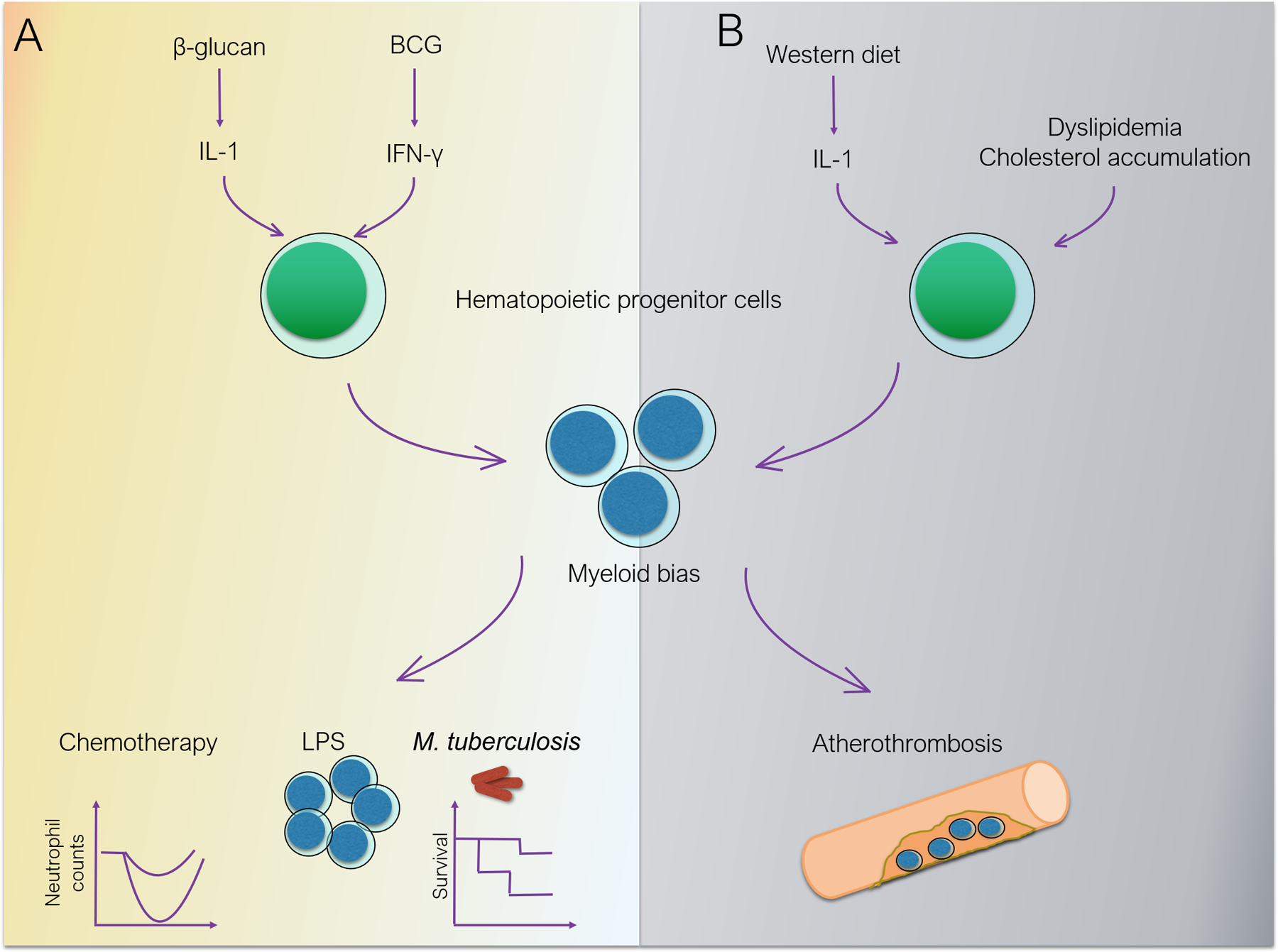
Until recently, immunologic memory was considered an exclusive characteristic of adaptive immunity. However, recent advances suggest that the innate arm of the immune system can also mount a type of nonspecific memory responses. Innate immune cells can elicit a robust response to subsequent inflammatory challenges after initial activation by certain stimuli, such as fungal-derived agents or vaccines. This type of memory, termed trained innate immunity (also named innate immune memory), is associated with epigenetic and metabolic alterations. Hematopoietic progenitor cells, which are the cells responsible for the generation of mature myeloid cells at steady-state and during inflammation, have a critical contribution to the induction of innate immune memory. Inflammation-triggered alterations in cellular metabolism, the epigenome and transcriptome of hematopoietic progenitor cells in the bone marrow promote long-lasting functional changes, resulting in increased myelopoiesis and consequent generation of trained innate immune cells. In the present brief review, we focus on the involvement of hematopoietic progenitors in the process of trained innate immunity and its possible role in cardiometabolic disease.
Keywords: bone marrow; hematopoietic stem cells; immune system; inflammation; myelopoiesis; vaccines.
Conflict of interest statement
Disclosure
The authors disclose no conflict of interest.
Figures
References
-
- WHO | Vaccination greatly reduces disease, disability, death and inequity worldwide. WHO. Accessed March 30, 2020 https://www.who.int/bulletin/volumes/86/2/07-040089/en/ - PMC - PubMed
Publication types
MeSH terms
Grants and funding
LinkOut - more resources
Full Text Sources
Medical
