Moderation of Prazosin's Efficacy by Alcohol Withdrawal Symptoms
- PMID: 33207935
- PMCID: PMC8119326
- DOI: 10.1176/appi.ajp.2020.20050609
Moderation of Prazosin's Efficacy by Alcohol Withdrawal Symptoms
Abstract
Objective: Alcohol use disorder (AUD) is a leading cause of global disease burden. Chronic, heavy use increases the likelihood of alcohol withdrawal symptoms and associated secondary outcomes of alcohol craving and mood, anxiety, and sleep disturbances, which are predictive of poor treatment outcomes. The authors examined whether alcohol withdrawal symptoms moderate the efficacy of prazosin in reducing alcohol intake and associated secondary outcomes.
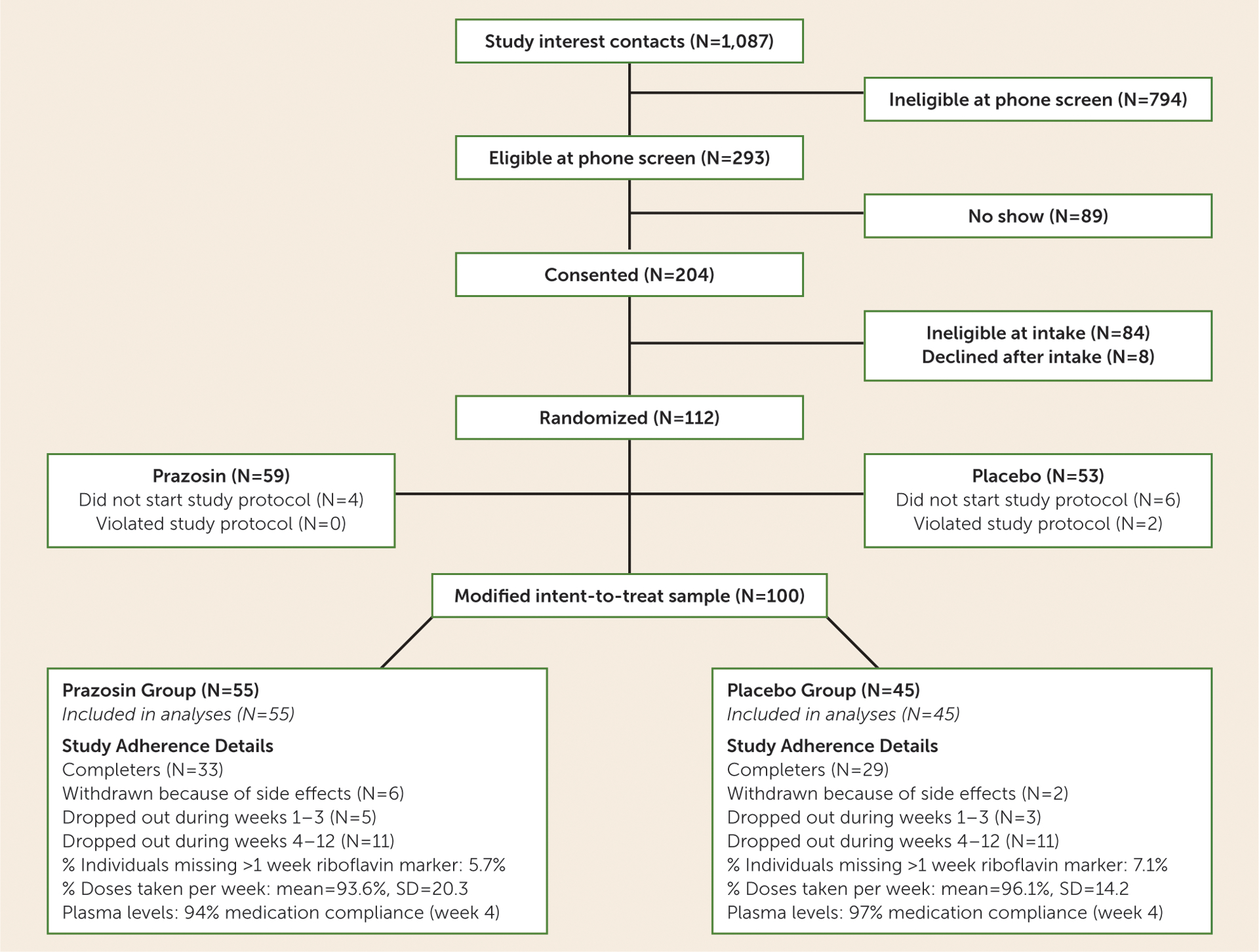
Methods: A 12-week, double-blind, randomized, controlled proof-of-concept trial of prazosin (16 mg/day, with a 2-week titration) was conducted in community-recruited adults with current alcohol dependence (N=100) with varying levels of alcohol withdrawal symptoms assessed at treatment entry. Primary outcomes were daily self-reported drinking days and heavy drinking days, and secondary outcomes were average drinks/day and mood, anxiety, craving, and sleep quality ratings.
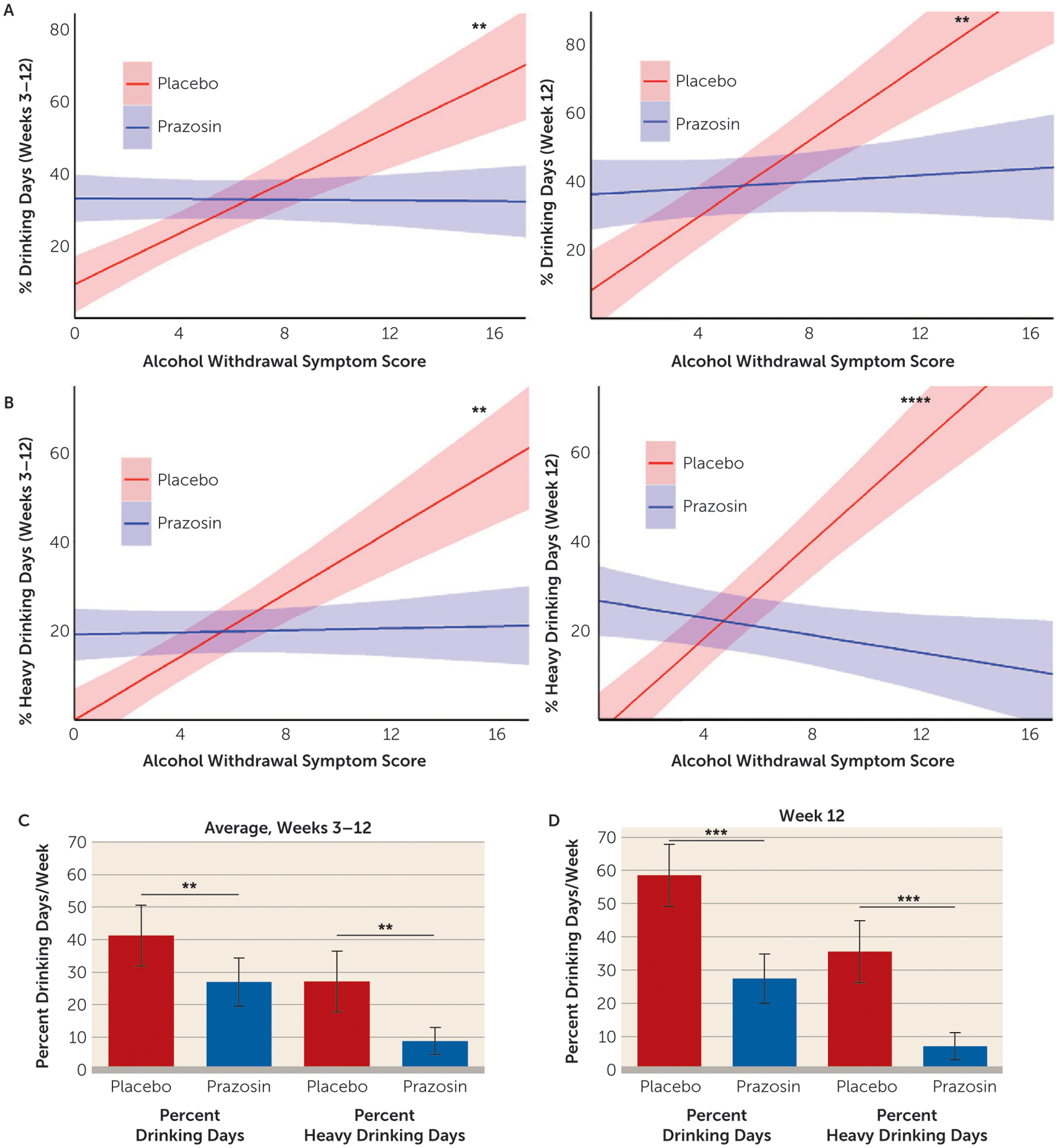
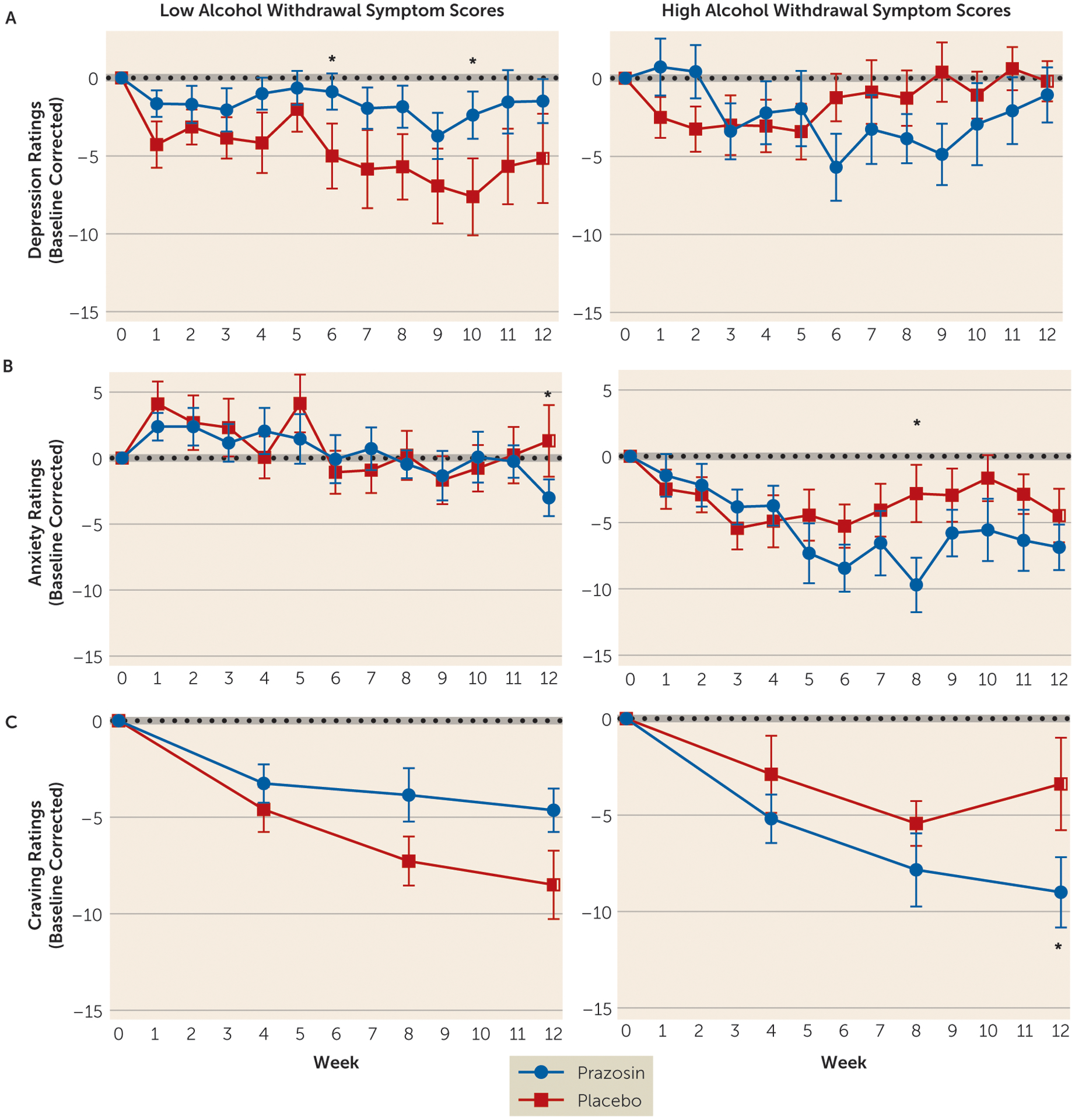
Results: Modified intent-to-treat analyses indicated a significant interaction of alcohol withdrawal symptom score by treatment by full-dose treatment period (weeks 3-12) for drinking days, heavy drinking days, and average drinks/day. By week 12, participants with high alcohol withdrawal symptoms on prazosin reported 7.07% heavy drinking days and 27.46% drinking days, while those on placebo had 35.58% heavy drinking days and 58.47% drinking days (heavy drinking days: odds ratio=0.14, 95% CI=0.058, 0.333; drinking days: odds ratio=0.265, 95% CI=0.146, 0.481). No such benefit of prazosin was observed in those reporting low or no alcohol withdrawal symptoms. Individuals with high alcohol withdrawal symptoms on prazosin compared with placebo also showed significantly improved anxiety, depression, and alcohol craving over the course of the trial.
Conclusions: The findings indicate that alcohol withdrawal symptoms are a significant moderator of prazosin treatment response for alcohol use outcomes and for associated symptoms of alcohol craving, anxiety, and mood symptoms. These data support further evaluation of alcohol withdrawal symptoms as a prognostic indicator of prazosin's efficacy in the treatment of AUD.
Keywords: Alcohol Use Disorder; Alcohol Withdrawal Symptoms; Prazosin.
Conflict of interest statement
The authors report no financial relationships with commercial interests.
Figures
Comment in
-
Medications to Treat Alcohol Use Disorder: Targeting the Dark Side.Am J Psychiatry. 2021 May 1;178(5):375-377. doi: 10.1176/appi.ajp.2021.21030286. Am J Psychiatry. 2021. PMID: 33979539 No abstract available.
-
Prazosin for Alcohol Use Disorder: A Clarification.J Clin Psychiatry. 2021 Sep 21;82(6):21lr14076. doi: 10.4088/JCP.21lr14076. J Clin Psychiatry. 2021. PMID: 34551219 No abstract available.
References
-
- Garbutt JC: The state of pharmacotherapy for the treatment of alcohol dependence. J Subst Abuse Treat 2009; 36:S15–S23 - PubMed
-
- Litten RZ, Ryan ML, Falk DE, et al. : Heterogeneity of alcohol use disorder: understanding mechanisms to advance personalized treatment. Alcohol Clin Exp Res 2015; 39:579–584 - PubMed
Publication types
MeSH terms
Substances
Grants and funding
LinkOut - more resources
Full Text Sources
Other Literature Sources
Medical