


Adding flexibility to clinical trial designs: an example-based guide to the practical use of adaptive designs
- PMID: 33208155
- PMCID: PMC7677786
- DOI: 10.1186/s12916-020-01808-2
Adding flexibility to clinical trial designs: an example-based guide to the practical use of adaptive designs
Abstract
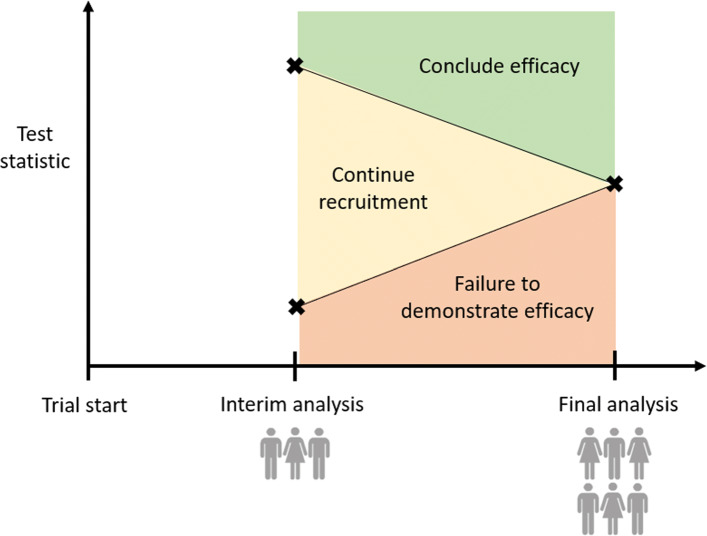
Adaptive designs for clinical trials permit alterations to a study in response to accumulating data in order to make trials more flexible, ethical, and efficient. These benefits are achieved while preserving the integrity and validity of the trial, through the pre-specification and proper adjustment for the possible alterations during the course of the trial. Despite much research in the statistical literature highlighting the potential advantages of adaptive designs over traditional fixed designs, the uptake of such methods in clinical research has been slow. One major reason for this is that different adaptations to trial designs, as well as their advantages and limitations, remain unfamiliar to large parts of the clinical community. The aim of this paper is to clarify where adaptive designs can be used to address specific questions of scientific interest; we introduce the main features of adaptive designs and commonly used terminology, highlighting their utility and pitfalls, and illustrate their use through case studies of adaptive trials ranging from early-phase dose escalation to confirmatory phase III studies.
Keywords: Efficient methods; Enrichment designs; Innovative trials; Multi-arm multi-stage platform trials; Novel designs.
Conflict of interest statement
The authors declare that they have no competing interests.
Figures
References
-
- Friedman L, Furberg C, DeMets D, Reboussin D, Granger C, et al. Fundamentals of clinical trials, vol. 4. New York: Springer; 2010.
-
- Pocock S. Group sequential methods in the design and analysis of clinical trials. Biometrika. 1977;64(2):191–9. doi: 10.1093/biomet/64.2.191. - DOI
Publication types
MeSH terms
Grants and funding
- MC UU 0002/14/MRC_/Medical Research Council/United Kingdom
- NIHR300576/National Institute for Health Research/International
- MR/L004933/1/MRC_/Medical Research Council/United Kingdom
- NIHR300576/DH_/Department of Health/United Kingdom
- NIHR-SRF-2015-08-001/National Institute for Health Research/International
LinkOut - more resources
Full Text Sources
Medical
