. 2020 Nov 18;6(47):eabc5911.
doi: 10.1126/sciadv.abc5911. Print 2020 Nov.

Engineered mutant α-ENaC subunit mRNA delivered by lipid nanoparticles reduces amiloride currents in cystic fibrosis-based cell and mice models

Affiliations

Engineered mutant α-ENaC subunit mRNA delivered by lipid nanoparticles reduces amiloride currents in cystic fibrosis-based cell and mice models

Anindit Mukherjee et al. Sci Adv. .

Abstract

Cystic fibrosis (CF) results from mutations in the chloride-conducting CF transmembrane conductance regulator (CFTR) gene. Airway dehydration and impaired mucociliary clearance in CF is proposed to result in tonic epithelial sodium channel (ENaC) activity, which drives amiloride-sensitive electrogenic sodium absorption. Decreasing sodium absorption by inhibiting ENaC can reverse airway surface liquid dehydration. Here, we inhibit endogenous heterotrimeric ENaC channels by introducing inactivating mutant ENaC α mRNA (αmutENaC). Lipid nanoparticles carrying αmutENaC were transfected in CF-based airway cells in vitro and in vivo. We observed a significant decrease in macroscopic as well as amiloride-sensitive ENaC currents and an increase in airway surface liquid height in CF airway cells. Similarly, intranasal transfection of αmutENaC mRNA decreased amiloride-sensitive nasal potential difference in CFTRKO mice. These data suggest that mRNA-based ENaC inhibition is a powerful strategy for reducing mucus dehydration and has therapeutic potential for treating CF in all patients, independent of genotype.


Figures

Fig. 1
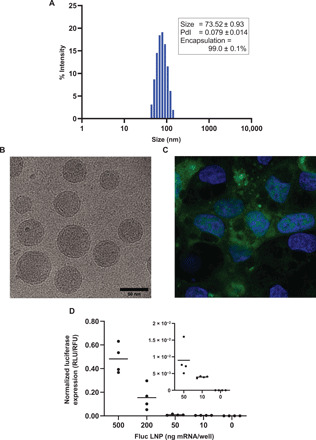
Fig. 1. LNP characterization and in vitro mRNA transfection.
(A) Dynamic light scattering analysis of LNP size distribution and mRNA encapsulation of the LNP encapsulating αmutENaC mRNA (n = 3). (B) Cryo-EM imaging of the LNPs encapsulating FLuc mRNA. (C) Imaging expression of EGFP transfection in CFBE41o- cells using LNPs encapsulating EGFP mRNA. (D) Measuring luminescence (FLuc)–based expression of firefly luciferase in CFBE41o- cells, with LNPs encapsulating FLuc mRNA (n = 4). Inset: Rescaled y axis for visualization of luminescence with 50, 10, and 0 ng per well transfection of FLuc mRNA. RLU, relative luminescence units; RFU, relative fluorescent units.
Fig. 2
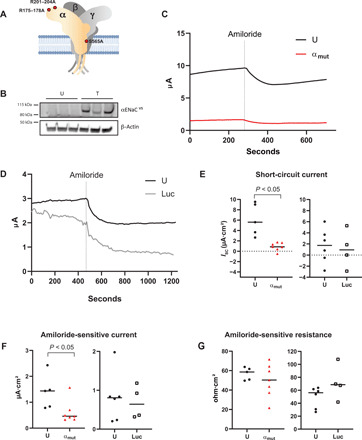
Fig. 2. αmutENaC transfection reduces amiloride-sensitive ENaC current in airway cell.
(A) α ENaC subunit mRNA was mutated (red dots) at the furin cleavage sites (R175, 177, 178 and R204, 202, 201) and the degenerin site (S565) to alanine. Trimeric ENaC channel is shown. The α subunit is colored yellow; the β and γ subunits are in gray. Each subunit is shown to have cytosolic, transmembrane, and extracellular domains. (B) Western blot of CFBE41o- cell extracts 72 hours after transfection (T), with LNPs encapsulating 750 ng of C-terminal V5 epitope–tagged αmutENaCV5 mRNA (n = 3). Untransfected (U) cells were used as controls (n = 3). The blots were probed using anti-V5 antibody. β-Actin was used as a gel loading control. Polarized CFBE41o- cells were transfected with lipid nanoparticles containing (C) αmutENaC (U, n = 5; αmut, n = 7) [untransfected (U), black line; αmut transfected (αmut), red line] or (D) luciferase [luciferase-transfected (Luc), gray line] (U, n = 6; Luc, n = 4) mRNAs, and short-circuit currents (ISC) were recorded after 72 hours. Statistical analyses were performed using experimental values of (E) short circuit currents (ISC) before amiloride treatment, (F) amiloride-sensitive ISC, and (G) amiloride-sensitive resistance. P values are indicated in the panels. U, untransfected (solid black circle); αmut, αmutENaC-transfected (red triangle); and Luc, luciferase-transfected (open square).
Fig. 3
Fig. 3. αmutENaC transfection increases ASL height in airway cells.
ASL height was measured in polarized CFBE41o- or WT CFTR stably overexpressing CFBE-WT cells. (A) Representative 3D-rendered confocal images of polarized CFBE-WT (WT, top), untransfected (U, middle), and αmutENaC-transfected CFBE41o- cells (αmut, bottom). Cells were labeled with calcein (green), and the ASL was labeled with cell-impermeant rhodamine-dextran (red). ASL height of (height of rhodamine-dextran) untransfected CFBE41o- (U) cells was compared with that of (B) CFBE-WT (U_WT, n = 3) and (C) αmutENaC-transfected CFBE41o- cells (αmut, n = 6). Colored shapes indicate average ASL height of each of the six points on an insert: Statistical analyses were performed between mean ASL height of untransfected [U_Mean, solid black circles (B) or solid black diamonds (C)] and CFBE-WT (U_WT_Mean, solid gray circles) or αmutENaC-transfected CFBE41o- cells (U_αmut_Mean, solid gray diamonds). The P values are indicated.
Fig. 4
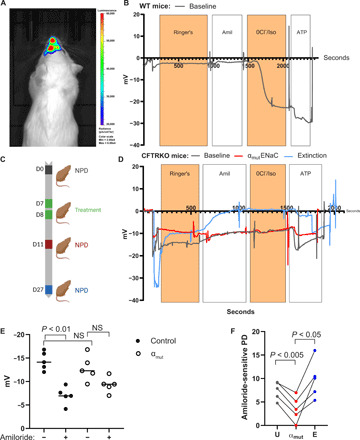
Fig. 4. αmutENaC transfection reduced amiloride-sensitive NPD in CFTRKO mice.
(A) In vivo luciferase expression was detected in a mouse treated with LNP encapsulating FLuc mRNA by intranasal instillation. Photo credit: Jeonghwan Kim, Oregon State University. (B) Representative NPD trace of WT mouse. (C) Timeline of LNP dosing and NPD recordings on CFTRKO mice. Color of each NPD recording time marker corresponds to the color of the NPD traces in the next panel. (D) Representative NPD traces of untransfected (gray line) and 72-hour αmutENaC-transfected (red line) and extinction of dosed LNP (blue line) on CFTRKO mice. (E) NPD values of untransfected (solid circles) and 72-hour αmutENaC-transfected (open circles) before and after amiloride treatment were graphically plotted. NS, not significant. (F) Amiloride-sensitive NPD traces of untransfected (gray circles) and 72-hour αmutENaC-transfected (red circles) and extinction recordings (blue circles) were measured and tracked in the same animal. The P values are indicated in the panels.
Fig. 5
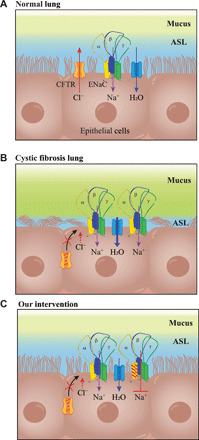
Fig. 5. Reduction of ENaC activity by αmutENaC in CF epithelium.
(A) Normal lung: Channels and transporters involved in maintaining ASL liquid height. (B) CF lung: Defect in CFTR protein leads to excessive sodium absorption by ENaC, resulting in excessive transcellular water absorption by aquaporin channels, leading to dehydration of ASL, mucus buildup, and obstruction of ciliary movement. (C) Our intervention: Reduction of ENaC activity by mutant α ENaC subunit restores ASL height in CF epithelia.

References

    1. Jiang C., Finkbeiner W. E., Widdicombe J. H., McCray P. B. Jr., Miller S. S., Altered fluid transport across airway epithelium in cystic fibrosis. Science 262, 424–427 (1993). - PubMed
    1. Rowntree R. K., Harris A., The phenotypic consequences of CFTR mutations. Ann. Hum. Genet. 67 ( Pt 5), 471–485 (2003). - PubMed
    1. Heijerman H. G. M., McKone E. F., Downey D. G., Van Braeckel E., Rowe S. M., Tullis E., Mall M. A., Welter J. J., Ramsey B. W., McKee C. M., Marigowda G., Moskowitz S. M., Waltz D., Sosnay P. R., Simard C., Ahluwalia N., Xuan F., Zhang Y., Taylor-Cousar J. L., McCoy K. S., McCoy K., Donaldson S., Walker S., Chmiel J., Rubenstein R., Froh D. K., Neuringer I., Jain M., Moffett K., Taylor-Cousar J. L., Barnett B., Mueller G., Flume P., Livingston F., Mehdi N., Teneback C., Welter J., Jain R., Kissner D., Patel K., Calimano F. J., Johannes J., Daines C., Keens T., Scher H., Chittivelu S., Reddivalam S., Klingsberg R. C., Johnson L. G., Verhulst S., Macedo P., Downey D., Connett G., Nash E., Withers N., Lee T., Bakker M., Heijerman H., Vermeulen F., Van Braeckel E., Knoop C., De Wachter E., van der Meer R., Merkus P., Majoor C., Efficacy and safety of the elexacaftor plus tezacaftor plus ivacaftor combination regimen in people with cystic fibrosis homozygous for the F508del mutation: A double-blind, randomised, phase 3 trial. Lancet 394, 1940–1948 (2019). - PMC - PubMed
    1. Alton E. W. F. W., Boyd A. C., Porteous D. J., Davies G., Davies J. C., Griesenbach U., Higgins T. E., Gill D. R., Hyde S. C., Innes J. A.; UK Cystic Fibrosis Gene Therapy Consortium , A phase I/IIa safety and efficacy study of nebulized liposome-mediated gene therapy for cystic fibrosis supports a multidose trial. Am. J. Respir. Crit. Care Med. 192, 1389–1392 (2015). - PMC - PubMed
    1. Davies J. C., Moskowitz S. M., Brown C., Horsley A., Mall M. A., McKone E. F., Plant B. J., Prais D., Ramsey B. W., Taylor-Cousar J. L., Tullis E., Uluer A., McKee C. M., Robertson S., Shilling R. A., Simard C., Van Goor F., Waltz D., Xuan F., Young T., Rowe S. M.; VX16-659-101 Study Group , VX-659–tezacaftor–ivacaftor in patients with cystic fibrosis and one or two Phe508del alleles. N. Engl. J. Med. 379, 1599–1611 (2018). - PMC - PubMed

Publication types