. 2021 Feb 2;96(5):e719-e731.
doi: 10.1212/WNL.0000000000011217. Epub 2020 Nov 18.

Association of MRI Brain Injury With Outcome After Pediatric Out-of-Hospital Cardiac Arrest

Affiliations

Association of MRI Brain Injury With Outcome After Pediatric Out-of-Hospital Cardiac Arrest

Matthew P Kirschen et al. Neurology. .

Abstract

Objective: To determine the association between the extent of diffusion restriction and T2/fluid-attenuated inversion recovery (FLAIR) injury on brain MRI and outcomes after pediatric out-of-hospital cardiac arrest (OHCA).

Methods: Diffusion restriction and T2/FLAIR injury were described according to the pediatric MRI modification of the Alberta Stroke Program Early Computed Tomography Score (modsASPECTS) for children from 2005 to 2013 who had an MRI within 14 days of OHCA. The primary outcome was unfavorable neurologic outcome defined as ≥1 change in Pediatric Cerebral Performance Category (PCPC) from baseline resulting in a hospital discharge PCPC score 3, 4, 5, or 6. Patients with unfavorable outcomes were further categorized into alive with PCPC 3-5, dead due to withdrawal of life-sustaining therapies for poor neurologic prognosis (WLST-neuro), or dead by neurologic criteria.

Results: We evaluated MRI scans from 77 patients (median age 2.21 [interquartile range 0.44, 13.07] years) performed 4 (2, 6) days postarrest. Patients with unfavorable outcomes had more extensive diffusion restriction (median 7 [4, 10.3] vs 0 [0, 0] regions, p < 0.001) and T2/FLAIR injury (5.5 [2.3, 8.2] vs 0 [0, 0.75] regions, p < 0.001) compared to patients with favorable outcomes. Area under the receiver operating characteristic curve for the extent of diffusion restriction and unfavorable outcome was 0.96 (95% confidence interval [CI] 0.91, 0.99) and 0.92 (95% CI 0.85, 0.97) for T2/FLAIR injury. There was no difference in extent of diffusion restriction between patients who were alive with an unfavorable outcome and patients who died from WLST-neuro (p = 0.11).

Conclusions: More extensive diffusion restriction and T2/FLAIR injury on the modsASPECTS score within the first 14 days after pediatric cardiac arrest was associated with unfavorable outcomes at hospital discharge.


Figures

Figure 1
Figure 1. Modified Alberta Stroke Program Early Computed Tomography Score (ASPECTS) Scoring System
Modified ASPECTS scoring system showing all 69 brain regions and the 23 condensed regions analyzed in this study. ACA = anterior cerebral artery vascular distribution; MCA = middle cerebral artery vascular distribution; PCA = posterior cerebral artery vascular distribution; WM = white matter.
Figure 2
Figure 2. Representative Regions on the Modified Alberta Stroke Program Early Computed Tomography Score (ASPECTS) Scoring System Depicted on Sample MRI (Left Hemisphere)
The percentage of patients with a favorable (top row right hemisphere) or unfavorable (bottom row right hemisphere) outcome that had at least one brain region with diffusion restriction for each of the 23 condensed regions. All 69 of the modASPECTS regions are detailed in figure 1. A1-A2 = anterior cerebral artery cortical and subcortical vascular territory; C = caudate; CP = cerebral peduncle; D = dentate; G = globus pallidus; H = hippocampus; I = insula; IC = internal capsule; M1-M6 = middle cerebral artery cortical and subcortical vascular territory; P = putamen; P1-P2 = posterior cerebral artery cortical and subcortical vascular territory; Po = pons; T = thalamus.
Figure 3
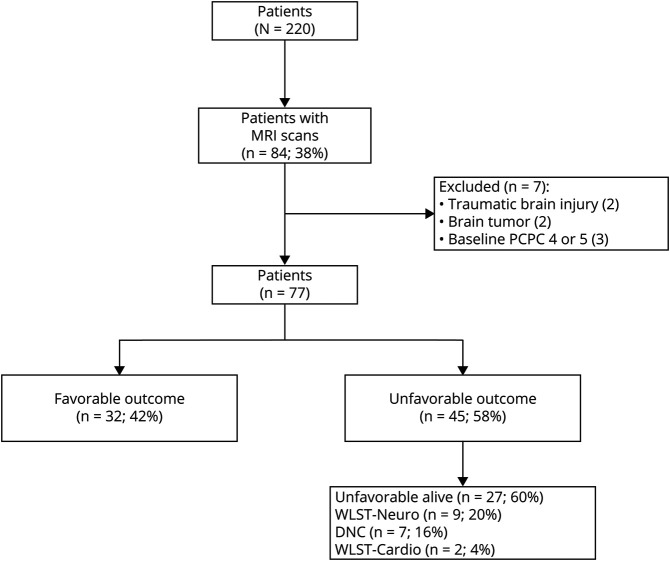
Figure 3. CONSORT (Consolidated Standards of Reporting Trials) Diagram
CONSORT diagram showing patient numbers (%) in each outcome category. DNC = death by neurologic criteria; PCPC = Pediatric Cerebral Performance Category; WLST-cardio = withdrawal of life-sustaining therapies due to rearrest or cardiopulmonary failure; WLST-neuro = withdrawal of life-sustaining therapies due to poor neurologic prognosis.
Figure 4
Figure 4. Diffusion Restriction and T2/Fluid-Attenuated Inversion Recovery (FLAIR) MRI Injury for Patients With Favorable and Unfavorable Outcomes
Extent of diffusion restriction and T2/FLAIR MRI injury for patients with favorable and unfavorable outcomes (A) and for patients in the subcategories of unfavorable outcomes (B). Boxplots with whiskers demonstrating 5 and 95th percentiles. DNC = death by neurologic criteria; PCPC = Pediatric Cerebral Performance Category; WLST-neuro = withdrawal of life-sustaining therapies due to poor neurologic prognosis.
Figure 5
Figure 5. Receiver Operating Characteristic (ROC) Curves for Diffusion Restriction and T2/Fluid-Attenuated Inversion Recovery (FLAIR) Injury
ROC curves (for diffusion restriction (A) and T2/FLAIR injury (B) to predict unfavorable outcome.

References

    1. Benjamin EJ, Virani SS, Callaway CW, et al. . Heart disease and stroke statistics: 2018 update: a report from the American Heart Association. Circulation 2018;137:e67–e492. - PubMed
    1. Fink EL, Prince DK, Kaltman JR, et al. . Unchanged pediatric out-of-hospital cardiac arrest incidence and survival rates with regional variation in North America. Resuscitation 2016;107:121–128. - PMC - PubMed
    1. Nitta M, Iwami T, Kitamura T, et al. . Age-specific differences in outcomes after out-of-hospital cardiac arrests. Pediatrics 2011;128:e812–e820. - PubMed
    1. Atkins DL, Everson-Stewart S, Sears GK, et al. . Epidemiology and outcomes from out-of-hospital cardiac arrest in children: the Resuscitation Outcomes Consortium Epistry-Cardiac Arrest. Circulation 2009;119:1484–1491. - PMC - PubMed
    1. Du Pont-Thibodeau G, Fry M, Kirschen M, et al. . Timing and modes of death after pediatric out-of-hospital cardiac arrest resuscitation. Resuscitation 2018;133:160–166. - PubMed

Publication types

MeSH terms