Review
. 2021 Jan;17(1):47-57.
doi: 10.1038/s41584-020-00533-7. Epub 2020 Nov 18.

Mechanisms and therapeutic implications of cellular senescence in osteoarthritis

Affiliations
Review

Mechanisms and therapeutic implications of cellular senescence in osteoarthritis

Philip R Coryell et al. Nat Rev Rheumatol. 2021 Jan.

Abstract

The development of osteoarthritis (OA) correlates with a rise in the number of senescent cells in joint tissues, and the senescence-associated secretory phenotype (SASP) has been implicated in cartilage degradation and OA. Age-related mitochondrial dysfunction and associated oxidative stress might induce senescence in joint tissue cells. However, senescence is not the only driver of OA, and the mechanisms by which senescent cells contribute to disease progression are not fully understood. Furthermore, it remains uncertain which joint cells and SASP-factors contribute to the OA phenotype. Research in the field has looked at developing therapeutics (namely senolytics and senomorphics) that eliminate or alter senescent cells to stop disease progression and pathogenesis. A better understanding of how senescence contributes to joint dysfunction may enhance the effectiveness of these approaches and provide relief for patients with OA.


Conflict of interest statement

Competing interests

R.F.L. has consulted for Unity Biotechnology (<$1,000). The other authors declare no competing interests.

Figures
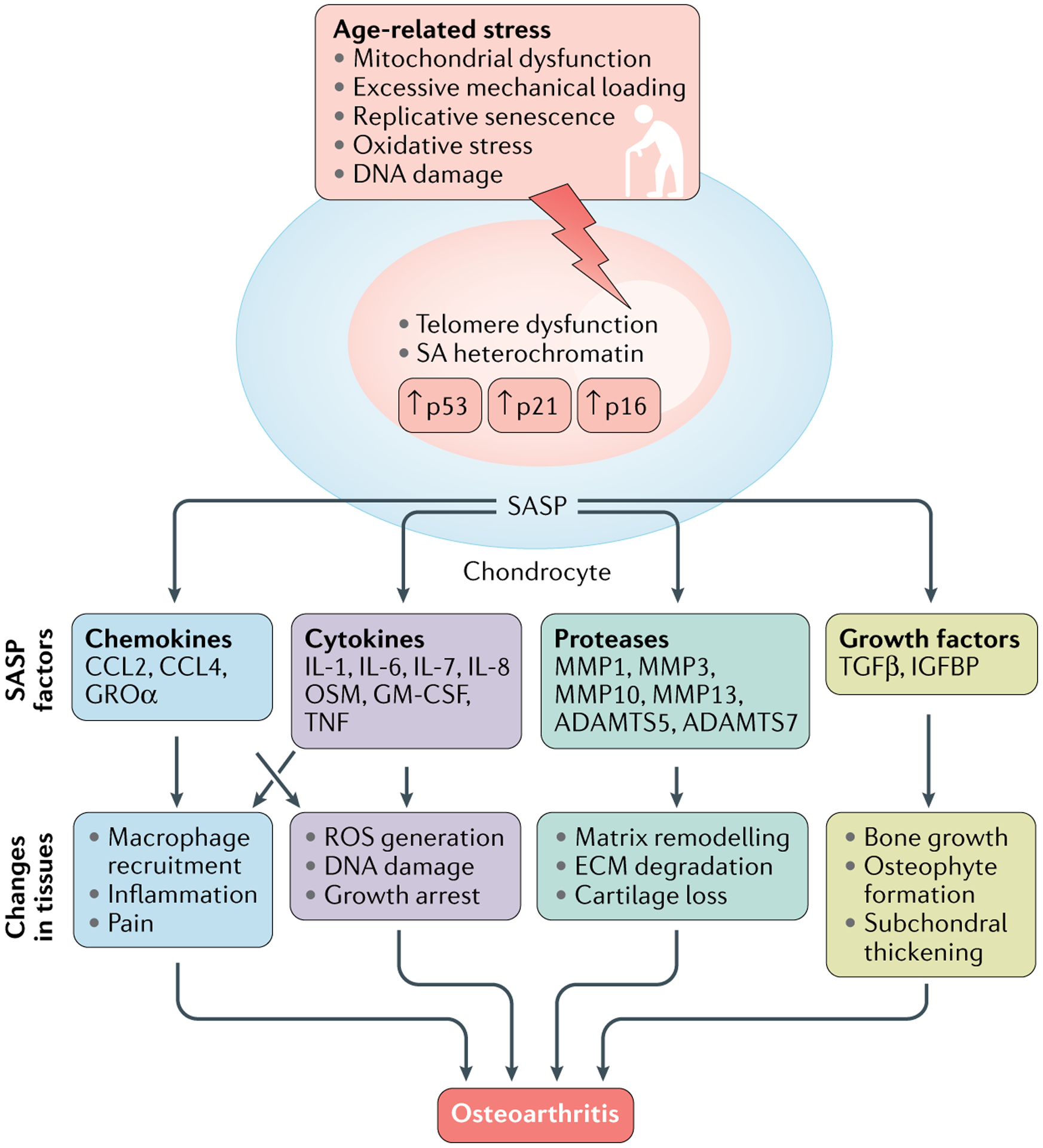
Fig. 1 |
Fig. 1 |. Associations between age-related stress, senescence and OA.
Multiple age-related stresses converge on the induction of senescent hallmarks in articular joint cells. These cells can exhibit the senescence-associated secretory phenotype (SASP) and secrete factors (including chemokines, cytokines, proteases and growth factors) that act independently or together to induce changes commonly found in osteoarthritic tissues. ADAMTS, a disintegrin and metalloproteinase with thrombospondin motifs; CCL, CC-chemokine ligand; ECM, extracellular matrix; GM-CSF, granulocyte–macrophage colony-stimulating factor; GRO, growth-regulated alpha protein; IGFBP, insulin-like growth factor binding protein; MMP, matrix metalloproteinase; OA, osteoarthritis; OSM, oncostatin M; ROS, reactive oxygen species; SA heterochromatin, senescence-associated heterochromatin; TGFβ, transforming growth factor-β.
Fig. 2 |
Fig. 2 |. Model for oxidative stress-induced senescence in joint cells.
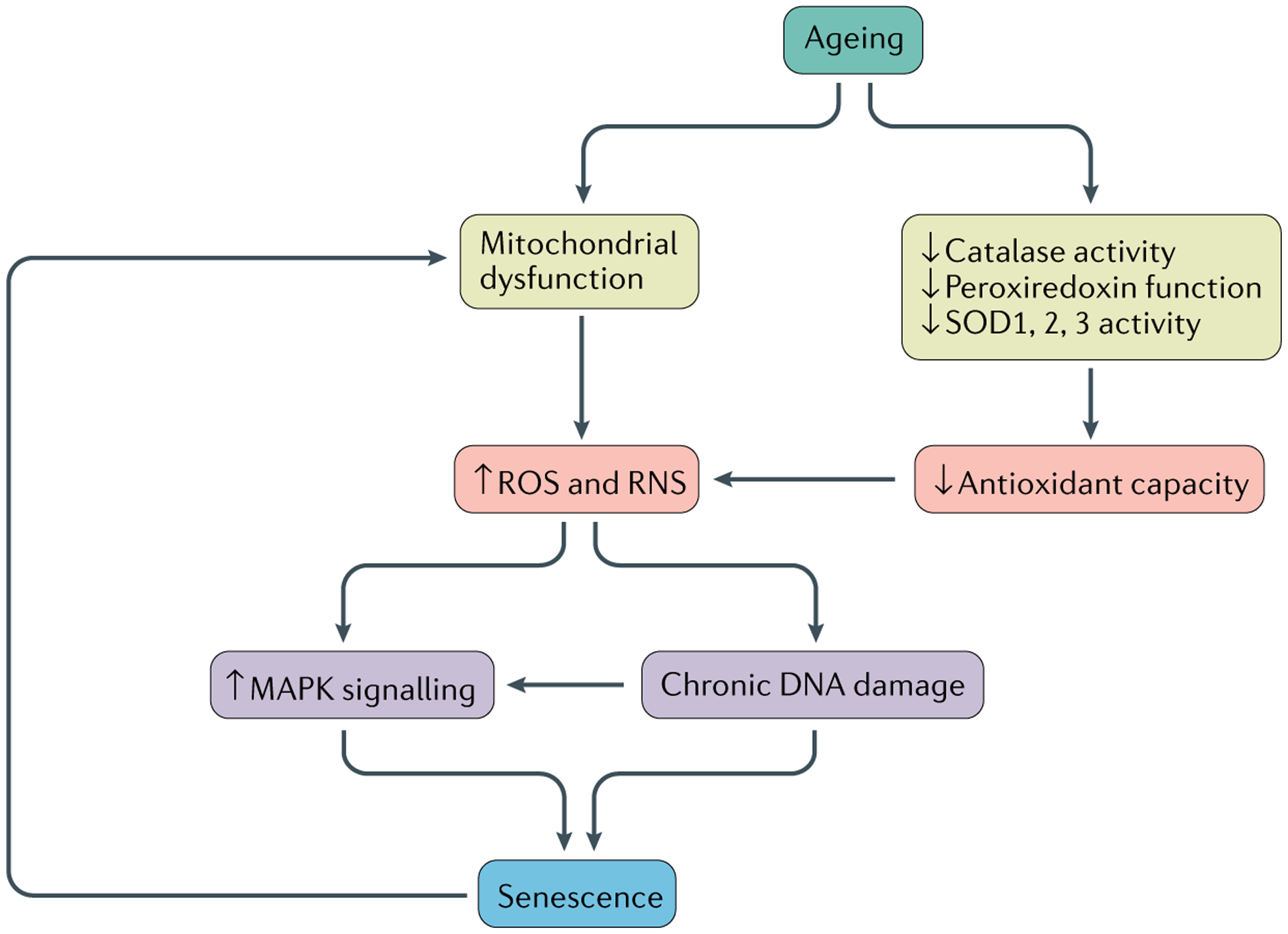
Aged chondrocytes and synovial cells exhibit mitochondrial dysfunction, as well as a reduction in antioxidant capacity, via a decrease in the activity of catalase and superoxide dismutase (SOD) and decreased peroxiredoxin function. These phenotypes increase the generation of reactive oxidative species (ROS) and reactive nitrogen species (RNS), which induce chronic DNA damage and increase MAPK stress signalling, both of which can act independently or together to induce senescence. Senescence itself can cause further mitochondrial damage, causing positive feedback.
Fig. 3 |
Fig. 3 |. Model for cellular senescence in joint tissue and potential treatments.
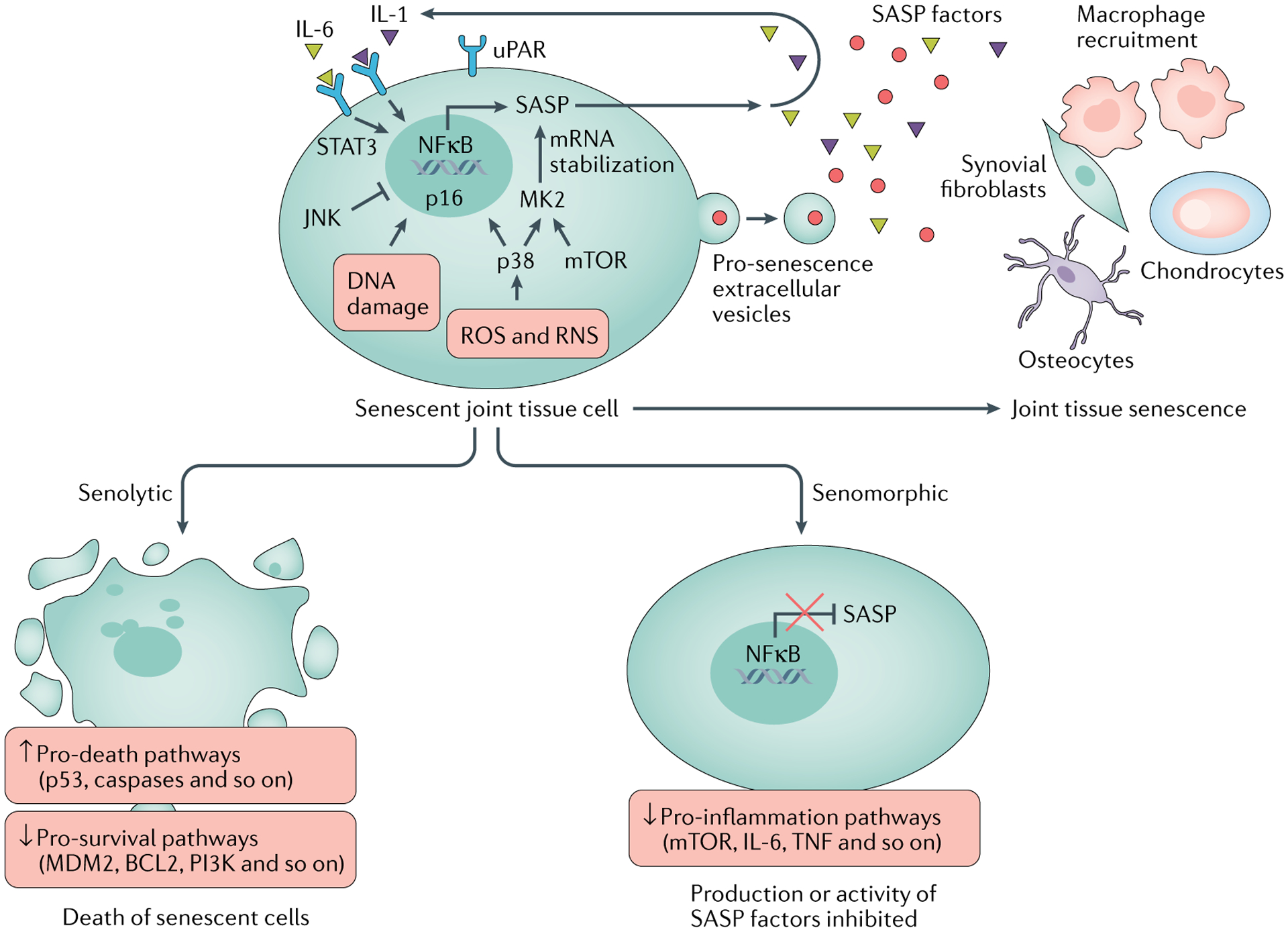
Cytokines such as IL-6 promote senescence via the transcription factor STAT3, and IL-1 can induce NFκB-driven expression of genes encoding senescence-associated secretory phenotype (SASP) factors. Senescent joint cells are characterized by increased oxidative stress (owing to the generation of reactive oxidative species (ROS) and reactive nitrogen species (RNS)), DNA damage, increased expression of urokinase-type plasminogen activator surface receptor (uPAR), and upregulation of stress proteins such as p38, c-Jun N-terminal kinase (JNK) and mTOR. p38 induces senescence and the expression of p16, while JNK negatively regulates senescence in cells in joint tissue. mTOR and p38 promote the SASP by upregulating the translation of (mTOR) and phosphorylating (p38) MK2 (also known as MAPKAPK2), which stabilizes mRNA transcripts encoding SASP factors. SASP factors (including IL-1 and IL-6) and senescence-inducing extracellular vesicles are secreted by these cells into the extracellular matrix, promoting macrophage recruitment to, and driving further senescence in, the surrounding joint tissue. Senolytic drugs aim to prevent senescence-associated disease by inducing apoptosis specifically in senescent cells via the upregulation of p53, caspases and other proteins in death-associated pathways, while repressing pathways associated with cell survival (for example, pathways involving MDM2, BCL2 and PI3K). Senomorphic drugs do not kill senescent cells, but repress the SASP by inhibiting the activity of proteins related to inflammation, such as mTOR, or by directly inhibiting the activity or production of SASP factors such as IL-6 and TNF.

References

    1. Loeser RF, Goldring SR, Scanzello CR & Goldring MB Osteoarthritis: a disease of the joint as an organ. Arthritis Rheum. 64, 1697–1707 (2012). - PMC - PubMed
    1. Loeser RF, Collins JA & Diekman BO Ageing and the pathogenesis of osteoarthritis. Nat. Rev. Rheumatol 12, 412–420 (2016). - PMC - PubMed
    1. Johnson VL & Hunter DJ The epidemiology of osteoarthritis. Best Pract. Res. Clin. Rheumatol 28, 5–15 (2014). - PubMed
    1. Cisternas MG et al. Alternative methods for defining osteoarthritis and the impact on estimating prevalence in a US population-based survey. Arthritis Care Res. 68, 574–580 (2016). - PMC - PubMed
    1. Hootman JM & Helmick CG Projections of US prevalence of arthritis and associated activity limitations. Arthritis Rheum. 54, 226–229 (2006). - PubMed

MeSH terms