Patient-derived cell line, xenograft and organoid models in lung cancer therapy
- PMID: 33209645
- PMCID: PMC7653147
- DOI: 10.21037/tlcr-20-154
Patient-derived cell line, xenograft and organoid models in lung cancer therapy
Abstract
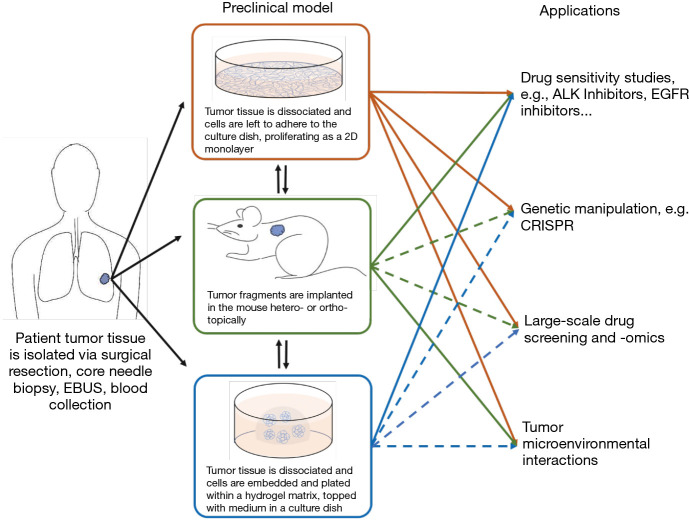
Lung cancer accounts for most cancer-related deaths worldwide and has an overall 5-year survival rate of ~15%. Cell lines have played important roles in the study of cancer biology and potential therapeutic targets, as well as pre-clinical testing of novel drugs. However, most experimental therapies that have cleared preclinical testing using established cell lines have failed phase III clinical trials. This suggests that such models may not adequately recapitulate patient tumor biology and clinical outcome predictions. Here, we discuss and compare different pre-clinical lung cancer models, including established cell lines, patient-derived cell lines, xenografts and organoids, summarize the methodology for generating these models, and review their relative advantages and limitations in different oncologic research applications. We further discuss additional gaps in patient-derived pre-clinical models to better recapitulate tumor biology and improve their clinical predictive power.
Keywords: 3D culture; Lung cancer; cell line; organoid; patient-derived models; preclinical models; xenograft.
2020 Translational Lung Cancer Research. All rights reserved.
Conflict of interest statement
Conflicts of Interest: All authors have completed the ICMJE uniform disclosure form (available at http://dx.doi.org/10.21037/tlcr-20-154). The series “New Developments in Lung Cancer Diagnosis and Pathological Patient Management Strategies” was commissioned by the editorial office without any funding or sponsorship. MST reports grants and personal fees from AstraZeneca, personal fees from BMS, grants and personal fees from Bayer, personal fees from Hoffmann La Roche, personal fees from Amgen, personal fees from Pfizer, personal fees from Takeda, outside the submitted work. MST serves as an unpaid editorial board member of Translational Lung Cancer Research from Jul 2014 to Jul 2021. The other authors have no conflicts of interest to declare.
Figures
References
Publication types
LinkOut - more resources
Full Text Sources
Other Literature Sources