Review
. 2021 Mar;7(2):559-571.
doi: 10.1002/vms3.394. Epub 2020 Nov 18.

Evolutionary study of COVID-19, severe acute respiratory syndrome coronavirus 2 (SARS-CoV-2) as an emerging coronavirus: Phylogenetic analysis and literature review

Affiliations
Review

Evolutionary study of COVID-19, severe acute respiratory syndrome coronavirus 2 (SARS-CoV-2) as an emerging coronavirus: Phylogenetic analysis and literature review

Alireza Tabibzadeh et al. Vet Med Sci. 2021 Mar.

Abstract

Since emerging coronaviruses have always become a human health concern globally especially severe acute respiratory syndrome coronavirus 2 (SARS-CoV) and Middle East respiratory syndrome coronavirus and a novel coronavirus was introduced in Wuhan, China, in December 2019 (called SARS-CoV-2), many researchers focused on its epidemics, virological and clinical features. SARS-CoV-2 is classified as Betacoronaviruses genus and Sarbecovirus subgenus (lineage B). The virus shows a great similarity with SARS-CoV and bat SARS-like coronaviruses. In this study, we evaluate SARS-CoV-2 virus phylogeny and evolution by using current virus and related sequences.

Keywords: COVID-19; evolutionary study; phylogenetic analysis; severe acute respiratory syndrome coronavirus 2 (SARS-CoV-2).


Conflict of interest statement

None declared.

Figures
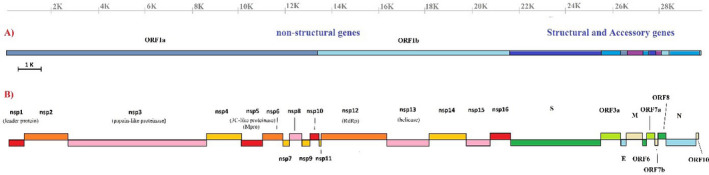
FIGURE 1
FIGURE 1
Genome order of SARS‐CoV‐2. (a) Schematic view of the virus genes order; (b) viral encoded proteins and their identified function. SARS‐CoV‐2, severe acute respiratory syndrome coronavirus 2
FIGURE 2
FIGURE 2
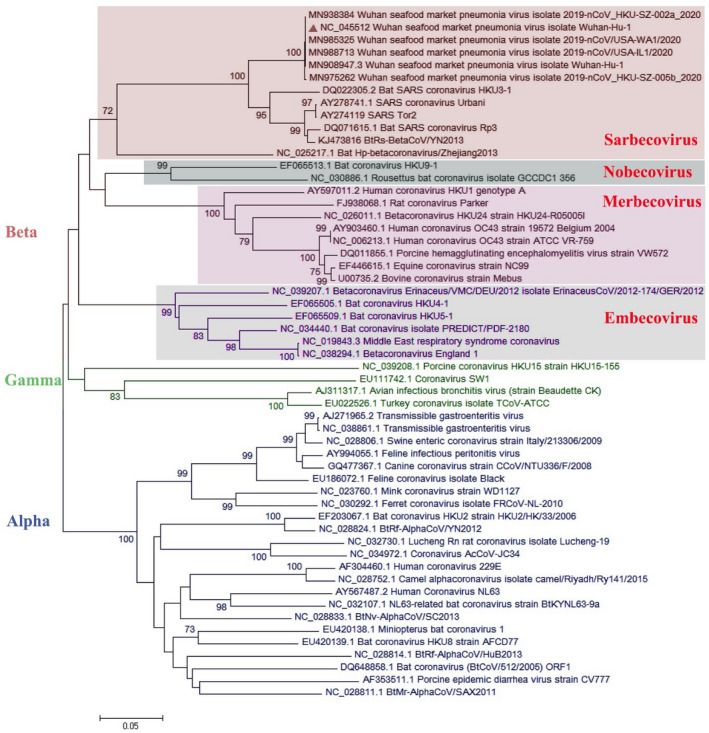
The phylogenetic analysis of 300 bases region of theRNA‐dependent RNA polymerasegene of coronaviruses by Neighbour Joining method using 1,000 bootstrap, red triangle showed SARS‐CoV‐2 reference sequence, The scale represents Coronaviruses genus alpha (blue font), gamma (green font) and beta (red font) genus. Beta genus divided into four subgenus (highlighted) included Sarbecovirus, Nobecovirus, Merbecovirus and Embecovirus. SARS‐CoV‐2, severe acute respiratory syndrome coronavirus 2
FIGURE 3
FIGURE 3
The amino acid sequence of the E protein and three major domains, the amino acid conservation shows by the colours: red colour indicates the most conserve, pink colour indicates less conserve and blue colour indicates gaps or non‐conserve regions
FIGURE 4
FIGURE 4
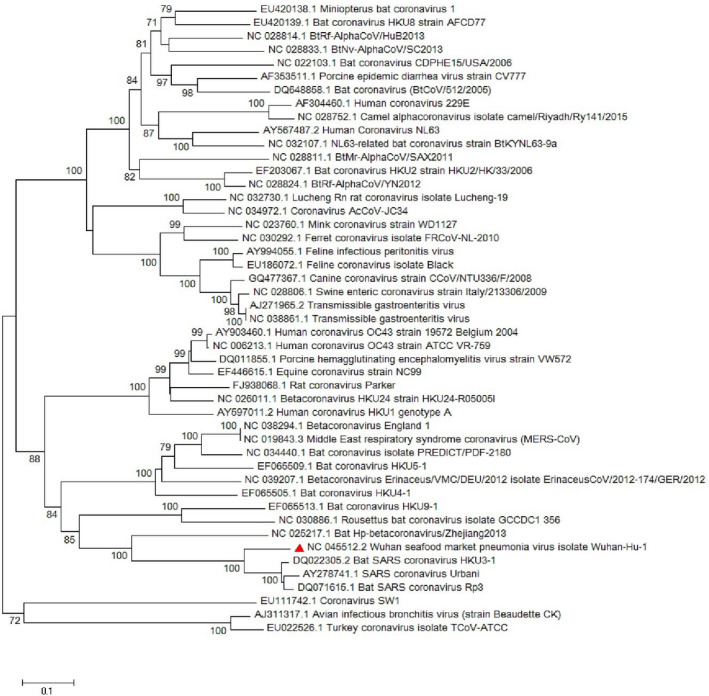
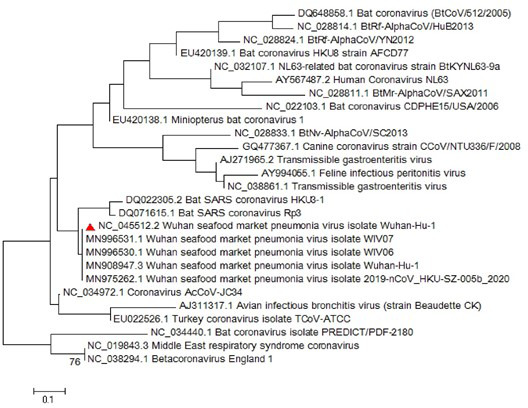
The phylogenetic analysis of 227 bases region of the E gene of coronaviruses by Neighbour Joining method using 1,000 bootstrap. Red triangle showed SARS‐CoV‐2 reference sequence. The scale represents 0.1 substitutions per nucleotide position all of the accession numbers and full name of the strains were listed. SARS‐CoV‐2, severe acute respiratory syndrome coronavirus 2
FIGURE 5
FIGURE 5
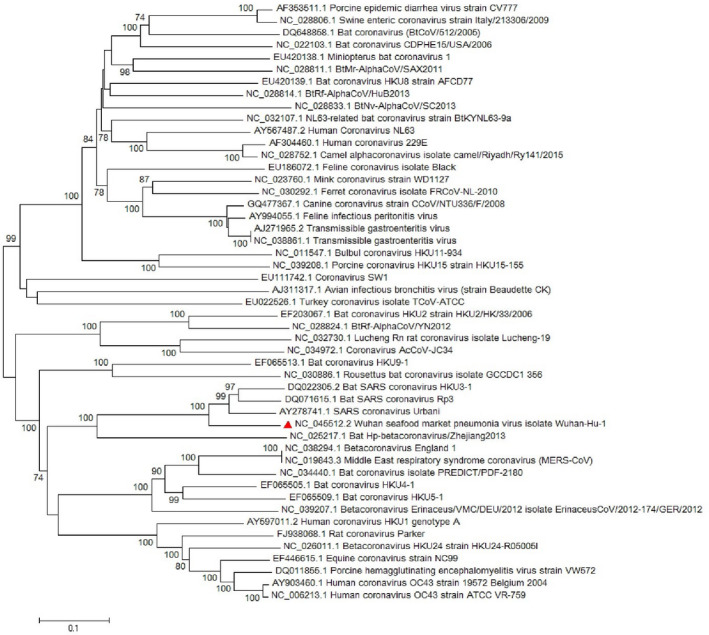
The phylogenetic analysis of 668 bases region of the M gene of coronaviruses by Neighbour Joining method using 1,000 bootstrap, Red triangle showed SARS‐CoV‐2 reference sequence. The scale represents 0.1 substitutions per nucleotide position. All of the accession numbers and full name of the strains were listed. SARS‐CoV‐2, severe acute respiratory syndrome coronavirus 2
FIGURE 6
FIGURE 6
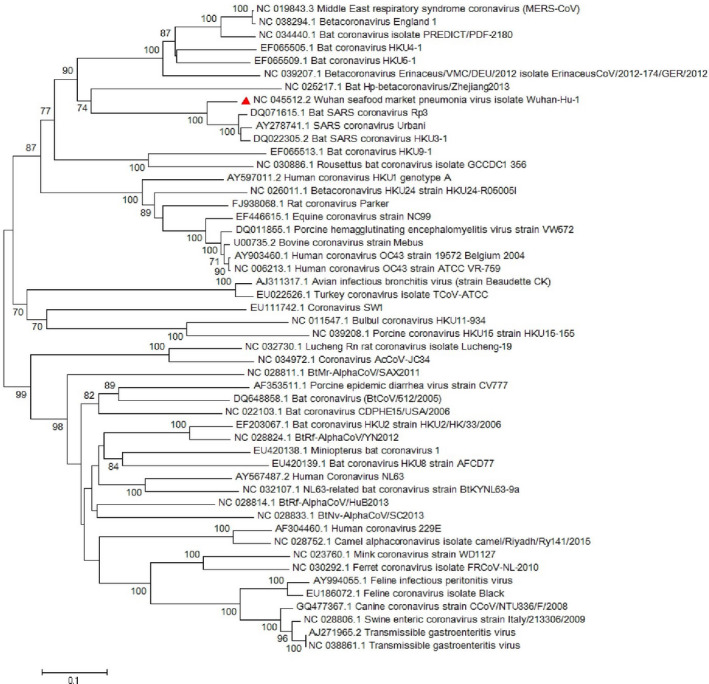
The phylogenetic analysis of 3,821 bases region of the S gene of corona viruses by Neighbour Joining method using 1,000 bootstrap. Red triangle showed SARS‐CoV‐2 reference sequence. The scale represents 0.1 substitutions per nucleotide position. All of the accession numbers and full name of the strains were listed. SARS‐CoV‐2, severe acute respiratory syndrome coronavirus 2
FIGURE 7
FIGURE 7
The phylogenetic analysis of 1,259 bases region of the N gene of corona viruses by Neighbor Joining method using 1,000 bootstrap. Red triangle showed SARS‐CoV‐2 reference sequence. The scale represents 0.1 substitutions per nucleotide position. All of the accession numbers and full name of the strains were listed. SARS‐CoV‐2, severe acute respiratory syndrome coronavirus 2
FIGURE 8
FIGURE 8
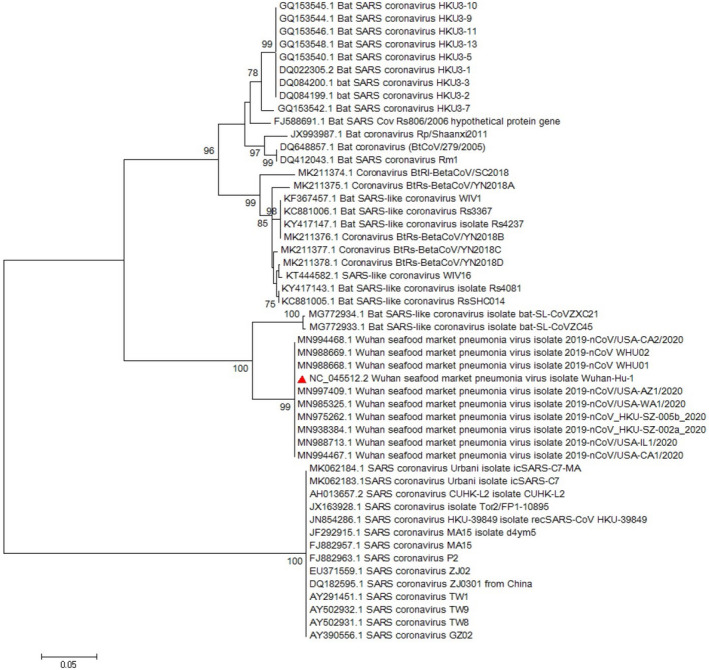
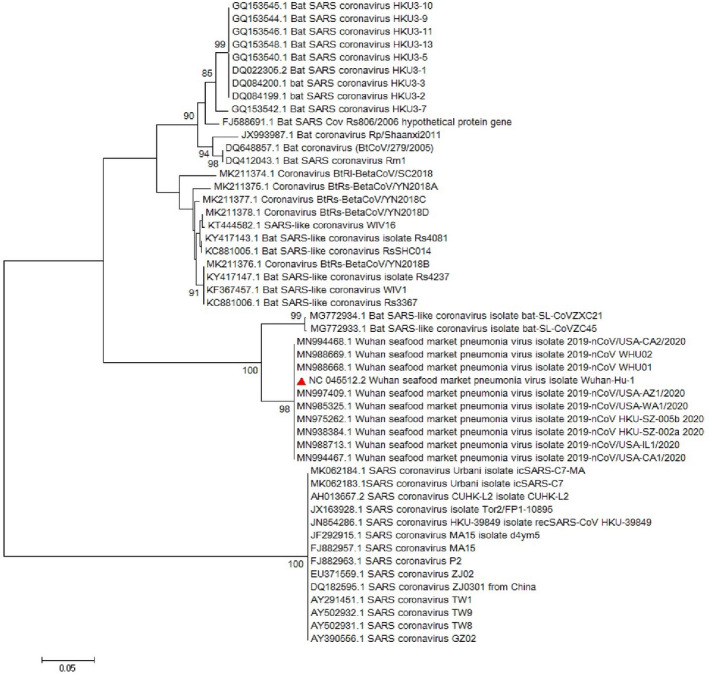
The phylogenetic analysis of 365 bases region of the ORF8 gene of corona viruses by Neighbour Joining method using 1,000 bootstrap. Red triangle showed SARS‐CoV‐2 reference sequence. The scale represents 0.05 substitutions per nucleotide position. All of the accession numbers and full name of the strains were listed. SARS‐CoV‐2, severe acute respiratory syndrome coronavirus 2
FIGURE 9
FIGURE 9
The phylogenetic analysis of 370 bases region of the ORF8 gene of corona viruses by Maximum likelihood method using 1,000 bootstrap. Red triangle showed SARS‐CoV‐2 reference sequence. The scale represents 0.05 substitutions per nucleotide position. All of the accession numbers and full name of the strains were listed. SARS‐CoV‐2, severe acute respiratory syndrome coronavirus 2
FIGURE 10
FIGURE 10
The phylogenetic analysis of 827 bases region of the ORF3 gene of coronaviruses by Neighbour Joining method using 1,000 bootstrap. Red triangle showed SARS‐CoV‐2 reference sequence. The scale represents 0.1 substitutions per nucleotide position. All of the accession numbers and full name of the strains were listed. SARS‐CoV‐2, severe acute respiratory syndrome coronavirus 2
FIGURE 11
FIGURE 11
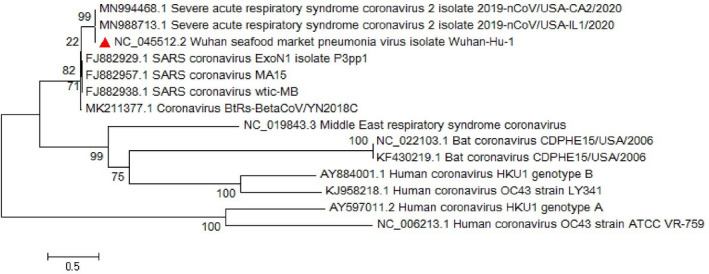
The phylogenetic analysis of 1,802 bases region of the nsp13 (helicase) gene of coronaviruses by Neighbour Joining method using 1,000 bootstrap. Red triangle showed SARS‐CoV‐2 reference sequence. The scale represents 0.5 substitutions per nucleotide position. All of the accession numbers and full name of the strains were listed. SARS‐CoV‐2, severe acute respiratory syndrome coronavirus 2
FIGURE 12
FIGURE 12
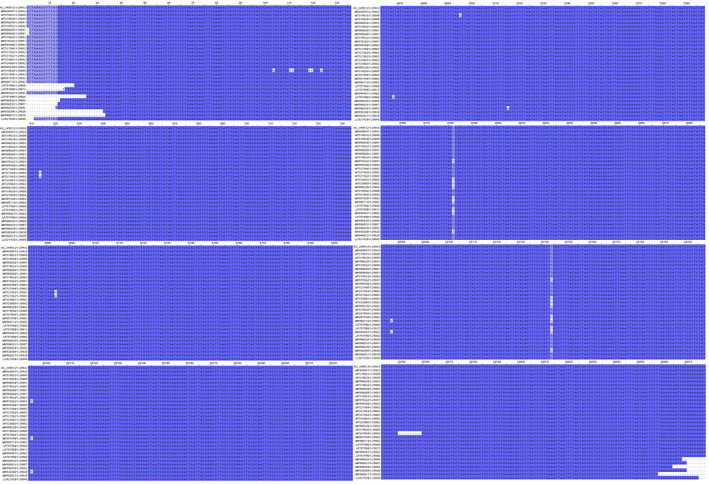
The multiple sequence alignment with Kaligne, the blue sequences shows similarity while the light blue or white sequences shows the differences in full genome alignment of the SARS‐CoV‐2 (screens in figure are truncated and only the highly different positions are illustrated), this sequences mostly obtained from primary full genome sequences in China and USA. SARS‐CoV‐2, severe acute respiratory syndrome coronavirus 2

References

    1. Azhar, E. I. , Hui, D. S. C. , Memish, Z. A. , Drosten, C. , & Zumla, A. (2019). The middle east respiratory syndrome (MERS). Infectious Disease Clinics of North America, 33(4), 891–905. - PMC - PubMed
    1. Bai, Y. , Jiang, D. , Lon, J. R. , Chen, X. , Hu, M. , Lin, S. , Chen, Z. , Wang, X. , Meng, Y. , & Dua, H. (2020). Comprehensive evolution and molecular characteristics of a large number of SARS‐CoV‐2 genomes reveal its epidemic trends. International Journal of Infectious Diseases, 100, 164–173. 10.1016/j.ijid.2020.08.066 - DOI - PMC - PubMed
    1. Behzadi, M. A. , & Leyva‐Grado, V. H. (2019). Overview of current therapeutics and novel candidates against influenza, respiratory syncytial virus, and Middle East respiratory syndrome coronavirus infections. Frontiers in Microbiology, 19(10), 1327. - PMC - PubMed
    1. Bogoch, I. I. , Watts, A. , Thomas‐Bachli, A. , Huber, C. , Kraemer, M. U. , & Khan, K. (2020). Pneumonia of unknown aetiology in Wuhan, China: Potential for international spread via commercial air travel. Journal of Travel Medicine, 27(2), taaa008. - PMC - PubMed
    1. Borchardt, R. A. , & Rolston, K. V. (2012). Respiratory tract infections: Emerging viral pathogens. Journal of the American Academy of Physician Assistants, 25(10), 19–20. - PubMed

Publication types