


Game-based learning environments affect frontal brain activity
- PMID: 33211780
- PMCID: PMC7676717
- DOI: 10.1371/journal.pone.0242573
Game-based learning environments affect frontal brain activity
Abstract
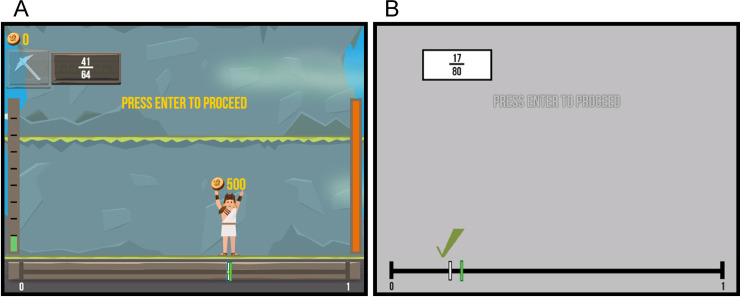
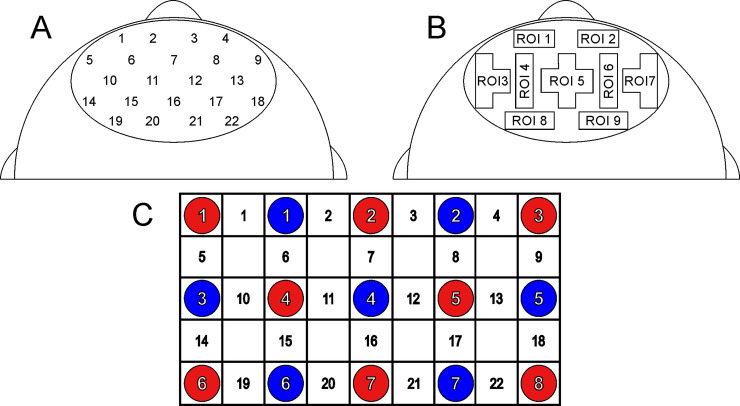
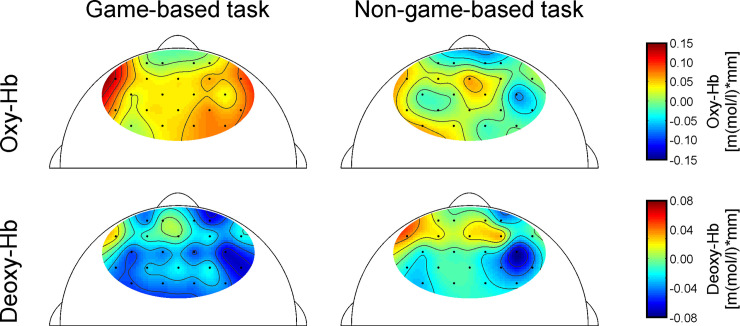
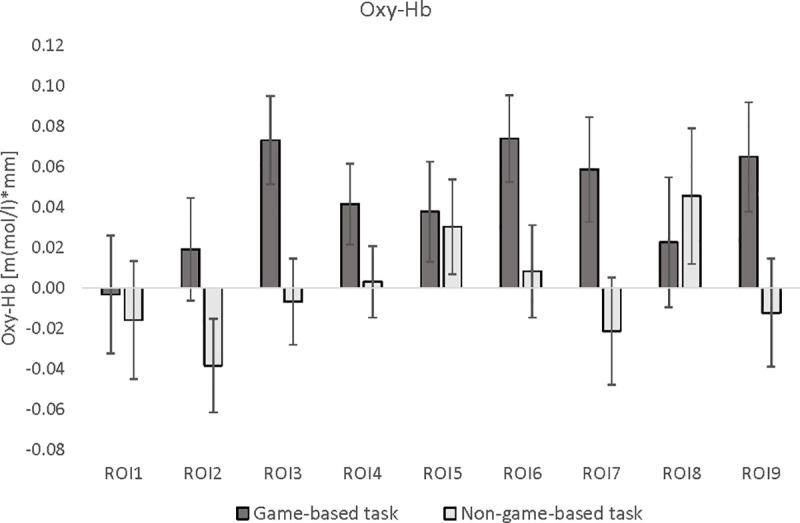
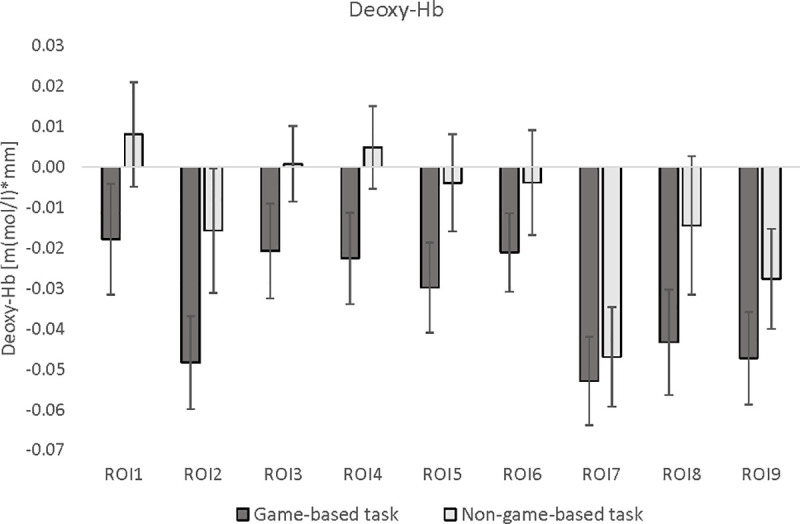
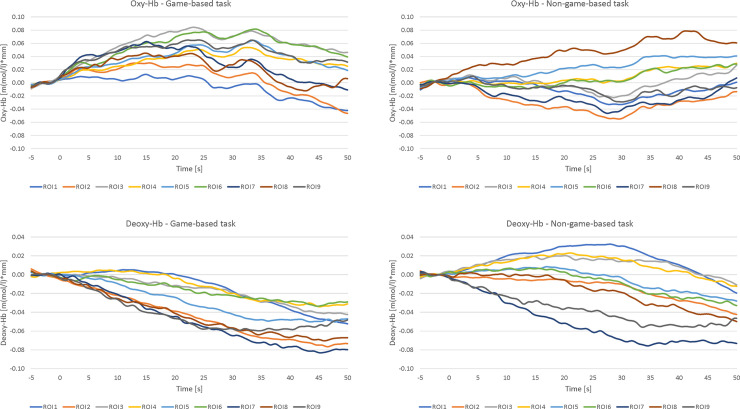
Inclusion of game elements in learning environments to increase motivation and learning outcome is becoming increasingly popular. However, underlying mechanisms of game-based learning have not been studied sufficiently yet. In the present study, we investigated effects of game-based learning environments on a neurofunctional level. In particular, 59 healthy adults completed a game-based version (including game elements such as a narrative and virtual incentives) as well as a non-game-based version of a number line estimation task, to improve fractional knowledge, while their brain activity was monitored using near-infrared spectroscopy. Behavioral performance was comparable across the two versions, although there was a tendency that less errors were made in the game-based version. However, subjective user experience differed significantly between versions. Participants rated the game-based version as more attractive, novel, and stimulating but less efficient than the non-game-based version. Additionally, positive affect was reported to be higher while engaging in the game-based as compared to the non-game-based task version. Corroborating these user reports, we identified increased brain activation in areas associated with emotion and reward processing while playing the game-based version, which might be driven by rewarding elements of the game-based version. Moreover, frontal areas associated with attention were also more activated in the game-based version of the task. Hence, we observed converging evidence on a user experience and neurofunctional level indicating that the game-based version was more rewarding as well as emotionally and attentionally engaging. These results underscore the potential of game-based learning environments to promote more efficient learning by means of attention and reward up-tuning.
Conflict of interest statement
The authors have declared that no competing interests exist.
Figures
References
-
- Sailer M, Homner L. The Gamification of Learning: a Meta-analysis. Educ Psychol Rev 2020; 32(1): 77–112 [ 10.1007/s10648-019-09498-w] - DOI
-
- Boyle EA, Hainey T, Connolly TM, et al. An update to the systematic literature review of empirical evidence of the impacts and outcomes of computer games and serious games. Computers & Education 2016; 94: 178–92 [ 10.1016/j.compedu.2015.11.003] - DOI
-
- Wouters P, van Nimwegen C, van Oostendorp H, van der Spek ED. A meta-analysis of the cognitive and motivational effects of serious games. Journal of Educational Psychology 2013; 105(2): 249–65 [ 10.1037/a0031311] - DOI
-
- Plass JL, Homer BD, Kinzer CK. Foundations of Game-Based Learning. Educational Psychologist 2015; 50(4): 258–83 [ 10.1080/00461520.2015.1122533] - DOI
Publication types
MeSH terms
LinkOut - more resources
Full Text Sources
