Diagnostic performance of 18F-DCFPyL positron emission tomography/computed tomography for biochemically recurrent prostate cancer and change-of-management analysis
- PMID: 33212005
- PMCID: PMC8195586
- DOI: 10.5489/cuaj.6817
Diagnostic performance of 18F-DCFPyL positron emission tomography/computed tomography for biochemically recurrent prostate cancer and change-of-management analysis
Abstract
Introduction: Conventional imaging (CI) performs poorly to identify sites of disease in biochemically recurrent prostate cancer. 68Ga-PSMA-11 positron emission tomography/computed tomography (PET/CT) is most studied but has a very short half-life. This study reports the diagnostic performance of the novel prostate-specific membrane antigen (PSMA) radiotracer 18F-DCFPyL using real-life data and tumor board simulation to estimate the impact of 18F-DCFPyL PET on patient management.
Methods: Ninety-three 18F-DCFPyL PET/CT scans performed for patients previously treated for prostate cancer with a rising prostate-specific antigen (PSA) were retrospectively compared to contemporary CI and clinical imaging and PSA followups. A chart review was performed to document prior imaging, pathology results, serial serum PSA measurements, and other pertinent clinical data. Clinical utility of 18F-DCFPyL PET was measured using a simulated tumor board formed by three physicians with extensive prostate cancer experience deciding on management with and without knowledge of PET/CT results.
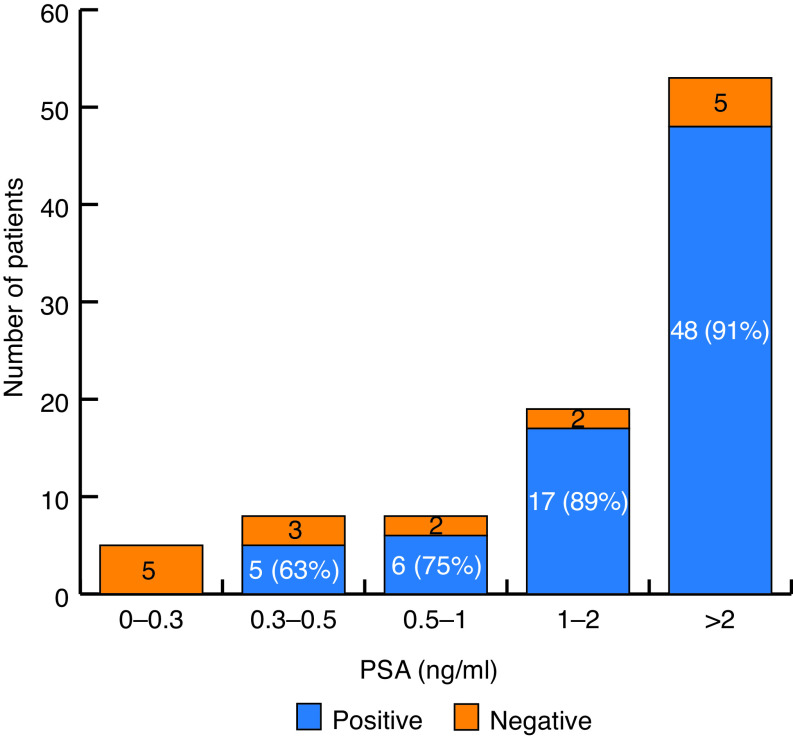
Results: At median PSA 2.27 (interquartile rage [IQR] 5.27], 82% of 18F-DCFPyL PET/CT demonstrated at least one site of disease: non-regional lymph nodes (37% of scans), regional lymph node metastases (28%), local recurrence (27%), and bone metastases (20%), with higher PET positivity at higher PSA. Compared to 18F-DCFPyL PET/CT, CI showed overall poor performance, with accuracy below 20% for all extent of disease. PET/CT changed management in 44% of cases. The most frequent scenario was a radical change from initiating androgen deprivation therapy (ADT) to stereotactic body radiotherapy (SBRT) of oligo-lesional disease. In univariate and multivariate analysis, no patient characteristic could predict change of management by PET/CT results.
Conclusions: 18F-DCFPyL significantly outperforms CI in recurring prostate cancer and is likely to impact management.
Conflict of interest statement
Figures
References
LinkOut - more resources
Full Text Sources
Research Materials
Miscellaneous