


Targeting Tumor-Associated Macrophages to Increase the Efficacy of Immune Checkpoint Inhibitors: A Glimpse into Novel Therapeutic Approaches for Metastatic Melanoma
- PMID: 33212945
- PMCID: PMC7698460
- DOI: 10.3390/cancers12113401
Targeting Tumor-Associated Macrophages to Increase the Efficacy of Immune Checkpoint Inhibitors: A Glimpse into Novel Therapeutic Approaches for Metastatic Melanoma
Abstract
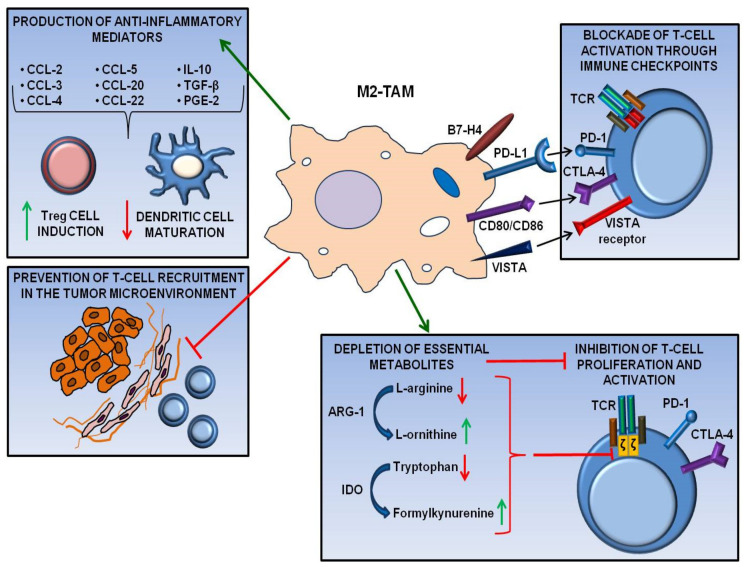
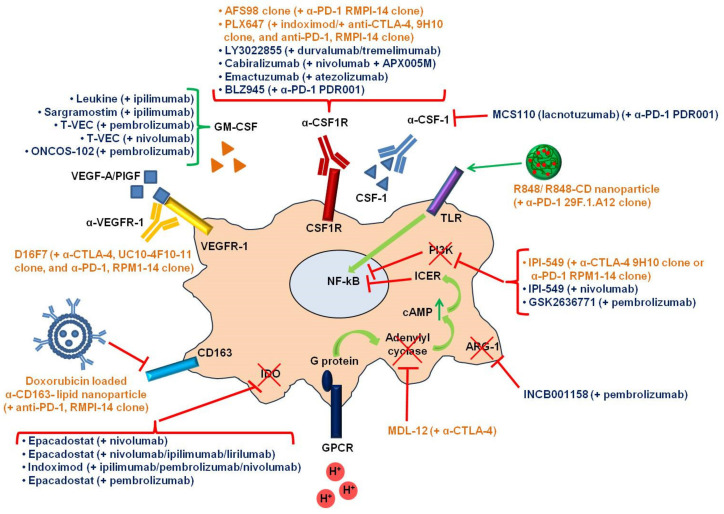
Immune checkpoint inhibitors (ICIs) represent a promising therapeutic intervention for a variety of advanced/metastatic solid tumors, including melanoma, but in a large number of cases, patients fail to establish a sustained anti-tumor immunity and to achieve a long-lasting clinical benefit. Cells of the tumor micro-environment such as tumor-associated M2 macrophages (M2-TAMs) have been reported to limit the efficacy of immunotherapy, promoting tumor immune evasion and progression. Thus, strategies targeting M2-TAMs have been suggested to synergize with immune checkpoint blockade. This review recapitulates the molecular mechanisms by which M2-TAMs promote cancer immune evasion, with focus on the potential cross-talk between pharmacological interventions targeting M2-TAMs and ICIs for melanoma treatment.
Keywords: CTLA-4; PD-1; PD-L1; VEGFR-1; immune checkpoint; immune escape; macrophages; melanoma; metastasis.
Conflict of interest statement
The authors declare no conflicts of interest. The funders had no role in the design of the study; in the collection, analyses, or interpretation of data; in the writing of the manuscript; or in the decision to publish the results.
Figures
References
Publication types
Grants and funding
LinkOut - more resources
Full Text Sources
Other Literature Sources
Research Materials
