


Current methods for diagnosis of human coronaviruses: pros and cons
- PMID: 33219449
- PMCID: PMC7679240
- DOI: 10.1007/s00216-020-03046-0
Current methods for diagnosis of human coronaviruses: pros and cons
Abstract
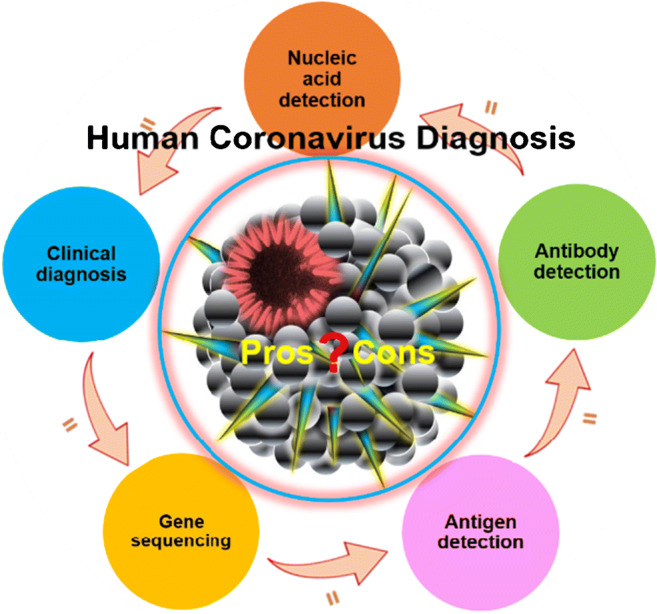
The current global fight against coronavirus disease (COVID-19) to flatten the transmission curve is put forth by the World Health Organization (WHO) as there is no immediate diagnosis or cure for COVID-19 so far. In order to stop the spread, researchers worldwide are working around the clock aiming to develop reliable tools for early diagnosis of severe acute respiratory syndrome (SARS-CoV-2) understanding the infection path and mechanisms. Currently, nucleic acid-based molecular diagnosis (real-time reverse transcription polymerase chain reaction (RT-PCR) test) is considered the gold standard for early diagnosis of SARS-CoV-2. Antibody-based serology detection is ineffective for the purpose of early diagnosis, but a potential tool for serosurveys, providing people with immune certificates for clearance from COVID-19 infection. Meanwhile, there are various blooming methods developed these days. In this review, we summarise different types of coronavirus discovered which can be transmitted between human beings. Methods used for diagnosis of the discovered human coronavirus (SARS, MERS, COVID-19) including nucleic acid detection, gene sequencing, antibody detection, antigen detection, and clinical diagnosis are presented. Their merits, demerits and prospects are discussed which can help the researchers to develop new generation of advanced diagnostic tools for accurate and effective control of human coronavirus transmission in the communities and hospitals.
Keywords: Biosensors; COVID-19; Human coronaviruses; Molecular diagnostics; Serology detection.
Conflict of interest statement
The authors declare that they have no conflict of interest.
Figures
References
-
- Tyrrell DA, Bynoe ML. Cultivation of viruses from a high proportion of patients with colds. Lancet. 1966;1(7428):76–77. - PubMed
Publication types
MeSH terms
Grants and funding
LinkOut - more resources
Full Text Sources
Other Literature Sources
Miscellaneous
