. 2020 Nov 21;8(1):165.
doi: 10.1186/s40168-020-00932-8.

Microbial function and genital inflammation in young South African women at high risk of HIV infection

Affiliations

Microbial function and genital inflammation in young South African women at high risk of HIV infection

Arghavan Alisoltani et al. Microbiome. .

Erratum in

Abstract

Background: Female genital tract (FGT) inflammation is an important risk factor for HIV acquisition. The FGT microbiome is closely associated with inflammatory profile; however, the relative importance of microbial activities has not been established. Since proteins are key elements representing actual microbial functions, this study utilized metaproteomics to evaluate the relationship between FGT microbial function and inflammation in 113 young and adolescent South African women at high risk of HIV infection. Women were grouped as having low, medium, or high FGT inflammation by K-means clustering according to pro-inflammatory cytokine concentrations.

Results: A total of 3186 microbial and human proteins were identified in lateral vaginal wall swabs using liquid chromatography-tandem mass spectrometry, while 94 microbial taxa were included in the taxonomic analysis. Both metaproteomics and 16S rRNA gene sequencing analyses showed increased non-optimal bacteria and decreased lactobacilli in women with FGT inflammatory profiles. However, differences in the predicted relative abundance of most bacteria were observed between 16S rRNA gene sequencing and metaproteomics analyses. Bacterial protein functional annotations (gene ontology) predicted inflammatory cytokine profiles more accurately than bacterial relative abundance determined by 16S rRNA gene sequence analysis, as well as functional predictions based on 16S rRNA gene sequence data (p < 0.0001). The majority of microbial biological processes were underrepresented in women with high inflammation compared to those with low inflammation, including a Lactobacillus-associated signature of reduced cell wall organization and peptidoglycan biosynthesis. This signature remained associated with high FGT inflammation in a subset of 74 women 9 weeks later, was upheld after adjusting for Lactobacillus relative abundance, and was associated with in vitro inflammatory cytokine responses to Lactobacillus isolates from the same women. Reduced cell wall organization and peptidoglycan biosynthesis were also associated with high FGT inflammation in an independent sample of ten women.

Conclusions: Both the presence of specific microbial taxa in the FGT and their properties and activities are critical determinants of FGT inflammation. Our findings support those of previous studies suggesting that peptidoglycan is directly immunosuppressive, and identify a possible avenue for biotherapeutic development to reduce inflammation in the FGT. To facilitate further investigations of microbial activities, we have developed the FGT-DB application that is available at http://fgtdb.org/ . Video Abstract.

Keywords: Cytokine; Female genital tract; Inflammation; Metaproteomics; Microbial function; Microbiome.


Conflict of interest statement

The authors declare that they have no competing interests.

Figures
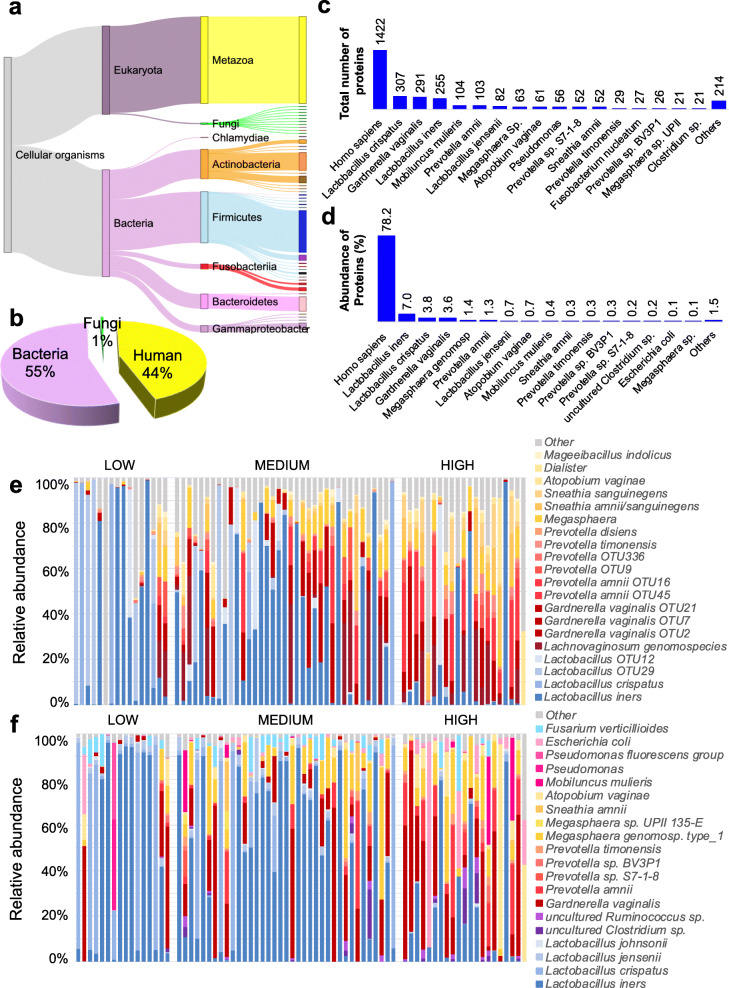
Fig. 1
Fig. 1
Bacterial relative abundance determined using metaproteomics versus 16S rRNA gene sequencing by inflammation cytokine profile. Liquid chromatography-tandem mass spectrometry was used to evaluate the metaproteome in lateral vaginal wall swabs from 113 women from Cape Town, South Africa. Proteins were identified using MaxQuant and a custom database generated using de novo sequencing to filter the UniProt database. Taxonomy was assigned using UniProt, and relative abundance of each taxon was determined by aggregating the intensity-based absolute quantification (iBAQ) values of all proteins identified for each taxon. a Proteins identified were assigned to the Eukaryota and Bacteria domains. Eukaryota proteins included those assigned to the fungi kingdom and metazoan subkingdom, while the bacteria domain included actinobacteria, firmicutes, fusobacteria, bacteriodetes, and gammaproteobacter phyla. b Distribution of taxa identified is shown as a pie chart. c Number of proteins detected for taxa for which the greatest number of proteins were identified. d Protein relative abundance per taxon for taxa with the highest relative abundance. The relative abundance of the top 20 most abundant bacterial taxa identified using e 16S rRNA gene sequencing and f metaproteomics is shown for all participants for whom both 16S rRNA gene sequence data and metaproteomics data were generated (n = 74). For 16S rRNA gene sequence analysis, the V4 region was amplified and libraries sequenced on an Illumina MiSeq platform. Inflammation groups were defined based on hierarchical followed by K-means clustering of all women according to the concentrations of nine pro-inflammatory cytokines [interleukin (IL)-1α, IL-1β, IL-6, IL-12p40, IL-12p70, tumor necrosis factor (TNF)-α, TNF-β, TNF-related apoptosis-inducing ligand (TRAIL), interferon (IFN)-γ]. OTU operational taxonomic unit
Fig. 2
Fig. 2
Weighted co-correlation network analysis of microbial and human proteins. The weighted correlation network analysis (WGCNA) R package was used to build a microbial-host functional weighted co-correlation network using intensity-based absolute quantification (iBAQ) values. a Correlations between proteins and modules are shown by the heatmap, with positive correlations shown in red and negative correlations shown in blue. Row sidebars represent the top taxa and biological processes assigned to each of the proteins (no separate correlation coefficients were calculated for taxa and biological processes). b The protein dendrogram and module assignment are displayed, with five modules identified using dynamic tree cut. c Spearman’s rank correlation was used to determine correlation coefficients between individual cytokines/chemokines and module eigengenes (the first principal component of the expression matrix of the corresponding module) for all samples. Finally, we reported the average Spearman’s correlation coefficients for all pro-inflammatory cytokines and chemokines. d Similarly, Spearman’s correlation coefficients were calculated between module eigengenes and Nugent scores [bacterial vaginosis (BV)] and sexually transmitted infections (STIs) as a categorical variable
Fig. 3
Fig. 3
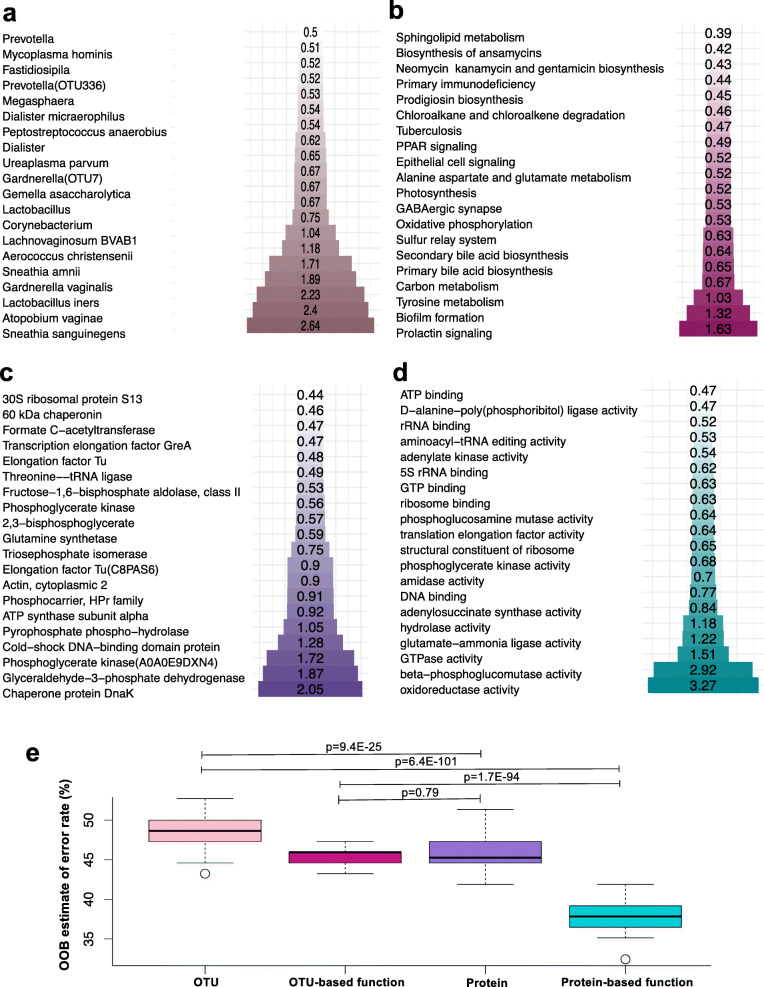
Comparison of bacterial, bacterial protein, and bacterial function relative abundance for prediction of genital inflammation. Random forest analysis was used to evaluate the accuracy of a bacterial relative abundance (determined using 16S rRNA gene sequencing; n = 74), b bacterial functional predictions based on 16 rRNA data (n = 74), c bacterial protein relative abundance (determined using metaproteomics; n = 74), and d bacterial protein molecular function relative abundance (determined by metaproteomics and aggregation of protein values assigned to the same gene ontology term; n = 74) for determining the presence of genital inflammation (low, medium, and high groups). Inflammation groups were defined based on hierarchical followed by K-means clustering of women according to the concentrations of nine pro-inflammatory cytokines [interleukin (IL)-1α, IL-1β, IL-6, IL-12p40, IL-12p70, tumor necrosis factor (TNF)-α, TNF-β, TNF-related apoptosis-inducing ligand (TRAIL), interferon (IFN)-γ]. The bars and numbers within the bars indicate the relative importance of each taxon, protein, or function based on the Mean Decrease in Gini Value. The sizes of bars in each panel differ based on the length of the labels. e Each random forest model was iterated 100 times for each of the input datasets separately, and the distribution of the out-of-bag (OOB) error rates for the 100 models was then compared using t tests. OTU operational taxonomic unit
Fig. 4
Fig. 4
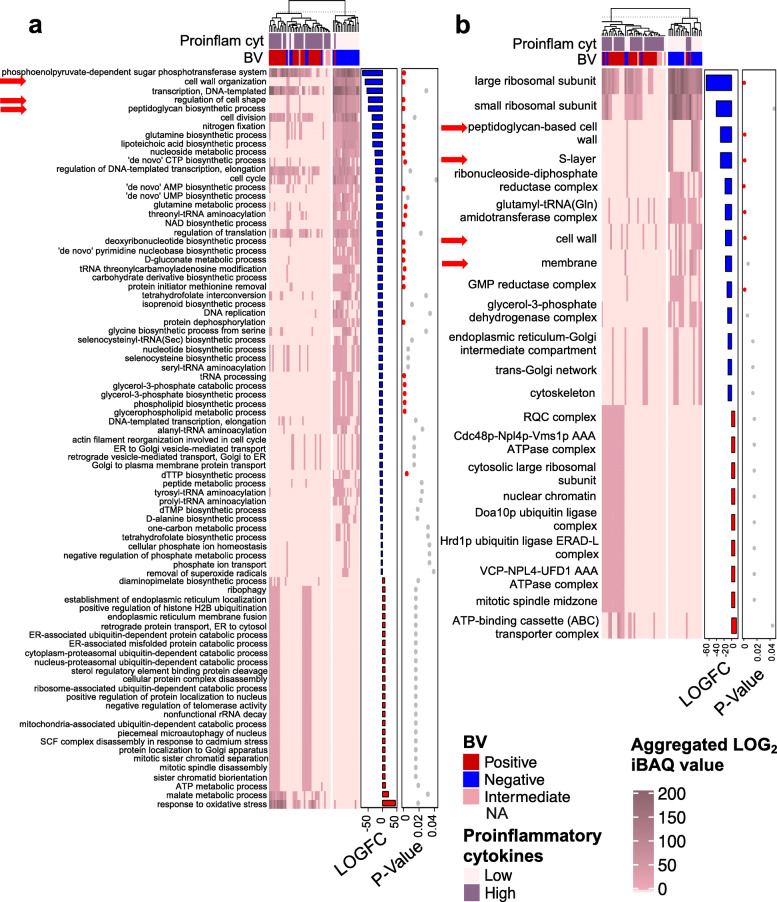
Microbial biological process and cellular component gene ontologies associated with genital inflammatory cytokine profiles. Unsupervised hierarchical clustering of aggregated intensity-based absolute quantification (iBAQ) values for microbial protein a biological process (BP) or b cellular component (CC) gene ontology (GO) relative abundance (n = 113). GO relative abundance was determined by metaproteomics and aggregation of microbial protein iBAQ values assigned to the same GO term. The heatmaps show aggregated microbial GO relative abundance, and the bar graphs show fold changes in aggregated log2-transformed iBAQ values (LOGFC) for each microbial protein with the same a BP or b CC GO in women with high versus low inflammation. Inflammation groups were defined based on hierarchical followed by K-means clustering of women according to the concentrations of nine pro-inflammatory cytokines [interleukin (IL)-1α, IL-1β, IL-6, IL-12p40, IL-12p70, tumor necrosis factor (TNF)-α, TNF-β, TNF-related apoptosis-inducing ligand (TRAIL), interferon (IFN)-γ]. Red bars indicate positive and blue bars indicate negative fold changes in women with high versus low inflammation. False discovery rate-adjusted p values are shown by dots, with red dots indicating low p values. Red arrows indicate cell wall and membrane processes and components. BV bacterial vaginosis, Proinflam cyt pro-inflammatory cytokine
Fig. 5
Fig. 5
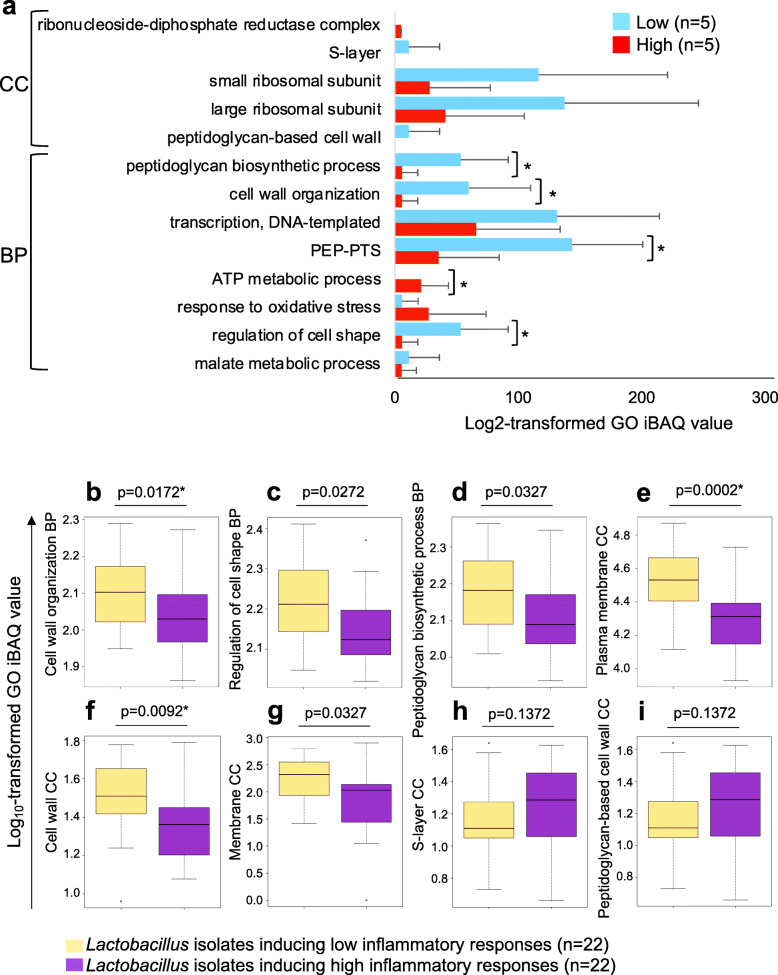
Relative abundance of gene ontologies in independent samples and in inflammatory versus non-inflammatory Lactobacillus isolates. a The top 14 microbial biological process (BP) and cellular component (CC) gene ontology (GO) terms that distinguished women with low versus high inflammation in the full cohort (n = 113) were validated in an independent sample of ten women from Cape Town, South Africa. Liquid chromatography-tandem mass spectrometry was used to evaluate the metaproteome in lateral vaginal wall swabs from these women. Inflammation groups were defined based on hierarchical followed by K-means clustering of these ten women according to the concentrations of nine pro-inflammatory cytokines [interleukin (IL)-1α, IL-1β, IL-6, IL-12p40, IL-12p70, tumor necrosis factor (TNF)-α, TNF-β, TNF-related apoptosis-inducing ligand (TRAIL), interferon (IFN)-γ]. GO relative abundance was determined by aggregation of microbial protein intensity-based absolute quantification (iBAQ) values assigned to a same GO term. The relative abundance of the top BPs and CCs (except ATP-binding cassette transporter complex which was not detected in these samples) is shown as bar graphs, with blue indicating women with low inflammation (n = 5) and red indicating women with high inflammation (n = 5). Welch’s t test was used for comparisons. *p < 0.05. bi Twenty-two Lactobacillus isolates that induced relatively high inflammatory responses and 22 isolates that induced lower inflammatory responses were adjusted to 4.18 × 10⁶ CFU/ml in bacterial culture medium and incubated for 24 h under anaerobic conditions. Following incubation, protein was extracted and digested and liquid chromatography-tandem mass spectrometry was conducted. Raw files were processed with MaxQuant against a database including the Lactobacillus genus and common contaminants. The iBAQ values for proteins with the same gene ontologies were aggregated, log10-transformed, and compared using the Mann-Whitney U test. Box-and-whisker plots show log10-transformed iBAQ values, with lines indicating medians and whiskers extending to 1.5 times the interquartile range from the box. A false discovery rate step-down procedure was used to adjust for multiple comparisons, and adjusted p values < 0.05 were considered statistically significant
Fig. 6
Fig. 6
Longitudinal changes in FGT metaproteomic profiles. Liquid chromatography-tandem mass spectrometry was used to evaluate the metaproteome in lateral vaginal wall swabs from 74 women from Cape Town, South Africa, at two visits 9 weeks (interquartile range 9–11 weeks) apart. a Sankey diagram was used to visualize changes in inflammatory cytokine profiles between visits. b Principal component analysis (mixOmics R package) was used to group women based on the log2-transformed intensity-based absolute quantification (iBAQ) values of all proteins identified at both visits. Grouping is based on vaginal pro-inflammatory cytokine concentrations, and each point represents an individual woman. c Top 20 proteins (UniProt IDs) distinguishing women with and without inflammation at both visits determined by moderated t test (limma R package) and random forest analysis (randomForest R package). d Top 10 taxa distinguishing women with and without inflammation at both visits determined by moderated t test (limma R package) and random forest algorithm (randomForest R package). e Top 14 biological process and cellular component gene ontology terms distinguishing women with and without inflammation at both visits determined by moderated t test (limma R package) and random forest algorithm (randomForest R package). Positions of participants in each heatmap are fixed, and the inflammation status of each participant across the visits can be tracked using the row sidebars. Inflammation groups were defined based on hierarchical followed by K-means clustering of nine pro-inflammatory cytokines [interleukin (IL)-1α, IL-1β, IL-6, IL-12p40, IL-12p70, tumor necrosis factor (TNF)-α, TNF-β, TNF-related apoptosis-inducing ligand (TRAIL), interferon (IFN)-γ]. ABC ATP-binding cassette, Agg aggregated, BP biological process, CC cellular component, Infla inflammation, PC principal component, PEP-PTS phosphoenolpyruvate-dependent phosphotransferase system, RNDP complex ribonucleoside-diphosphate reductase complex

References

    1. UNAIDS Data 2019. Available at: https://www.unaids.org/sites/default/files/media_asset/2019-UNAIDS-data_.... Accessed 20/02/20.
    1. Masson L, Passmore JAS, Liebenberg LJ, Werner L, Baxter C, Arnold KB, et al. Genital inflammation and the risk of HIV acquisition in women. Clin Infect Dis. 2015;61:260–269. - PMC - PubMed
    1. McKinnon LR, Liebenberg LJ, Yende-Zuma N, Archary D, Ngcapu S, Sivro A, et al. Genital inflammation undermines the effectiveness of tenofovir gel in preventing HIV acquisition in women. Nat Med. 2018;24:491. - PMC - PubMed
    1. Morrison C, Fichorova RN, Mauck C, Chen PL, Kwok C, Chipato T, et al. Cervical inflammation and immunity associated with hormonal contraception, pregnancy, and HIV-1 seroconversion. J Acquir Immune Defic Syndr. 2014;66:109–117. - PubMed
    1. Li Q, Estes JD, Schlievert PM, Duan L, Brosnahan AJ, Southern PJ, et al. Glycerol monolaurate prevents mucosal SIV transmission. Nature. 2009;458:1034–1038. - PMC - PubMed

Publication types

Substances

LinkOut - more resources