


Intraneural Application of microRNA-1 Mimetic Nucleotides Does Not Resolve Neuropathic Pain After Chronic Constriction Injury in Rats
- PMID: 33223847
- PMCID: PMC7671483
- DOI: 10.2147/JPR.S266937
Intraneural Application of microRNA-1 Mimetic Nucleotides Does Not Resolve Neuropathic Pain After Chronic Constriction Injury in Rats
Abstract
Background: Alterations of the expression of microRNAs (miRNAs) in chronic pain models seem to play a crucial role in the development of neuropathic pain, with microRNA-1 (miR-1) being of particular interest. Recently, we were able to show that decreased miR-1 levels were associated with increased expression of brain-derived neurotrophic factor (BDNF) and Connexin 43 (Cx43). We hypothesized that miR-1 mimetic nucleotides could alleviate neuropathic pain caused by chronic constriction injury in rats.
Methods: MiR-1 mimetic nucleotides were evaluated for effectiveness, functionality, and intracellular stability by transfecting human glioblastoma cells (U-87 MG). In vivo transfection with miR-1 mimics and corresponding scrambled miRNAs serving as control was performed by repetitive injection (days 0, 3, and 7) into the sciatic nerve following chronic constriction injury (CCI) in rats. Quantitative PCR was used to measure miR-1 content. Cx43 expression was determined by Western blot analysis. Effects on neuropathic pain were assessed by detecting paw withdrawal thresholds using an automated filament application.
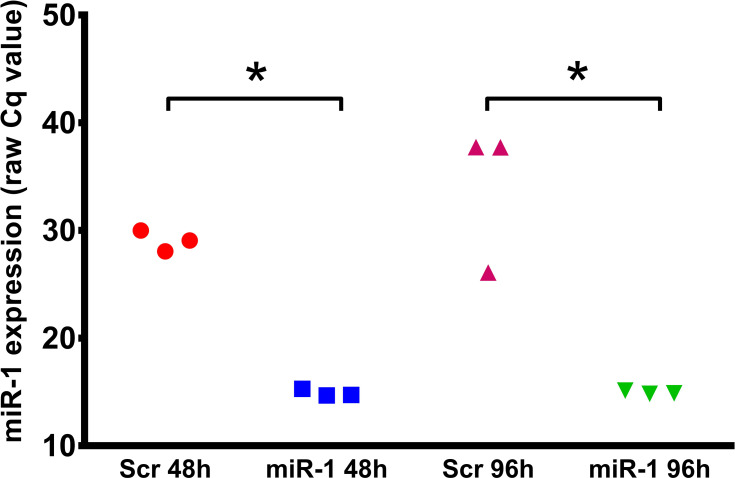
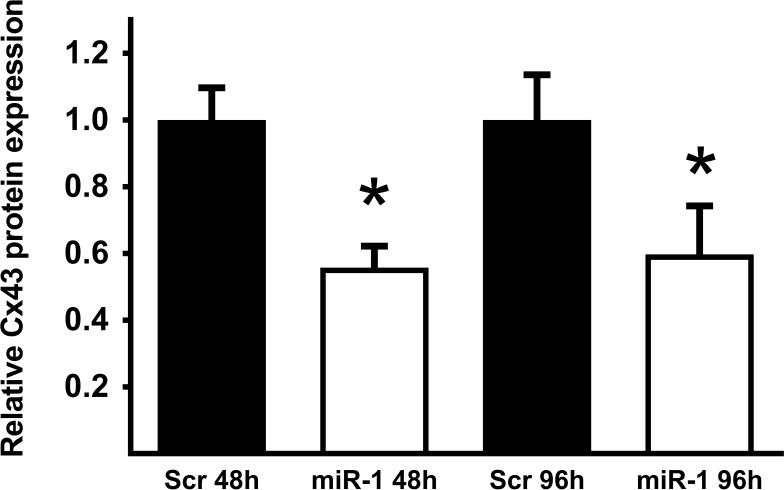
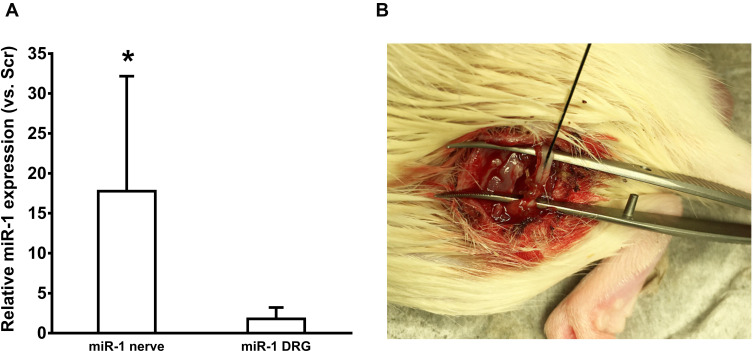
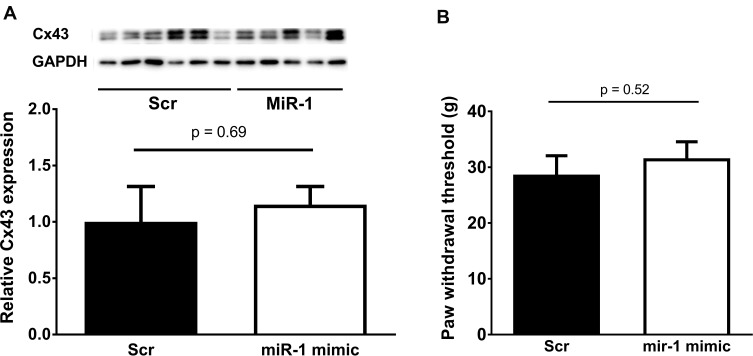
Results: Transfection of miR-1 mimics was confirmed in U-87 MG cells, with miR-1 content being increased significantly after 48 h and after 96 h (p<0.05). Effective downregulation of Cx43 expression was observed 48 and 96 h after transfection (-44 ± 0.07% and -40 ± 0.11%; p<0.05). In vivo, repetitive transfection with miR-1 mimetic nucleotides led to a 17.9-fold (± 14.2) increase of miR-1 in the sciatic nerve. However, the protein expression of Cx43 in sciatic nerves as well as paw withdrawal thresholds for mechanical stimulation was not significantly increased 10 days after chronic constriction injury.
Conclusion: While transfection with miR-1 mimics effective reduces Cx43 expression in vitro and restores miR-1 after CCI, we did neither observe altered levels of Cx43 protein level in nerves nor a beneficial effect on mechanical allodynia in vivo, most likely caused by insufficient Cx43 suppression.
Keywords: chronic pain; microRNAs; neuropathic pain; peripheral nerve.
© 2020 Kuebart et al.
Conflict of interest statement
Anne Kuebart and Verena Wollborn are co-first authors for this study. The authors declare no conflicts of interest.
Figures
References
-
- International Association for the Study of Pain. International Association for the Study of Pain. 2019. Accessed March 15, 2019.
LinkOut - more resources
Full Text Sources
