


Maintenance treatment of transcranial magnetic stimulation (TMS) for treatment-resistant depression patients responding to acute TMS treatment
- PMID: 33224435
- PMCID: PMC7675193
Maintenance treatment of transcranial magnetic stimulation (TMS) for treatment-resistant depression patients responding to acute TMS treatment
Abstract
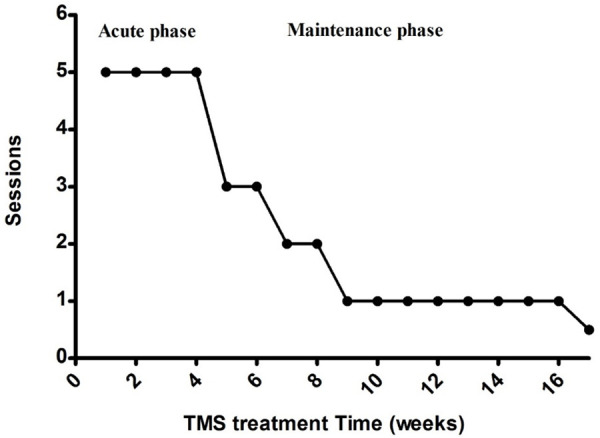
A growing body of studies has demonstrated that acute transcranial magnetic stimulation (TMS) therapy for treatment-resistant major depressive disorder (MDD) has achieved significant antidepressant effects and can alleviate other related symptoms. However, MDD has a high relapse rate, and patients with depressive symptoms can relapse weeks or months after acute TMS treatment. The lack of necessary TMS maintenance protocols after completing acute TMS treatment with full remission might be one of the reasons for the high relapse rates in MDD patients. Thus, investigating post-TMS treatment maintenance guidelines is important for decreasing relapse in treatment-resistant depression patients who had initially responded to acute TMS therapy. Therefore, we recommend a scientific approach to decrease relapse in treatment-resistant depression patients who had initially responded to acute TMS treatment.
Keywords: Transcranial magnetic stimulation; acute; depression; maintenance; major depressive disorder; therapy; treatment-resistant.
IJPPP Copyright © 2020.
Conflict of interest statement
None.
Figures
References
-
- Richards D. Prevalence and clinical course of depression: a review. Clin Psychol Rev. 2011;31:1117–1125. - PubMed
-
- Keller MB, Shapiro RW, Lavori PW, Wolfe N. Relapse in major depressive disorder: analysis with the life table. Arch Gen Psychiatry. 1982;39:911–915. - PubMed
-
- Mueller TI, Leon AC, Keller MB, Solomon DA, Endicott J, Coryell W, Warshaw M, Maser JD. Recurrence after recovery from major depressive disorder during 15 years of observational follow-up. Am J Psychiatry. 1999;156:1000–1006. - PubMed
Publication types
LinkOut - more resources
Full Text Sources
Other Literature Sources
Medical