Prevalence of BRAFV600E mutation in Asian series of papillary thyroid carcinoma-a contemporary systematic review
- PMID: 33224863
- PMCID: PMC7667088
- DOI: 10.21037/gs-20-430
Prevalence of BRAFV600E mutation in Asian series of papillary thyroid carcinoma-a contemporary systematic review
Abstract
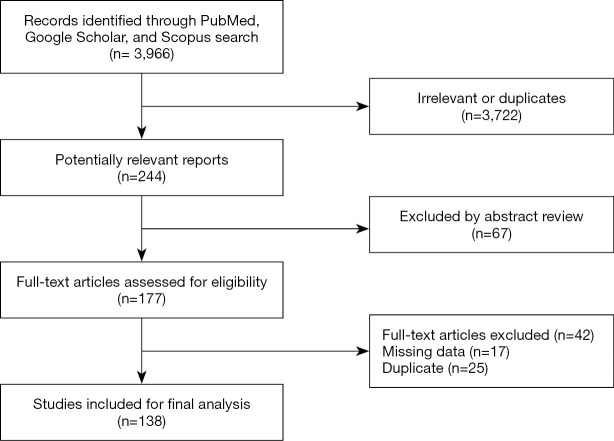
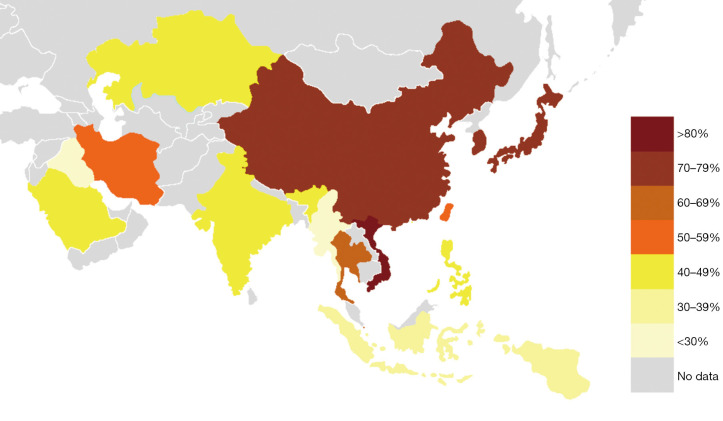
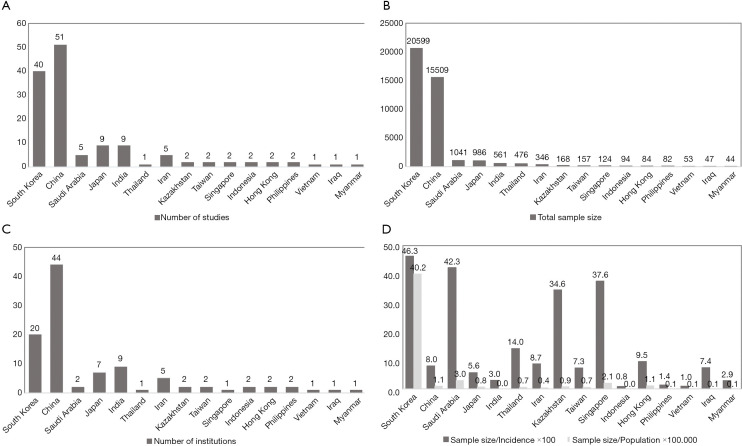
Papillary thyroid carcinoma (PTC), the most common malignancy of the endocrine system, is frequently driven by BRAFV600E mutation, which was reported in 35-60% cases in Western series. Numerous studies have recently emerged from Asian countries and regions; however sufficient summary is lacking to date. BRAF mutation serves as a diagnostic and prognostic tool in thyroid cancer, therefore establishing a rate of BRAF on the national scale could be of practical significance. We performed systematic reviews of available literature to investigate the prevalence of BRAF mutation in series of PTC from various Asian countries and regions. Out of the total 3,966 reports identified via initial screening, 138 studies encompassing over 40,000 PTCs were included for the final analysis. A vast majority (90.2%) of PTCs with known BRAF status were from East Asia, including China, South Korea, and Japan, with BRAF mutation rates of 71.2%, 75.5%, and 70.6%, respectively. Less abundant Indian and Saudi Arabian series found 45.6% and 46.3% prevalence of BRAFV600E in PTC, respectively. Much limited evidence was available from Thailand, Iran, Kazakhstan, Taiwan, Singapore, Indonesia, Hong Kong, Philippines, Vietnam, Iraq, and Myanmar. No relevant publications were found from other highly populated countries, such as Pakistan, Bangladesh, and Malaysia. After grouping by geographic region, we found that the highest rate of BRAFV600E was reported in the PTC series from East Asia (76.4%). Much lower rate (45-48%) was seen in PTC cohorts from South Asia, Central Asia, and the Middle East while the Southeast Asian series were in between (57%). Further subgroup analysis revealed that studies employing fresh frozen tissue and fine-needle aspirates showed higher rates of BRAF compared to those used formalin-fixed paraffin-embedded tissues. We found that the PTC series enrolled patients' cohorts after 2010 demonstrated a higher rate of BRAF compared to the earlier series. Finally, pediatric PTCs had lower BRAF prevalence compared to the baseline rate for the country. In conclusion, despite considerable among and within countries heterogeneity, the Asian PTC series showed a higher prevalence of BRAFV600E mutation than that in Western series. Causes of geographic heterogeneity, whether genuine (etiology, genetics) or methodology-related should be further investigated.
Keywords: Asia; BRAFV600E; China; Japan; Korea; papillary thyroid carcinoma (PTC).
2020 Gland Surgery. All rights reserved.
Conflict of interest statement
Conflicts of Interest: All authors have completed the ICMJE uniform disclosure form (available at http://dx.doi.org/10.21037/gs-20-430). The series “Asian and Western Practice in Thyroid Pathology: Similarities and Differences” was commissioned by the editorial office without any funding or sponsorship. The authors have no other conflicts of interest to declare.
Figures
References
-
- Bikas A, Burman KD. Epidemiology of thyroid cancer. In: Luster M, Duntas L, Wartofsky L. editors. The Thyroid and Its Diseases. Cham, Switzerland: Springer, 2019:541-7.
Publication types
LinkOut - more resources
Full Text Sources
Research Materials