


In vitro activation of ovarian cortex and autologous transplantation: A novel approach to primary ovarian insufficiency and diminished ovarian reserve
- PMID: 33225075
- PMCID: PMC7668396
- DOI: 10.1093/hropen/hoaa046
In vitro activation of ovarian cortex and autologous transplantation: A novel approach to primary ovarian insufficiency and diminished ovarian reserve
Abstract
Background: Primary ovarian insufficiency (POI) and diminished ovarian reserve are two conditions that affect women's fertility. Oocyte donation remains an option for these patients; however, the development of certain novel technologies, such as in vitro activation of ovarian cortex (IVA), enables the possibility of activating the pool of resting primordial follicles, increasing the chance of pregnancy.
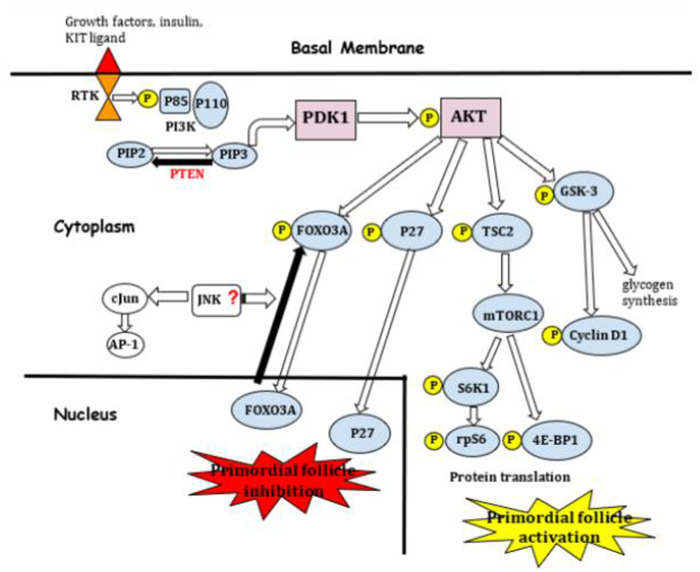
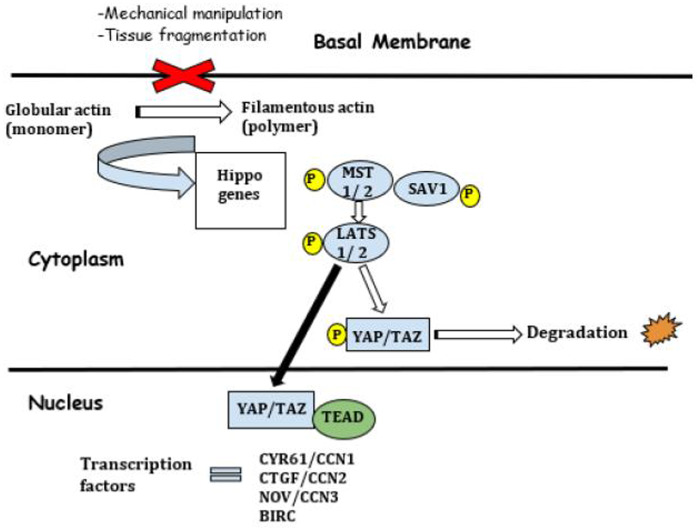
Objective and rationale: Here, we review the main pathways (PI3K and Hippo signaling) that govern the activation of primordial follicles and its application through the development of culture systems that support ovarian cortex for autologous transplantation. We also review the available data from case reports regarding outcomes of pregnancy and live birth rates with IVA.
Search methods: A PubMed search was conducted using the PubMed-NCBI database to identify literature pertinent to the pathways involved in the activation of primordial follicles and the outcomes of IVA techniques from 2013 to the present.
Outcomes: Women with POI have around a 5% chance of spontaneous pregnancy. Recently, novel techniques involving the activation of primordial follicles through molecular pathways have been developed, thus increasing the odds of these patients. More recently, the introduction of a drug-free IVA technique has shown to increase the number of antral follicles with successful oocyte maturation after gonadotropin treatment, reaching pregnancy rates over 30%, either through spontaneous conception or by the implementation of assisted reproductive technology.
Limitations: The evidence of this review is based on a few small series, so data should be interpreted with caution, and only randomized controlled trials could estimate the real magnitude and success of the procedure.
Reasons for caution: IVA technique remains an experimental strategy, with limited available data and the requirement of invasive procedures. Moreover, possible carcinogenic effects not yet determined after transplantation require special caution.
Wider implications: In view of the results achieved, IVA could provide a promising option for the preservation of fertility in some cancer patients and prepuberal girls where the only alternative is tissue cryopreservation.
Study funding/competing interests: The authors received no specific funding for this work and declared no potential conflicts of interest with respect to the research, authorship, and/or publication of this article.
Keywords: invitro activation/ primary ovarian insufficiency/ diminished ovarian reserve/ 38 PI3K pathway/ Hippo pathway/ dormant primordial follicle/ growth factors/ 39 autotransplantation.
© The Author(s) 2020. Published by Oxford University Press on behalf of European Society of Human Reproduction and Embryology.
Figures
References
-
- Adhikari D, Liu K. Molecular mechanisms underlying the activation of mammalian primordial follicles. Endocr Rev 2009;30:438–464. - PubMed
-
- Adhikari D, Liu K. mTOR signaling in the control of activation of primordial follicles. Cell Cycle 2010;9:1673–1674. - PubMed
-
- Albertini DF, Barrett SL. Oocyte-somatic cell communication. Reprod Suppl 2003;61:49–54. - PubMed
-
- Bates S, Peters G. Cyclin D1 as a cellular proto-oncogene. Semin Cancer Biol 1995;6:73–82. - PubMed
-
- Bertoldo MJ, Walters KA, Ledger WL, Gilchrist RB, Mermillod P, Locatelli Y. In vitro regulation of primordial follicle activation: challenges for fertility preservation strategies. Reprod Biomed Online 2018;36:491–499. - PubMed
Publication types
LinkOut - more resources
Full Text Sources
Other Literature Sources