Outcomes reported in trials of childhood fractures: a systematic review
- PMID: 33225285
- PMCID: PMC7677094
- DOI: 10.1302/2633-1462.15.BJO-2020-0031
Outcomes reported in trials of childhood fractures: a systematic review
Abstract
Aims: To analyze outcomes reported in trials of childhood fractures.
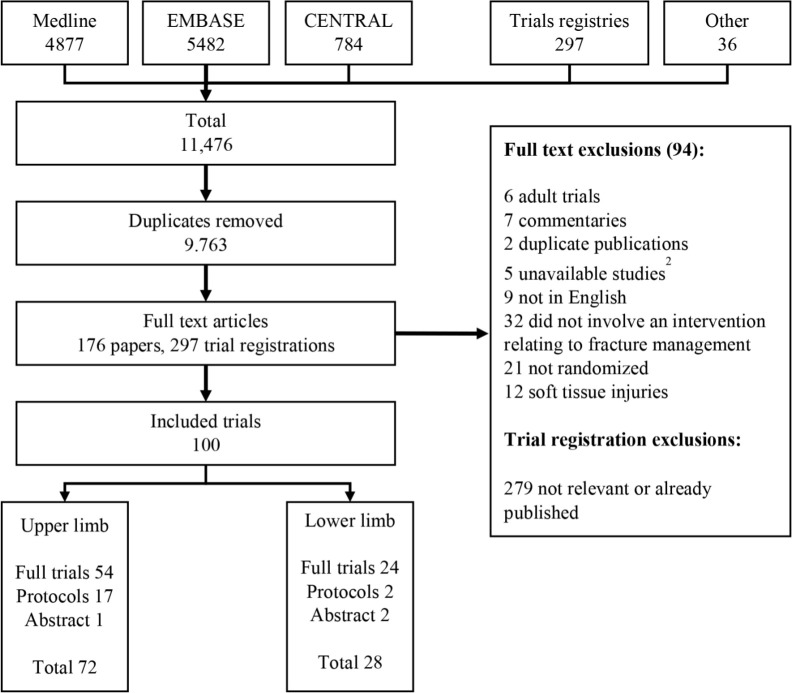
Methods: OVID MEDLINE, Embase, and Cochrane CENTRAL databases were searched on the eighth August 2019. A manual search of trial registries, bibliographic review and internet search was used to identify additional studies. 11,476 studies were screened following PRISMA guidelines. 100 trials were included in the analysis. Data extraction was completed by two researchers for each trial. Study quality was not evaluated. Outcomes reported by trials were mapped onto domains in the World Health Organization (WHO) International Classification of Function framework.
Results: In all, 525 outcomes were identified representing 52 WHO domains. Four domains were reported in more than 50% of trials: structure of upper/lower limb, sensation of pain, mobility of joint function, and health services, systems and policies. The Activities Scale for Kids performance (ASK-p) score was the most common outcome score reported in 6/72 upper limb and 4/28 lower limb trials.
Conclusion: There is a diverse range of outcomes reported in trials of childhood fractures covering all areas in the International Classification of Functioning, Disability and Health (ICF) framework. There were three common upper limb and three common lower limb outcomes. In the absence of a core outcome set, we recommend that upper limb trials report pain, range of movement and radiograph appearance of the arm and lower limb trials report pain, radiograph appearance of the leg and healthcare costs to improve consistency of reporting in future trials.Cite this article: Bone Joint Open 2020;1-5:167-174.
Keywords: Outcomes; childhood fractures; systematic review.
© 2020 Author(s) et al.
Conflict of interest statement
Potential Conflicts of Interest: The authors have no conflicts of interest relevant to this article to disclose.
Figures
References
-
- Cooper C, Dennison EM, Leufkens HGM, Bishop N, van Staa TP. Epidemiology of childhood fractures in Britain: a study using the general practice research database. J Bone Miner Res. 2004;19(12):1976–1981. - PubMed
-
- Kendrick D, Vinogradova Y, Coupland C, et al. Recovery from injury: the UK burden of injury multicentre longitudinal study. Inj Prev. 2007;2013(19):370–381. - PubMed
-
- WHO International Classification of Functioning, Disability and Health (ICF). WHO. http://www.who.int/classifications/icf/en/ (date last accessed 5 September 2018).