Osmolarity-independent electrical cues guide rapid response to injury in zebrafish epidermis
- PMID: 33225997
- PMCID: PMC7721437
- DOI: 10.7554/eLife.62386
Osmolarity-independent electrical cues guide rapid response to injury in zebrafish epidermis
Abstract
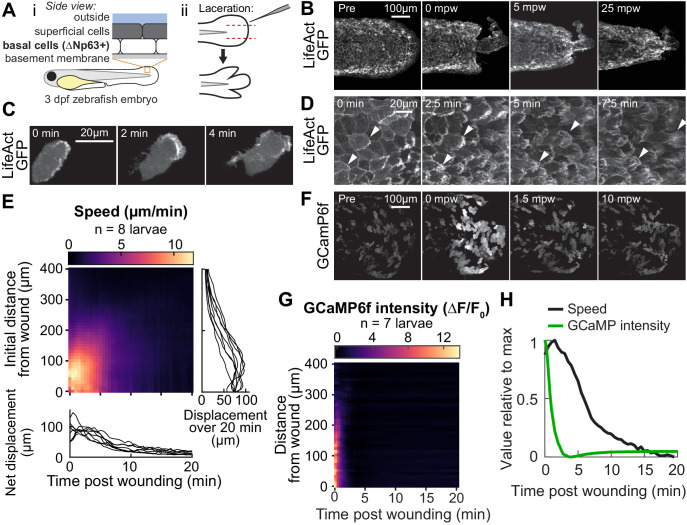
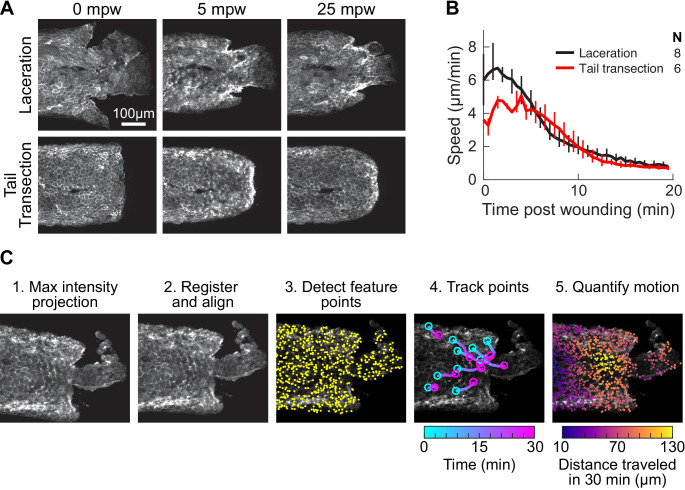
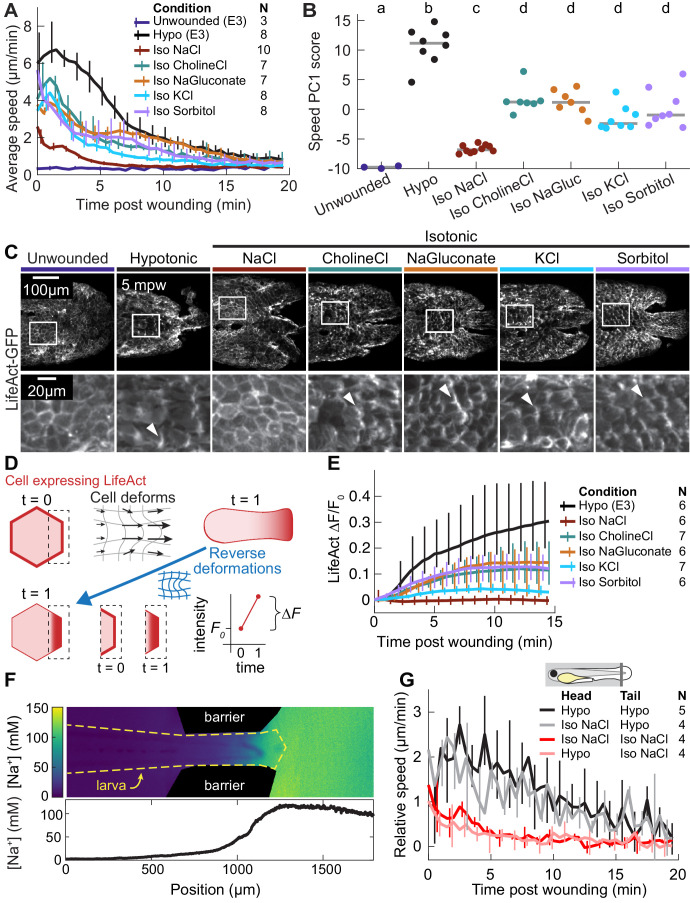
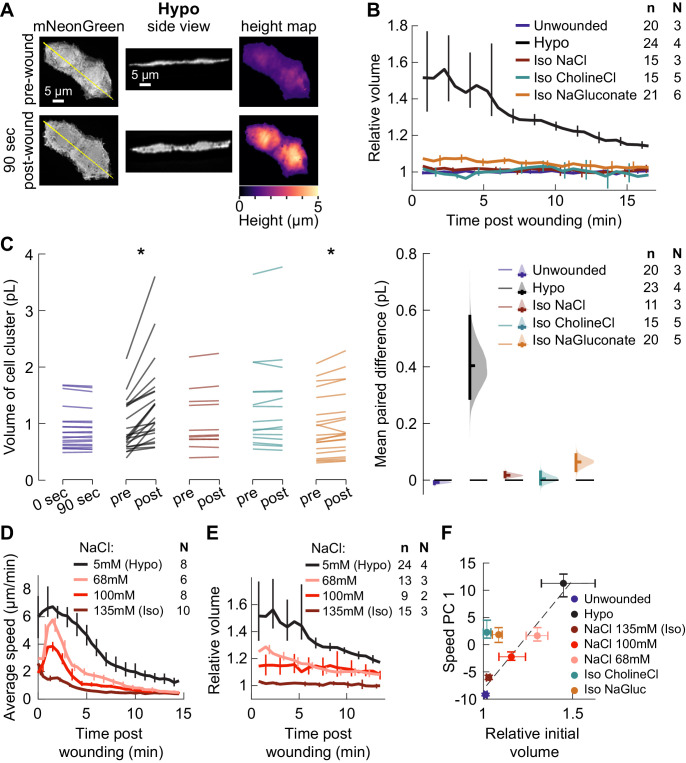
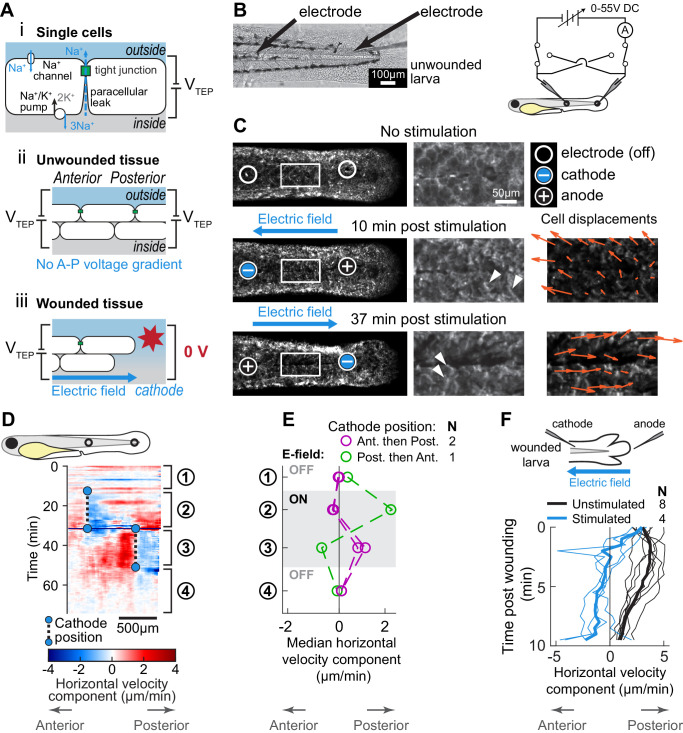
The ability of epithelial tissues to heal after injury is essential for animal life, yet the mechanisms by which epithelial cells sense tissue damage are incompletely understood. In aquatic organisms such as zebrafish, osmotic shock following injury is believed to be an early and potent activator of a wound response. We find that, in addition to sensing osmolarity, basal skin cells in zebrafish larvae are also sensitive to changes in the particular ionic composition of their surroundings after wounding, specifically the concentration of sodium chloride in the immediate vicinity of the wound. This sodium chloride-specific wound detection mechanism is independent of cell swelling, and instead is suggestive of a mechanism by which cells sense changes in the transepithelial electrical potential generated by the transport of sodium and chloride ions across the skin. Consistent with this hypothesis, we show that electric fields directly applied within the skin are sufficient to initiate actin polarization and migration of basal cells in their native epithelial context in vivo, even overriding endogenous wound signaling. This suggests that, in order to mount a robust wound response, skin cells respond to both osmotic and electrical perturbations arising from tissue injury.
Keywords: cell biology; cell migration; cell polarization; developmental biology; electric field; epidermis; transepithelial potential; wound healing; zebrafish.
© 2020, Kennard and Theriot.
Conflict of interest statement
AK, JT No competing interests declared
Figures
References
-
- Allan D, Caswell TA, van der Wel C, Dimiduk T, PIMS Contributors PIMS: Python Image Sequence. 0.4.1Github. 2015 https://soft-matter.github.io/pims/v0.4
Publication types
MeSH terms
Substances
Grants and funding
LinkOut - more resources
Full Text Sources
Other Literature Sources
Molecular Biology Databases
Research Materials