


Individualized versus standard diet fortification for growth and development in preterm infants receiving human milk
- PMID: 33226632
- PMCID: PMC8094236
- DOI: 10.1002/14651858.CD013465.pub2
Individualized versus standard diet fortification for growth and development in preterm infants receiving human milk
Abstract
Background: Human milk as compared to formula reduces morbidity in preterm infants but requires fortification to meet their nutritional needs and to reduce the risk of extrauterine growth failure. Standard fortification methods are not individualized to the infant and assume that breast milk is uniform in nutritional content. Strategies for individualizing fortification are available; however it is not known whether these are safe, or if they improve outcomes in preterm infants.
Objectives: To determine whether individualizing fortification of breast milk feeds in response to infant blood urea nitrogen (adjustable fortification) or to breast milk macronutrient content as measured with a milk analyzer (targeted fortification) reduces mortality and morbidity and promotes growth and development compared to standard, non-individualized fortification for preterm infants receiving human milk at < 37 weeks' gestation or at birth weight < 2500 grams.
Search methods: We used the standard search strategy of Cochrane Neonatal to search the Cochrane Central Register of Controlled Trials (CENTRAL; 2019, Issue 9), in the Cochrane Library; Ovid MEDLINE(R) and Epub Ahead of Print, In-Process & Other Non-Indexed Citations, Daily and Versions(R); and the Cumulative Index to Nursing and Allied Health Literature (CINAHL), on September 20, 2019. We also searched clinical trials databases and the reference lists of retrieved articles for pertinent randomized controlled trials (RCTs) and quasi-randomized trials.
Selection criteria: We considered randomized, quasi-randomized, and cluster-randomized controlled trials of preterm infants fed exclusively breast milk that compared a standard non-individualized fortification strategy to individualized fortification using a targeted or adjustable strategy. We considered studies that examined any use of fortification in eligible infants for a minimum duration of two weeks, initiated at any time during enteral feeding, and providing any regimen of human milk feeding.
Data collection and analysis: Data were collected using the standard methods of Cochrane Neonatal. Two review authors evaluated the quality of the studies and extracted data. We reported analyses of continuous data using mean differences (MDs), and dichotomous data using risk ratios (RRs). We used the GRADE approach to assess the certainty of evidence.
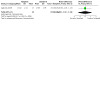
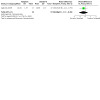
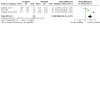
Main results: Data were extracted from seven RCTs, resulting in eight publications (521 total participants were enrolled among these studies), with duration of study interventions ranging from two to seven weeks. As compared to standard non-individualized fortification, individualized (targeted or adjustable) fortification of enteral feeds probably increased weight gain during the intervention (typical mean difference [MD] 1.88 g/kg/d, 95% confidence interval [CI] 1.26 to 2.50; 6 studies, 345 participants), may have increased length gain during the intervention (typical MD 0.43 mm/d, 95% CI 0.32 to 0.53; 5 studies, 242 participants), and may have increased head circumference gain during the intervention (typical MD 0.14 mm/d, 95% CI 0.06 to 0.23; 5 studies, 242 participants). Compared to standard non-individualized fortification, targeted fortification probably increased weight gain during the intervention (typical MD 1.87 g/kg/d, 95% CI 1.15 to 2.58; 4 studies, 269 participants) and may have increased length gain during the intervention (typical MD 0.45 mm/d, 95% CI 0.32 to 0.57; 3 studies, 166 participants). Adjustable fortification probably increased weight gain during the intervention (typical MD 2.86 g/kg/d, 95% CI 1.69 to 4.03; 3 studies, 96 participants), probably increased gain in length during the intervention (typical MD 0.54 mm/d, 95% CI 0.38 to 0.7; 3 studies, 96 participants), and increased gain in head circumference during the intervention (typical MD 0.36 mm/d, 95% CI 0.21 to 0.5; 3 studies, 96 participants). We are uncertain whether there are differences between individualized versus standard fortification strategies in the incidence of in-hospital mortality, bronchopulmonary dysplasia, necrotizing enterocolitis, culture-proven late-onset bacterial sepsis, retinopathy of prematurity, osteopenia, length of hospital stay, or post-hospital discharge growth. No study reported severe neurodevelopmental disability as an outcome. One study that was published after our literature search was completed is awaiting classification.
Authors' conclusions: We found moderate- to low-certainty evidence suggesting that individualized (either targeted or adjustable) fortification of enteral feeds in very low birth weight infants increases growth velocity of weight, length, and head circumference during the intervention compared with standard non-individualized fortification. Evidence showing important in-hospital and post-discharge clinical outcomes was sparse and of very low certainty, precluding inferences regarding safety or clinical benefits beyond short-term growth.
Trial registration: ClinicalTrials.gov NCT01487928 NCT01609894.
Copyright © 2020 The Cochrane Collaboration. Published by John Wiley & Sons, Ltd.
Conflict of interest statement
VF on the Mothers' Milk Bank Northeast Advisory Board in a voluntary capacity. This is a non‐profit community milk bank that provides donated, pasteurized human milk. JMT has no interests to declare. EAB has no interests to declare. PE has no interests to declare. SL has no interests to declare. MML has no interests to declare. JIH has no interests to declare.
Core editorial and administrative support for this review has been provided by a grant from The Gerber Foundation. The Gerber Foundation is a separately endowed, private foundation, independent from the Gerber Products Company. The grantor has no input on the content of the review or the editorial process (see Sources of support).
Figures






Comment in
-
What are the effects of individualized diet fortification for growth and development in infants born preterm receiving human milk? A Cochrane Review summary with commentary.Dev Med Child Neurol. 2021 Dec;63(12):1371-1373. doi: 10.1111/dmcn.15057. Epub 2021 Sep 15. Dev Med Child Neurol. 2021. PMID: 34524685 No abstract available.
References
References to studies included in this review
Agakidou 2019 {published and unpublished data}
-
- Agakidou E, Karagiozoglou-Lampoudi T, Parlapani E, Fletouris DJ, Sarafidis K, Tzimouli V, et al. Modifications of own mothers' milk fortification protocol affect early plasma IGF-I and ghrelin levels in preterm infants: a randomized clinical trial. Nutrients 2019;11(12):3056. [DOI: 10.3390/nu11123056] [PMID: ] - DOI - PMC - PubMed
Arslanoglu 2006 {published data only}
Bulut 2019 {published data only}
Hair 2014 {published data only}
-
- Hair AB, Blanco CL, Moreira AG, Hawthorne KM, Lee ML, Rechtman DJ, et al. Randomized trial of human milk cream as a supplement to standard fortification of an exclusive human milk-based diet in infants 750-1250 g birth weight. Journal of Pediatrics 2014;165(5):915-20. [DOI: 10.1016/j.jpeds.2014.07.005] [PMID: ] - DOI - PubMed
Kadioglu Simsek 2019 {published data only}
Moro 1995 {published data only}
Rochow 2020 {published data only (unpublished sought but not used)}
-
- Rochow N, Fusch G, Ali A, Bhatia A, So HY, Iskander R, et al. Individualized target fortification of breast milk with protein, carbohydrates, and fat for preterm infants: a double-blind randomized controlled trial. Clinical Nutrition 2020;S0261-5614(20):30303-8. [DOI: 10.1016/j.clnu.2020.04.031] [PMID: ] - DOI - PubMed
References to studies excluded from this review
Boehm 1993 {published data only}
Kanmaz 2013 {published data only}
-
- Kanmaz HG, Mutlu B, Canpolat FE, Erdeve O, Oguz SS, Uras N, et al. Human milk fortification with differing amounts of fortifier and its association with growth and metabolic responses in preterm infants. Journal of Human Lactation 2013;29(3):400-5. [DOI: 10.1177/0890334412459903] [PMID: ] - DOI - PubMed
Maas 2017 {published data only}
Mathes 2018 {published data only}
-
- Mathes M, Maas C, Bleeker C, Vek J, Bernhard W, Peter A, et al. Effect of increased enteral protein intake on plasma and urinary urea concentrations in preterm infants born at < 32 weeks gestation and < 1500 g birth weight enrolled in a randomized controlled trial - a secondary analysis. BioMed Central Pediatrics 2018;18(1):154. [DOI: 10.1186/s12887-018-1136-5] [PMID: ] - DOI - PMC - PubMed
McLeod 2016 {published data only}
-
- McLeod G, Sherriff J, Hartmann PE, Nathan E, Geddes D, Simmer K. Comparing different methods of human breast milk fortification using measured v. assumed macronutrient composition to target reference growth: a randomised controlled trial. British Journal of Nutrition 2016;115(3):431-9. [DOI: 10.1017/S0007114515004614] [PMID: ] - DOI - PubMed
Morlacchi 2016 {published data only}
-
- Morlacchi L, Mallardi D, Gianni ML, Roggero P, Amato O, Piemontese P, et al. Is targeted fortification of human breast milk an optimal nutrition strategy for preterm infants? An interventional study. Journal of Translational Medicine 2016;14(1):195. [DOI: 10.1186/s12967-016-0957-y] [PMID: ] - DOI - PMC - PubMed
References to studies awaiting assessment
Brion 2020 {published data only}
Additional references
AAP 1977
-
- American Academy of Pediatrics Committee on Nutrition. Nutritional needs of low-birth-weight infants. Pediatrics 1977;60(4):519-30. [PMID: ] - PubMed
AAP 2012
Adamkin 2014
Agostoni 2010
-
- Agostoni C, Buonocore G, Carnielli VP, De Curtis M, Darmaun D, Decsi T, et al, ESPGHAN Committee on Nutrition. Enteral nutrient supply for preterm infants: commentary from the European Society for Paediatric Gastroenterology, Hepatology, and Nutrition Committee on Nutrition. Journal of Pediatric Gastroenterology and Nutrition 2010;50(1):85-91. [DOI: 10.1097/MPG.0b013e3181adaee0] [PMID: ] - DOI - PubMed
Alan 2013
-
- Alan S, Atasay B, Cakir U, Duran Y, Kilic A, Kahvecioglu D, et al. An intention to achieve better postnatal in-hospital growth for preterm infants: adjustable protein fortification of human milk. Early Human Development 2013;89(12):1017-23. [DOI: 10.1016/j.earlhumdev.2013.08.015] [PMID: ] - DOI - PubMed
Amissah 2018a
Amissah 2018b
Amissah 2018c
Arslanoglu 2019
-
- Arslanoglu S, Boquien CY, King C, Lamireau D, Tonetto P, Barnett D, et al. Fortification of human milk for preterm infants: update and recommendations of the European Milk Bank Association (EMBA) Working Group on Human Milk Fortification. Frontiers in Pediatrics March 2019;7:76. [DOI: 10.3389/fped.2019.00076] [PMID: 30968003] - DOI - PMC - PubMed
Bayley 1993
-
- Bayley N. Bayley Scales of Infant Development–II. San Antonio, Texas: Psychological Corporation, 1993.
Bayley 2005
-
- Bayley N. Bayley Scales of Infant and Toddler Development. 3rd edition. San Antonio, TX: Harcourt Assessment, 2005.
Bell 1978
Brown 2020
Clark 2003
Ehrenkranz 1999
Ehrenkranz 2006
Ehrenkranz 2014
Embleton 2001
GRADEpro GDT [Computer program]
-
- GRADEpro GDT. Version accessed 05/25/2020. Hamilton (ON): McMaster University (developed by Evidence Prime). Available at gradepro.org.
Griffin 2016
Higgins 2011a
-
- Higgins JP, Altman DG, Sterne JA, on behalf of the Cochrane Statistical Methods Group and the Cochrane Bias Methods Group. Chapter 8. Assessing risk of bias in included studies. In: Higgins JP, Green S, editor(s). Cochrane Handbook for Systematic Reviews of Interventions Version 5.1.0 (updated March 2011). The Cochrane Collaboration, 2011. Available from handbook.cochrane.org.
Higgins 2011b
-
- Higgins JP, Green S, editor(s). Cochrane Handbook for Systematic Reviews of Interventions Version 5.1.0 (updated March 2011). The Cochrane Collaboration, 2011. Available from handbook.cochrane.org.
Higgins 2019
-
- Higgins JPT, Eldridge S, Li T. Chapter 23. Including variants on randomized trials, Section 23.3. Studies with more than two intervention groups. In: Higgins JPT, Thomas J, Chandler J, Cumpston M, Li T, Page MJ, Welch VA, editors(s). Cochrane Handbook for Systematic Reviews of Interventions Version 6.0 (updated July 2019). Available from www.training.cochrane.org/handbook. Cochrane, 2019.
Horbar 2015
Hu 2019
Jobe 2001
Kohn 2020
-
- Kohn MA, Senyak J. Sample Size Calculators [website]. UCSF CTSI. 27 July 2020. Available at https://www.sample-size.net/ (accessed 19 August 2020).
Lawrence 2011
-
- Lawrence RA, Lawrence RM. Breastfeeding: A Guide for the Medical Professional. 7th edition. St Louis, MO: Mosby (Elsevier), 2010.
Luo 2018
-
- Dehui L, Xiang W, Jiming L, Tiejun T. Optimally estimating the sample mean from the sample size, median, mid-range, and/or mid-quartile range. Statistical Methods in Medical Research 2018;27(6):1785–805. - PubMed
Median to Mean Calculator 2020
-
- Estimating the sample mean and standard deviation from the sample size, median, range and/or interquartile range. http://www.math.hkbu.edu.hk/~tongt/papers/median2mean.html. (accessed 29 May 2020). - PMC - PubMed
Moore 2011
Ofek Shlomai 2014
Patel 2005
Premkumar 2019
Radmacher 2013
Radmacher 2017
-
- Radmacher PG, Adamkin DH. Fortification of human milk for preterm infants. Seminars in Fetal & Neonatal Medicine 2017;22(1):30-5. [DOI: 10.1016/j.siny.2016.08.004] [PMID: ] - PubMed
Review Manager 2014 [Computer program]
-
- Review Manager 5 (RevMan 5). Version 5.3. Copenhagen: Nordic Cochrane Centre, The Cochrane Collaboration, 2014.
Rochow 2013
Saarela 2005
Sammallahti 2014
-
- Sammallahti S, Pyhälä R, Lahti M, Lahti J, Pesonen AK, Heinonen K, et al. Infant growth after preterm birth and neurocognitive abilities in young adulthood. Journal of Pediatrics 2014;165(6):1109-15.e3. [DOI: 10.1016/j.jpeds.2014.08.028] [PMID: ] - PubMed
Sauer 2011
Schünemann 2013
-
- Schünemann H, Brożek J, Guyatt G, Oxman A, editors, Grade Working Group. Handbook for grading the quality of evidence and the strength of recommendations using the GRADE approach (updated October 2013). GRADE Working Group, 2013. Available from gdt.guidelinedevelopment.org/app/handbook/handbook.html.
Thanigainathan 2020
US Food and Drug Administration 2018
-
- US Food and Drug Administration. FDA permits marketing of a diagnostic test to aid in measuring nutrients in breast milk. US FDA website: online news article 2018. Retrieved 25 August 2019, from www.fda.gov/news-events/press-announcements/fda-permits-marketing-diagno....
Wake Forest/Baptist Medical Center 2018
-
- Wake Forest/Baptist Medical Center. Brenner Children's NICU is first in nation to use FDA-approved breast milk analyzer. Online news article 2018. Retrieved 25 August 2019 from newsroom.wakehealth.edu/News-Releases/2019/05/Brenner-Childrens-NICU-is-....
Wu 2018
References to other published versions of this review
Fabrizio 2019
-
- Fabrizio V, Trzaski JM, Brownell EA, Esposito P, Lainwala S, Lussier MM, et al. Targeted or adjustable versus standard diet fortification for growth and development in very low birth weight infants receiving human milk. Cochrane Database of Systematic Reviews 2019, Issue 11. Art. No: CD013465. [DOI: 10.1002/14651858.CD013465] - DOI - PMC - PubMed
Publication types
MeSH terms
Associated data
LinkOut - more resources
Full Text Sources
Medical
Research Materials
Miscellaneous
