


The Current Status of Clinical Research Involving Microneedles: A Systematic Review
- PMID: 33228098
- PMCID: PMC7699365
- DOI: 10.3390/pharmaceutics12111113
The Current Status of Clinical Research Involving Microneedles: A Systematic Review
Abstract
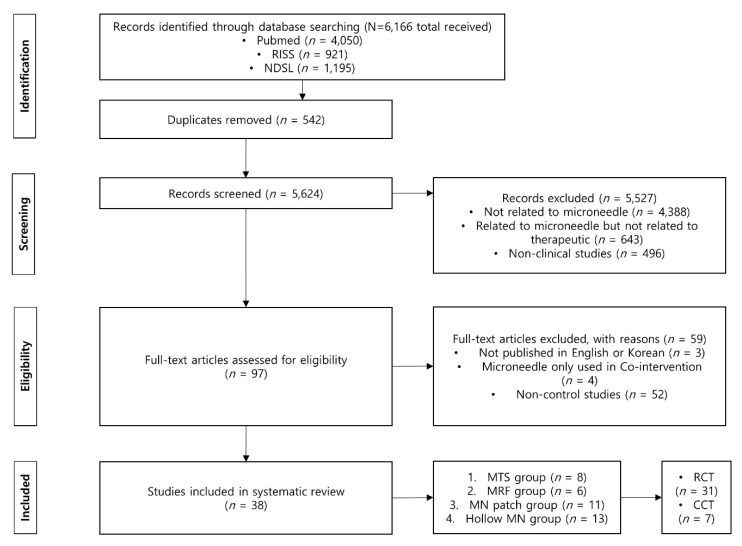
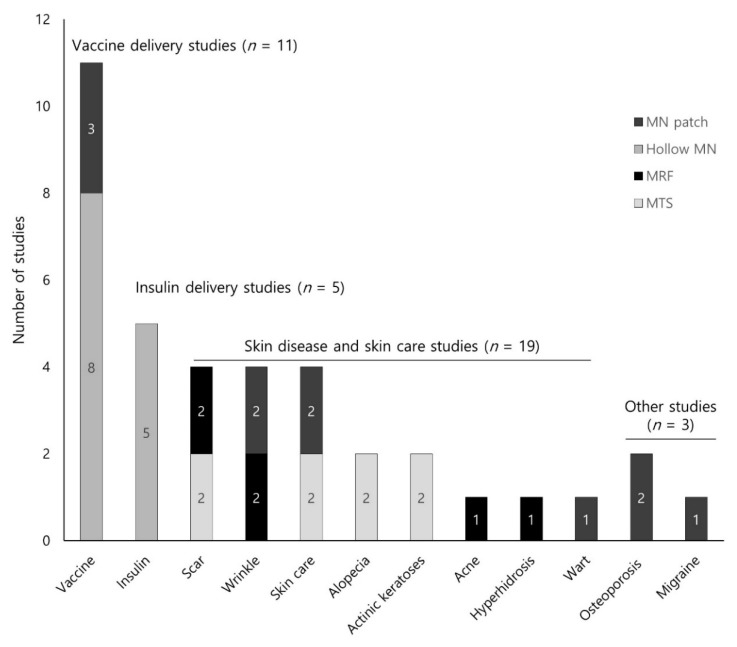
In recent years, a number of clinical trials have been published on the efficacy and safety of drug delivery using microneedles (MNs). This review aims to systematically summarize and analyze the current evidence including the clinical effect and safety of MNs. Three electronic databases, including PubMed, were used to search the literature for randomized controlled trials (RCTs) and clinical controlled trials (CCTs) that evaluated the therapeutic efficacy of MNs from their inception to 28 June 2018. Data were extracted according to the characteristics of study subjects; disorder, types, and details of the intervention (MNs) and control groups; outcome measurements; effectiveness; and incidence of adverse events (AEs). Overall, 31 RCTs and seven CCTs met the inclusion criteria. Although MNs were commonly used in skin-related studies, evaluating the effects of MNs was difficult because many studies did not provide adequate comparison values between groups. For osteoporosis treatment, vaccine, and insulin delivery studies, MNs were comparable to or more effective than the gold standard. Regarding the safety of MNs, most AEs reported in each study were minor (grade 1 or 2). A well-designed RCT is necessary to clearly evaluate the effectiveness of MNs in the future.
Keywords: microneedle; randomized controlled trial; research and development; systematic review.
Conflict of interest statement
The authors declare no conflict of interest.
Figures
References
-
- Donnelly R.F., Singh T.R.R., Morrow D.I., Woolfson A.D. Microneedle-Mediated Transdermal and Intradermal Drug Delivery. John Wiley & Sons; Hoboken, NJ, USA: 2012.
Publication types
LinkOut - more resources
Full Text Sources
Miscellaneous
