


Evaluating a Prototype Nasolaryngoscopy Hood During Aerosol-Generating Procedures in Otolaryngology
- PMID: 33228434
- PMCID: PMC7686647
- DOI: 10.1177/0194599820973652
Evaluating a Prototype Nasolaryngoscopy Hood During Aerosol-Generating Procedures in Otolaryngology
Abstract
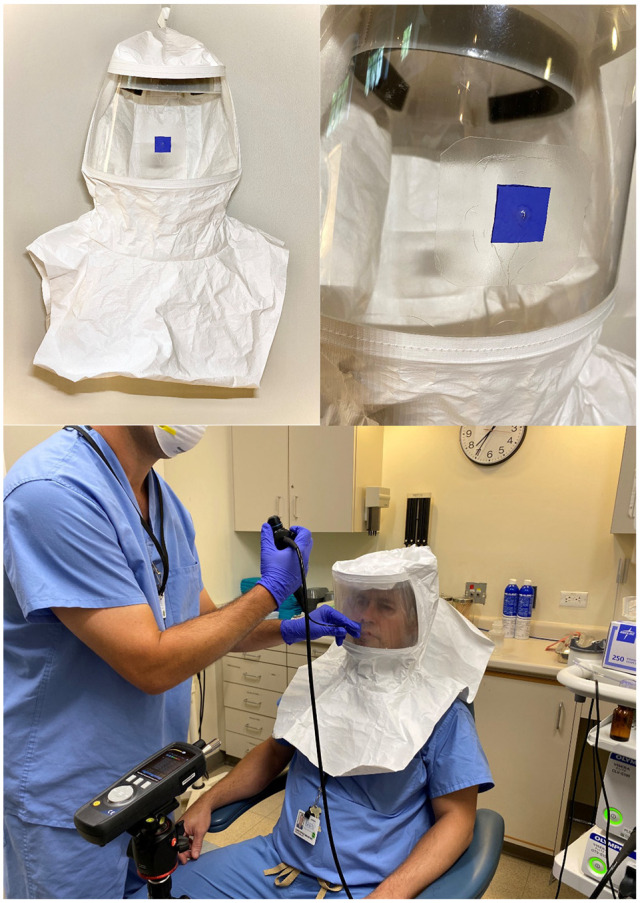
Objective: During the COVID-19 pandemic, there has been considerable interest in identifying aerosol- and droplet-generating procedures, as well as efforts to mitigate the spread of these potentially dangerous particulates. This study evaluated the efficacy of a prototype nasolaryngoscopy hood (PNLH) during various clinical scenarios that are known to generate aerosols and droplets.
Study design: Prospective detection of airborne aerosol generation during clinical simulation while wearing an PNLH.
Setting: Clinical examination room.
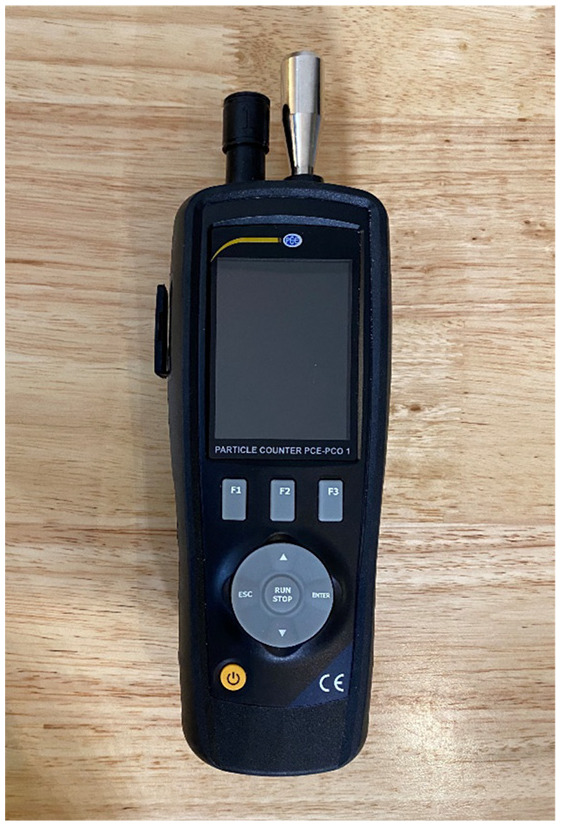
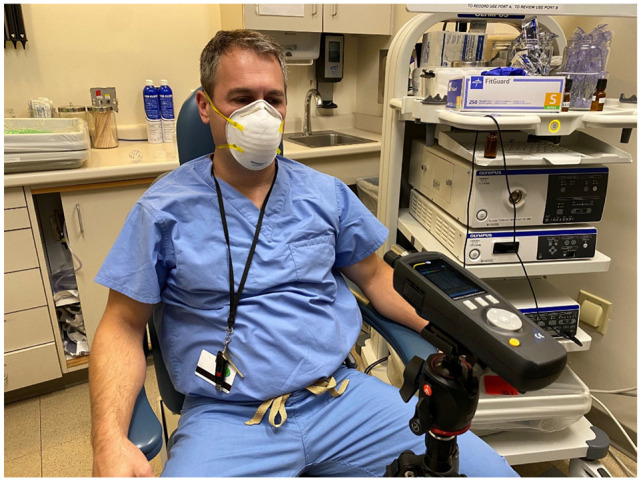
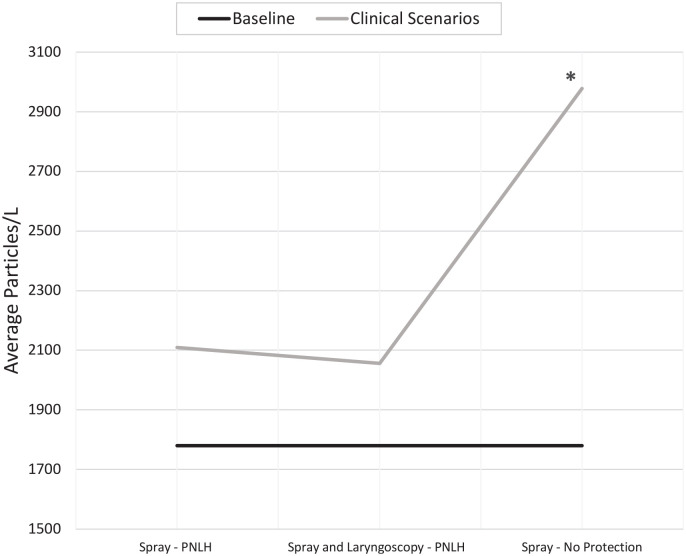
Methods: A particle counter was used to calculate the average number of 0.3-µm particles/L detected during various clinical scenarios that included sneezing, nasolaryngoscopy, sneezing during nasolaryngoscopy, and topical spray administration. Experiments were repeated to compare the PNLH versus no protection. During the sneeze experiments, additional measurements with a conventional N95 were documented.
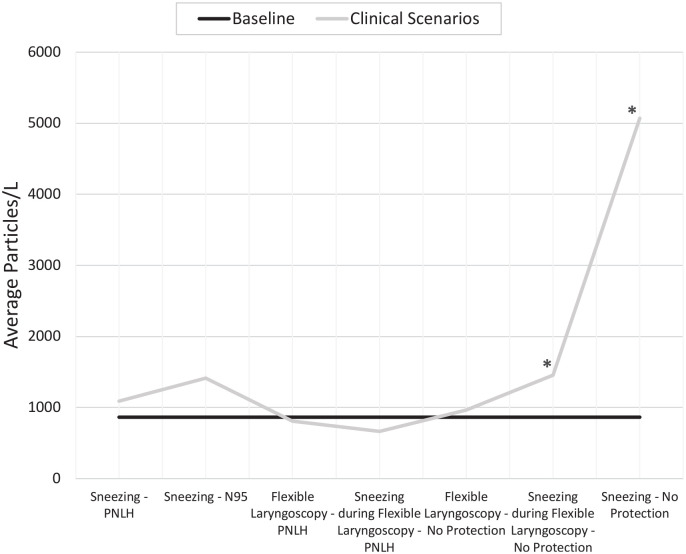
Results: There was a significant increase in aerosols detected during sneezing, sneezing during nasolaryngoscopy, and spray administration, as compared with baseline when no patient barrier was used. With the PNLH in place, the level of aerosols returned to comparable baseline levels in each scenario. Of note, routine nasolaryngoscopy did not lead to a statistically significant increase in aerosols.
Conclusion: This study demonstrated that the PNLH is a safe and effective form of protection that can be used in clinical practice to help mitigate the generation of aerosols during nasolaryngoscopy. While nasolaryngoscopy itself was not shown to produce significant aerosols, the PNLH managed to lessen the aerosol burden during sneezing episodes associated with nasolaryngoscopy.
Keywords: COVID-19; aerosol; endoscopy; otolaryngology; prevention.
Conflict of interest statement
Figures
Comment in
-
Withdrawal of Protective Equipment for Nasolaryngoscopy May Be at Risk of Secondary Aerosolization.Otolaryngol Head Neck Surg. 2021 Oct;165(4):606-607. doi: 10.1177/0194599821991084. Epub 2021 Feb 2. Otolaryngol Head Neck Surg. 2021. PMID: 33528301 No abstract available.
References
MeSH terms
Substances
LinkOut - more resources
Full Text Sources
Medical
