


'The dual pandemic' of suicide and COVID-19: A biopsychosocial narrative of risks and prevention
- PMID: 33229123
- PMCID: PMC7672361
- DOI: 10.1016/j.psychres.2020.113577
'The dual pandemic' of suicide and COVID-19: A biopsychosocial narrative of risks and prevention
Abstract
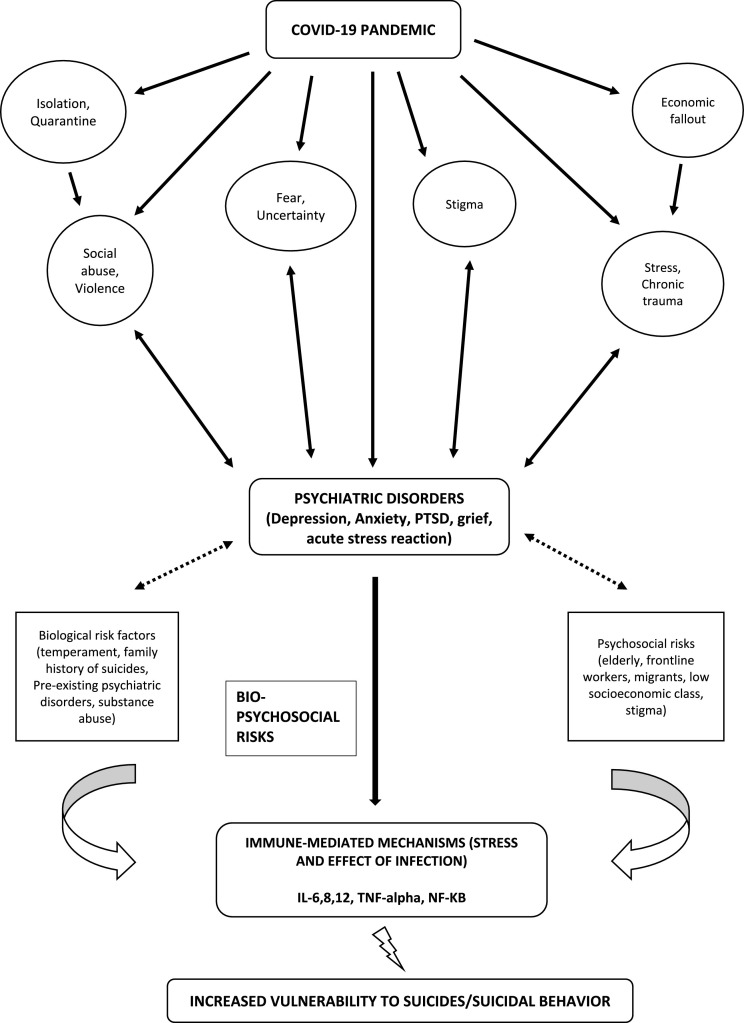
The Coronavirus disease 2019 (COVID-19) has emerged as a new global health threat. By increasing the risk of isolation, fear, stigma, abuse and economic fallout, COVID-19 has led to increase in risk of psychiatric disorders, chronic trauma and stress, which eventually increase suicidality and suicidal behavior. There is limited data on association of pandemics and suicides. Cases of suicides have been rising since COVID-19 first emerged in China. The association between suicides and pandemics can possibly be explained through various models like Durkheim's theory, Joiner's interpersonal theory, social stress theory, biological theories, etc. The frontline workers, elderly, migrants, homeless, socio-economically impoverished classes as well as those with pre-existing mental disorders, substance abuse and family history of suicides are at higher risk. Suicides are preventable and need early detection, awareness and socio-culturally tailored interventions. This narrative review draws global perspectives on the association of suicidality and pandemics, the theories and risk factors related to same based on the available evidence. It also hypothesizes neuroimmunity and immune based risk factors as possible links between the psychosocial vulnerabilities and suicide during outbreaks like COVID-19. Proposed strategies of suicide-prevention, as an integral part of public health response to the pandemic are subsequently discussed.
Keywords: Biopsychosocial; COVID-19; Coronavirus; Pandemic; Suicide; Suicide prevention.
Copyright © 2020 Elsevier Ltd. All rights reserved.
Conflict of interest statement
None.
Figures
References
-
- Banerjee D., Vaishnav M., Rao T.S., Raju M.S.V.K., Dalal P.K., Javed A., Saha G., Mishra K.K., Kumar V., Jagiwala M.P. Impact of the COVID-19 pandemic on psychosocial health and well-being in South-Asian (World Psychiatric Association zone 16) countries: A systematic and advocacy review from the Indian Psychiatric Society. Indian J. Psychiatry. 2020;62(9):343. - PMC - PubMed
Publication types
MeSH terms
LinkOut - more resources
Full Text Sources
Other Literature Sources
Medical
