


SARS-CoV-2 and Plasmodium falciparum common immunodominant regions may explain low COVID-19 incidence in the malaria-endemic belt
- PMID: 33230417
- PMCID: PMC7674012
- DOI: 10.1016/j.nmni.2020.100817
SARS-CoV-2 and Plasmodium falciparum common immunodominant regions may explain low COVID-19 incidence in the malaria-endemic belt
Abstract
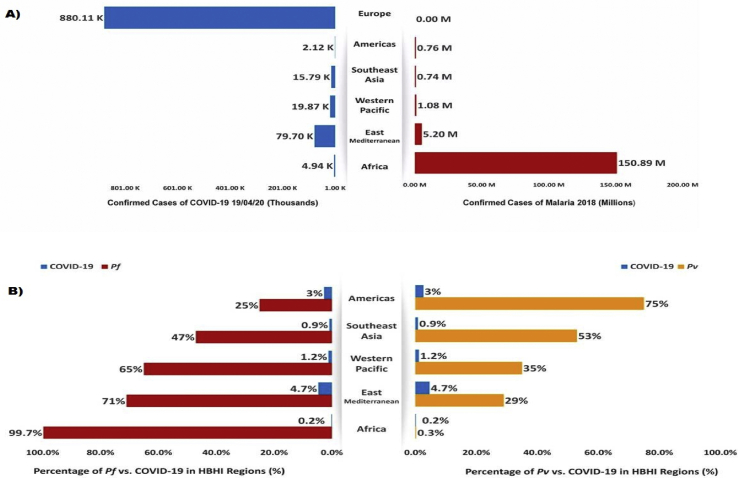
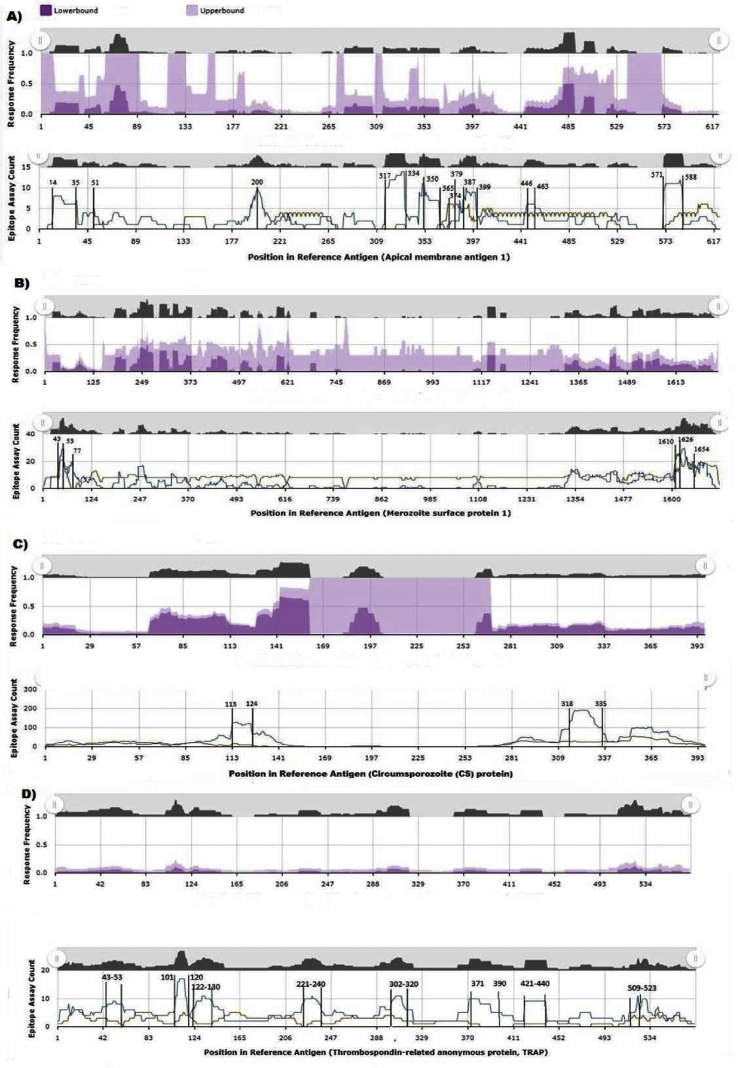
Coronavirus disease 2019 (COVID-19) has caused significant morbidity and mortality and new cases are on the rise globally, yet malaria-endemic areas report statistically significant lower incidences. We identified potential shared targets for an immune response to severe acute respiratory syndrome coronavirus 2 (SARS-CoV-2) by immune determinants' shared identities with P. falciparum using the Immune Epitope Database and Analysis Resource Immune 9.0 browser tool. Probable cross-reactivity is suggested through HLA-A∗02:01 and subsequent CD8+ T-cell activation. The apparent immunodominant epitope conservation between SARS-CoV-2 (N and open reading frame (ORF) 1ab) and P. falciparum thrombospondin-related anonymous protein (TRAP) may underlie the low COVID-19 incidence in the malaria-endemic zone by providing immunity against virus infection to those previously infected with Plasmodium. Additionally, we hypothesize that the shared epitopes which lie within antigens that aid in the establishment of the P. falciparum erythrocyte invasion may be an alternative route for SARS-CoV-2 via the erythrocyte CD147 receptor, although this remains to be proven.
Keywords: CD147 receptor; Plasmodium falciparum; SARS-CoV-2; epitope; homology.
© 2020 The Author(s).
Figures
References
-
- World Health Organization (WHO) 4 December 2019. World malaria report 2019.https://www.who.int/publications/i/item/9789241565721 Available at:
-
- World Health Organization (WHO) Malaria country profile 2018. https://www.who.int/malaria/publications/world-malaria-report-2018/en/ Available at:
LinkOut - more resources
Full Text Sources
Research Materials
Miscellaneous