


Diagnosing and managing post-stroke aphasia
- PMID: 33231117
- PMCID: PMC7880889
- DOI: 10.1080/14737175.2020.1855976
Diagnosing and managing post-stroke aphasia
Abstract
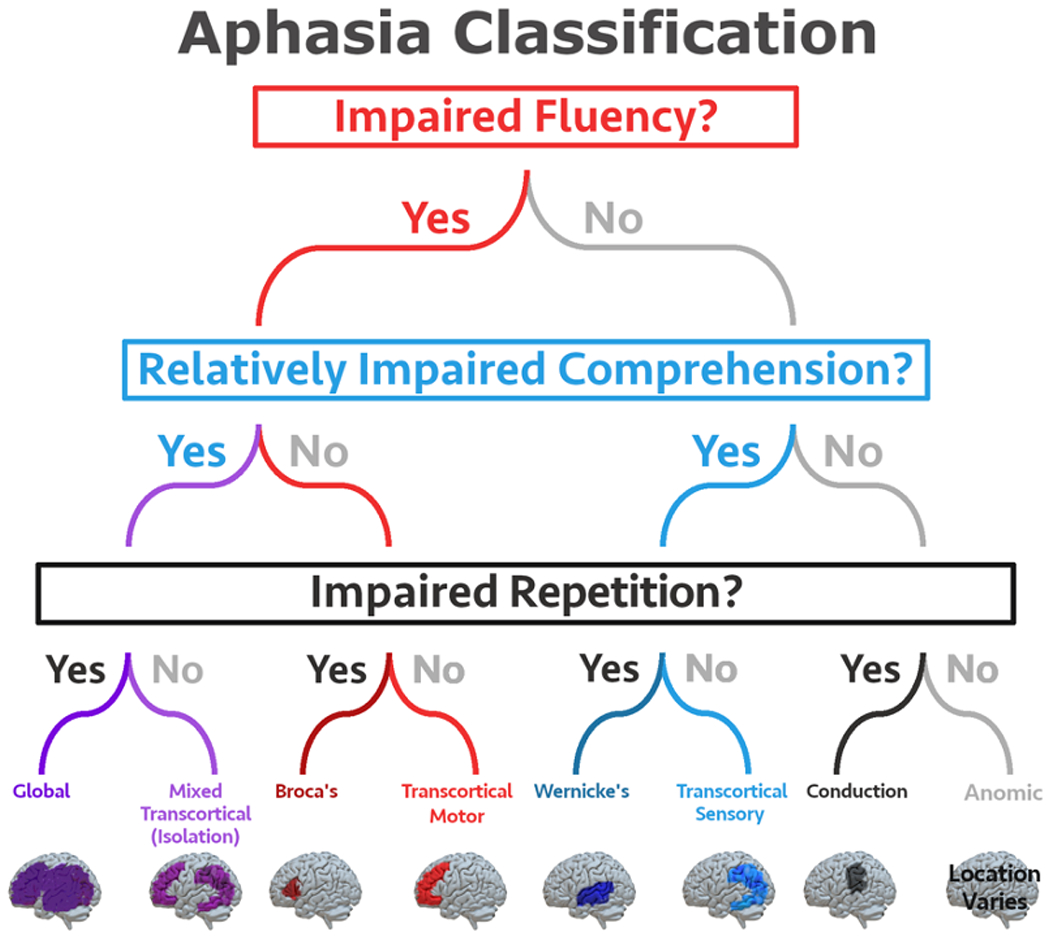
Introduction: Aphasia is a debilitating language disorder and even mild forms of aphasia can negatively affect functional outcomes, mood, quality of life, social participation, and the ability to return to work. Language deficits after post-stroke aphasia are heterogeneous. Areas covered: The first part of this manuscript reviews the traditional syndrome-based classification approach as well as recent advances in aphasia classification that incorporate automatic speech recognition for aphasia classification. The second part of this manuscript reviews the behavioral approaches to aphasia treatment and recent advances such as noninvasive brain stimulation techniques and pharmacotherapy options to augment the effectiveness of behavioral therapy. Expert opinion: Aphasia diagnosis has largely evolved beyond the traditional approach of classifying patients into specific syndromes and instead focuses on individualized patient profiles. In the future, there is a great need for more large scale randomized, double-blind, placebo-controlled clinical trials of behavioral treatments, noninvasive brain stimulation, and medications to boost aphasia recovery.
Keywords: Aphasia; medication; noninvasive brain stimulation; rehabilitation; speech therapy; stroke.
Conflict of interest statement
Declaration of interests
The authors have no other relevant affiliations or financial involvement with any organization or entity with a financial interest in or conflict with the subject matter or materials discussed in this manuscript apart from those disclosed.
Figures
References
-
- Engelter S, Gostynski M, Papa S, et al. Epidemiology of aphasia attributable to first ischemic stroke incidence, severity, fluency, etiology, and thrombolysis. Stroke. 2006; 37:1379–84 - PubMed
-
- Flowers HL, Skoretz SA, Silver FL, et al. Poststroke Aphasia Frequency, Recovery, and Outcomes: A Systematic Review and Meta-Analysis. Archives of Physical Medicine and Rehabilitation. 2016; 97:2188–201 - PubMed
-
- Baker C, Worrall L, Rose M, Hudson K, Ryan B, O’Byrne L. A systematic review of rehabilitation interventions to prevent and treat depression in post-stroke aphasia. Disability and rehabilitation. 2018; 40:1870–92 - PubMed
-
- Boden-Albala B, Litwak E, Elkind MSV, Rundek T, Sacco RL. Social isolation and outcomes post stroke. Neurology. 2005; 64:1888–92 - PubMed
-
* Investigated the relationship between social isolation and outcome in stroke and found that lack of social support contributes significantly to poorer outcomes. This study highlights the importance of considering social support when working with stroke patients.
-
- Dalemans RJP, de Witte L, Wade D, van den Heuvel W. Social participation through the eyes of people with aphasia. International Journal of Language & Communication Disorders. 2010; 45:537–50 - PubMed
Publication types
MeSH terms
Grants and funding
LinkOut - more resources
Full Text Sources
Medical
