Climate change and disease in plant communities
- PMID: 33232314
- PMCID: PMC7685433
- DOI: 10.1371/journal.pbio.3000949
Climate change and disease in plant communities
Abstract
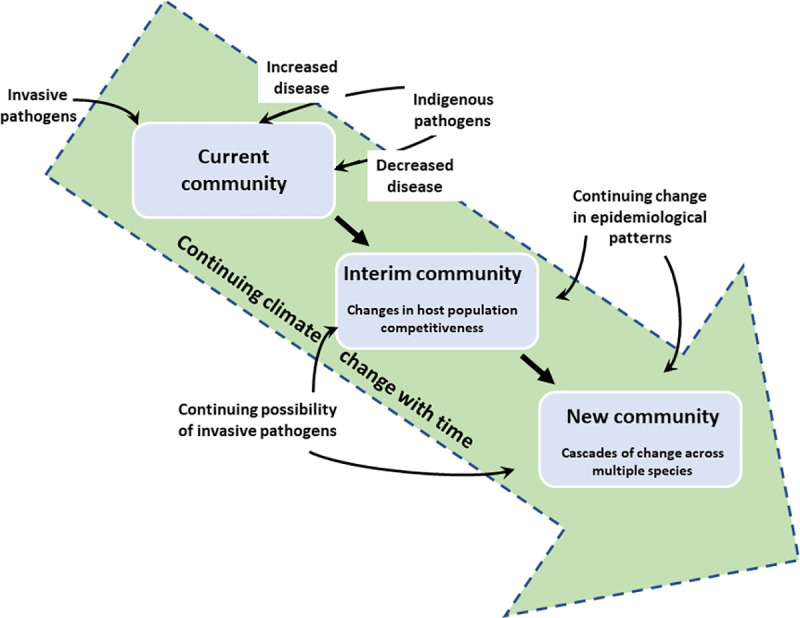
Climate change is triggering similar effects on the incidence and severity of disease for crops in agriculture and wild plants in natural communities. The complexity of natural ecosystems, however, generates a complex array of interactions between wild plants and pathogens in marked contrast to those generated in the structural and species simplicity of most agricultural crops. Understanding the different impacts of climate change on agricultural and natural ecosystems requires accounting for the specific interactions between an individual pathogen and its host(s) and their subsequent effects on the interplay between the host and other species in the community. Ultimately, progress will require looking past short-term fluctuations to multiyear trends to understand the nature and extent of plant and pathogen evolutionary adaptation and determine the fate of plants under future climate change.
Conflict of interest statement
The authors have declared that no competing interests exist.
Figures
References
-
- IPCC. Impacts, Adaptation, and Vulnerability. Part A: Global and Sectoral Aspects. Contribution of Working Group II to the Fifth Assessment Report of the Intergovernmental Panel on Climate Change. Cambridge: Cambridge University Press; 2014.
-
- Islam MS, Kieu E. Tackling regional climate change impacts and food security issues: A critical analysis across ASEAN, PIF, and SAARC. Sustainability. 2020;12:883 10.3390/su12030883 - DOI
MeSH terms
LinkOut - more resources
Full Text Sources
Medical
Miscellaneous