


Age Patterning in Wild Chimpanzee Gut Microbiota Diversity Reveals Differences from Humans in Early Life
- PMID: 33232664
- PMCID: PMC7993011
- DOI: 10.1016/j.cub.2020.10.075
Age Patterning in Wild Chimpanzee Gut Microbiota Diversity Reveals Differences from Humans in Early Life
Abstract
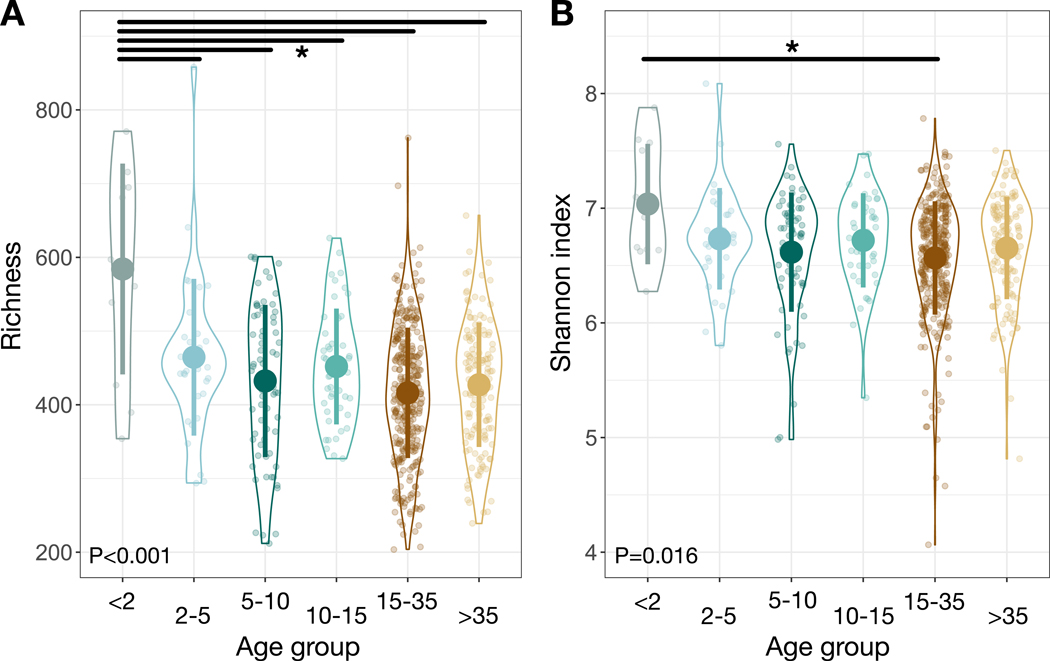
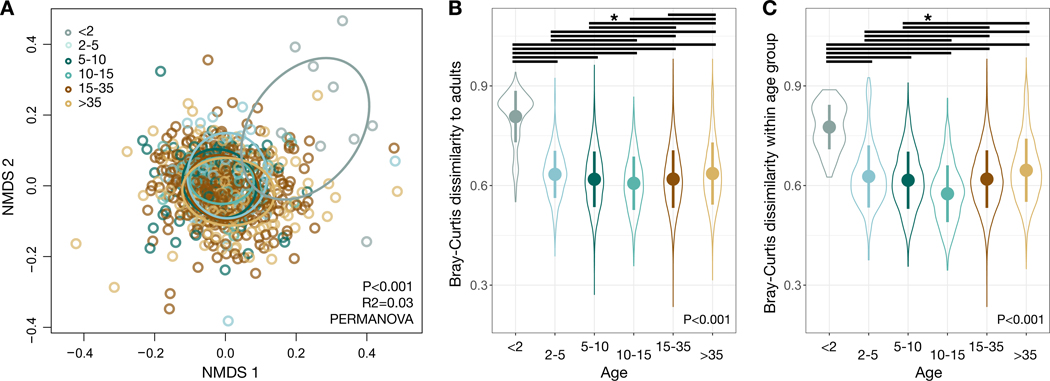
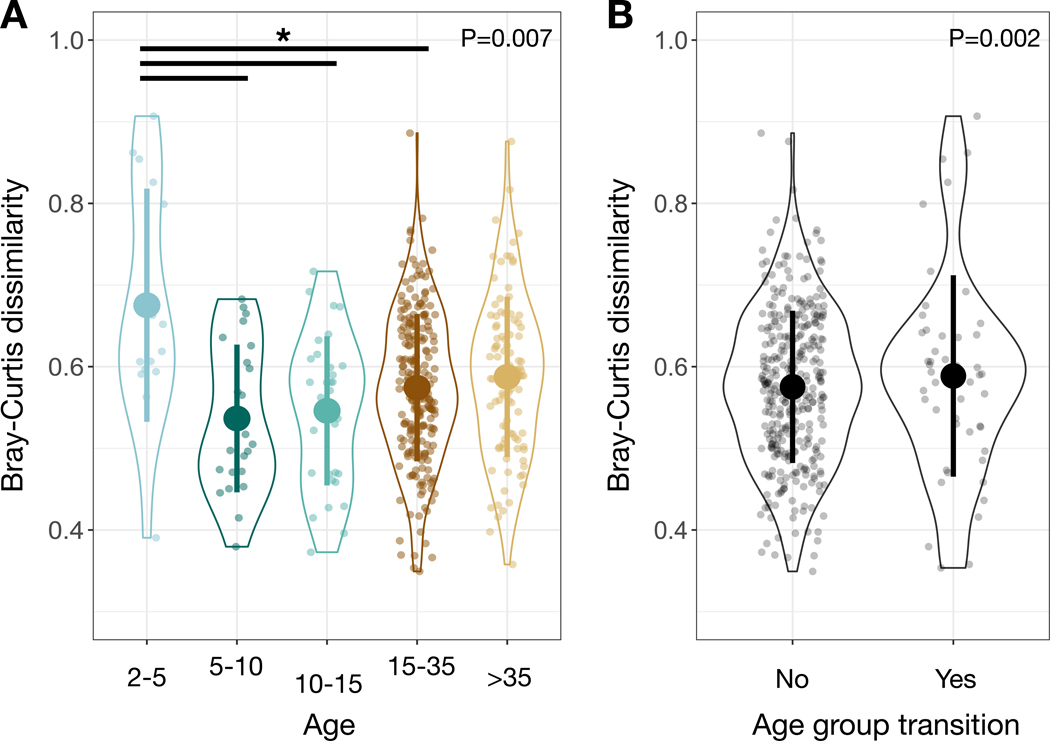
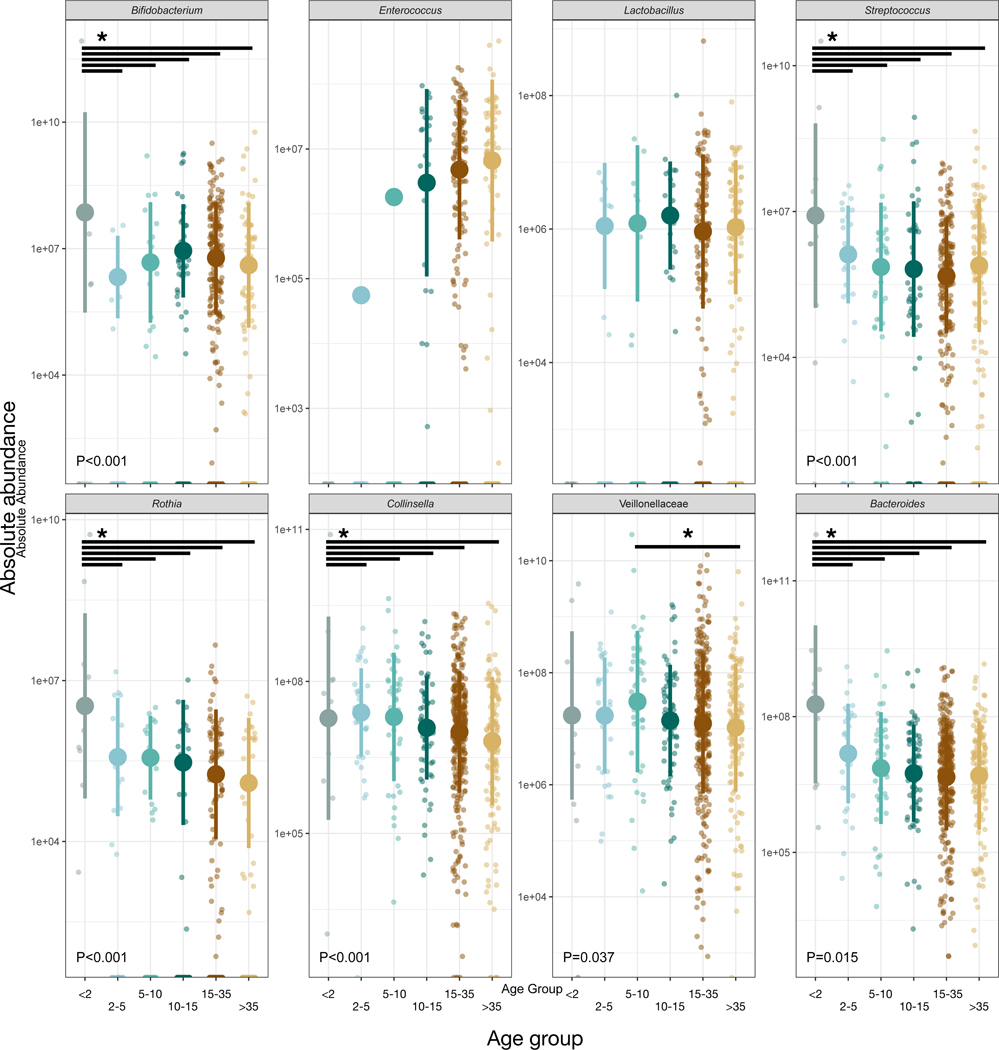
Survival in primates is facilitated by commensal gut microbes that ferment otherwise indigestible plant matter, resist colonization by pathogens, and train the developing immune system.1,2 However, humans are unique among primates in that we consume highly digestible foods, wean early, mature slowly, and exhibit high lifelong investments in maintenance.3-6 These adaptations suggest that lifetime trajectories of human-microbial relationships could differ from those of our closest living relatives. Here, we profile the gut microbiota of 166 wild chimpanzees aged 8 months to 67 years in the Kibale National Park, Uganda and compare the patterns of gut microbial maturation to those previously observed in humans. We found that chimpanzee gut microbial alpha-diversity, composition, density, interindividual variation, and within-individual change over time varied significantly with age. Notably, gut microbial signatures in infants <2 years old were distinct across all five metrics. Infant chimpanzee guts were enriched in some of the same taxa prevalent in infant humans (e.g., Bifidobacterium, Streptococcus, and Bacteroides), and chimpanzee gut microbial communities, like those of humans, exhibited higher interindividual variation in infancy versus later in life. However, in direct contrast to human infants, chimpanzee infants harbored surprisingly high-diversity rather than low-diversity gut bacterial communities compared with older conspecifics. These data indicate differential trajectories of gut microbiota development in humans and chimpanzees that are consistent with interspecific differences in lactation, diet, and immune function. Probing the phenotypic consequences of differential early-life gut microbial diversity in chimpanzees and other primates will illuminate the life history impacts of the hominid-microbiome partnership.
Keywords: aging; chimpanzee; development; diversity; gut microbiota; infancy; maturation; microbiome; primate; weaning.
Copyright © 2020 Elsevier Inc. All rights reserved.
Conflict of interest statement
Declaration of Interests The authors declare no competing interests.
Figures
Comment in
-
Microbiomes: Infant Chimps Crawling with Bacteria.Curr Biol. 2021 Feb 8;31(3):R124-R126. doi: 10.1016/j.cub.2020.11.045. Curr Biol. 2021. PMID: 33561409 Free PMC article.
References
-
- Marques TM, Wall R, Ross RP, Fitzgerald GF, Ryan CA, and Stanton C. (2010). Programming infant gut microbiota: influence of dietary and environmental factors. Curr. Opin. Biotechnol 21, 149–156. - PubMed
-
- Sommer F, and Bäckhed F. (2013). The gut microbiota: masters of host development and physiology. Nat. Rev. Microbiol 11, 227–238. - PubMed
-
- Aiello LC, and Wheeler P. (1995). The brain and the digestive system in human and primate evolution. Curr. Anthropol 36, 199–221.
-
- Carmody RN, and Wrangham RW (2009). The energetic significance of cooking. J. Hum. Evol 57, 379–391. - PubMed
-
- Kaplan H, Hill K, Lancaster J, and Hurtado AM (2000). A theory of human life history evolution: Diet, intelligence, and longevity. Evol. Anthropol 9, 156–185.
Publication types
MeSH terms
Grants and funding
LinkOut - more resources
Full Text Sources
Other Literature Sources
