


Epigenetics in β-cell adaptation and type 2 diabetes
- PMID: 33232934
- PMCID: PMC7770033
- DOI: 10.1016/j.coph.2020.10.008
Epigenetics in β-cell adaptation and type 2 diabetes
Abstract
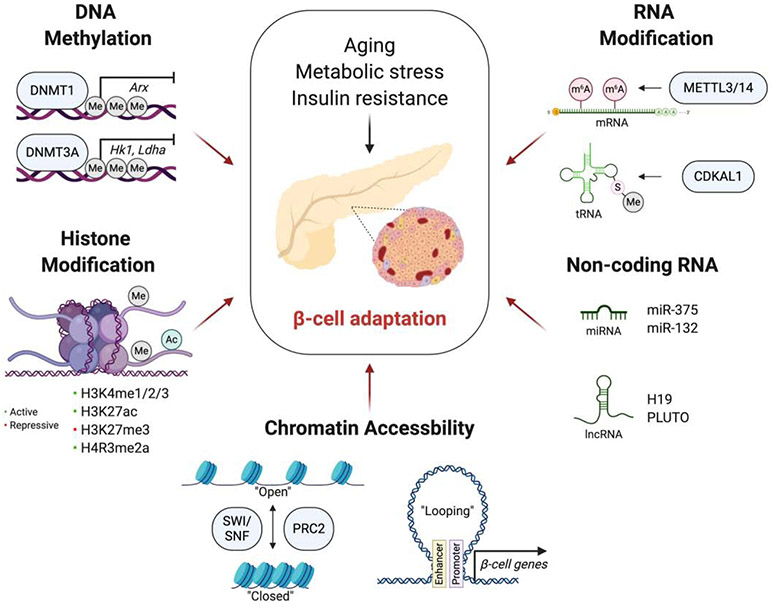
Healthy pancreatic β-cells adapt to systemic insulin resistance to maintain normal blood glucose levels, and a failure of this adaptation leads to type 2 diabetes in humans. While genome-wide association studies have uncovered genetic variants that are associated with type 2 diabetes, it is still insufficient to explain the high prevalence of this disease. Epigenetics is the study of gene expression changes that do not involve DNA sequence alterations such as DNA methylation, histone modification, and non-coding RNAs. Over the last decade, a large number of studies have reported on the role of epigenetics in β-cell biology. In this review, we summarize the epigenetic mechanisms in β-cell adaptation and type 2 diabetes, including alterations in three-dimensional chromatin structure and RNA modifications.
Copyright © 2020 Elsevier Ltd. All rights reserved.
Conflict of interest statement
Conflict of interest statement
The authors declare no conflict of interest.
Figures
References
-
- Donath MY, Ehses JA, Maedler K, Schumann DM, Ellingsgaard H, Eppler E, Reinecke M: Mechanisms of β-Cell Death in Type 2 Diabetes. Diabetes 2005, 54:S108 LP–S113. - PubMed
-
- Bensellam M, Jonas JC, Laybutt DR: Mechanisms of β;-cell dedifferentiation in diabetes: Recent findings and future research directions. J Endocrinol 2018, 236: R109–R143. - PubMed
Publication types
MeSH terms
Substances
Grants and funding
LinkOut - more resources
Full Text Sources
Medical
