WICID framework version 1.0: criteria and considerations to guide evidence-informed decision-making on non-pharmacological interventions targeting COVID-19
- PMID: 33234529
- PMCID: PMC7688443
- DOI: 10.1136/bmjgh-2020-003699
WICID framework version 1.0: criteria and considerations to guide evidence-informed decision-making on non-pharmacological interventions targeting COVID-19
Abstract
Introduction: Public health decision-making requires the balancing of numerous, often conflicting factors. However, participatory, evidence-informed decision-making processes to identify and weigh these factors are often not possible- especially, in the context of the SARS-CoV-2 pandemic. While evidence-to-decision frameworks are not able or intended to replace stakeholder participation, they can serve as a tool to approach relevancy and comprehensiveness of the criteria considered.
Objective: To develop a decision-making framework adapted to the challenges of decision-making on non-pharmacological interventions to contain the global SARS-CoV-2 pandemic.
Methods: We employed the 'best fit' framework synthesis technique and used the WHO-INTEGRATE framework as a starting point. First, we adapted the framework through brainstorming exercises and application to case studies. Next, we conducted a content analysis of comprehensive strategy documents intended to guide policymakers on the phasing out of applied lockdown measures in Germany. Based on factors and criteria identified in this process, we developed the WICID (WHO-INTEGRATE COVID-19) framework version 1.0.
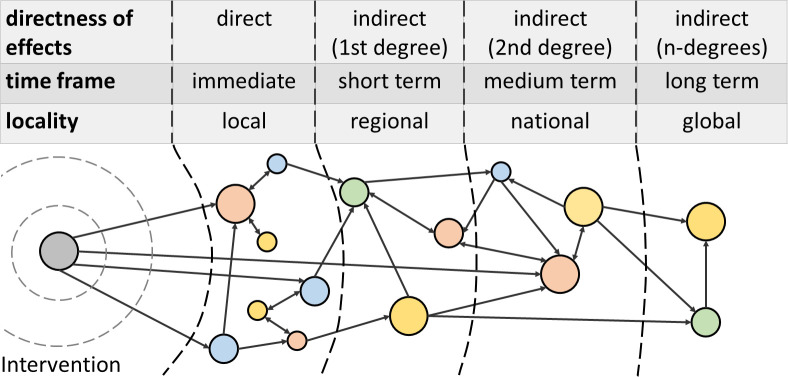
Results: Twelve comprehensive strategy documents were analysed. The revised framework consists of 11+1 criteria, supported by 48 aspects, and embraces a complex systems perspective. The criteria cover implications for the health of individuals and populations due to and beyond COVID-19, infringement on liberties and fundamental human rights, acceptability and equity considerations, societal, environmental and economic implications, as well as implementation, resource and feasibility considerations.
Discussion: The proposed framework will be expanded through a comprehensive document analysis focusing on key stakeholder groups across the society. The WICID framework can be a tool to support comprehensive evidence-informed decision-making processes.
Keywords: health policy; public health; qualitative study.
© Author(s) (or their employer(s)) 2020. Re-use permitted under CC BY-NC. No commercial re-use. See rights and permissions. Published by BMJ.
Conflict of interest statement
Competing interests: JMS is the author of the WHO-INTEGRATE framework. JMS and MV were part of an expert group which developed strategy documents intended to inform the COVID-19 crisis task force of the German government. One (in the case of JMS) and two (in the case of MV) of which were included as comprehensive strategy documents in this analysis. We received support by the Bundeszentrale für gesundheitliche Aufklärung (BZgA; the German Federal Center for Health Education) to cover the publication fees for this manuscript. The BZgA did not have any editorial or scientific influence on the content of this publication.
Figures

References
-
- Sanderson I. Intelligent policy making for a complex world: pragmatism, evidence and learning. Polit Stud 2009;57:699–719. 10.1111/j.1467-9248.2009.00791.x - DOI
-
- Lancaster K, Rhodes T, Rosengarten M. Making evidence and policy in public health emergencies: lessons from COVID-19 for adaptive evidence-making and intervention. Evid Policy 2020;16:477–90. 10.1332/174426420X15913559981103 - DOI
MeSH terms
LinkOut - more resources
Full Text Sources
Medical
Miscellaneous