. 2020 Nov 17:15:9049-9059.
doi: 10.2147/IJN.S281976. eCollection 2020.

Carbon Dots from Paeoniae Radix Alba Carbonisata: Hepatoprotective Effect

Affiliations

Carbon Dots from Paeoniae Radix Alba Carbonisata: Hepatoprotective Effect

Yusheng Zhao et al. Int J Nanomedicine. .

Abstract

Introduction: The charcoal processed product of Paeoniae Radix Alba (PRA), PRA Carbonisata (PRAC), has long been used for its hepatoprotective effects. However, the material basis and mechanism of action of PRAC remain unclear.

Aim: To explore the hepatoprotective effects of Paeoniae Radix Alba Carbonisata-derived carbon dots (PRAC-CDs).

Methods: PRAC-CDs were characterized using transmission electron microscopy, high-resolution transmission electron microscopy, ultraviolet, fluorescence, Fourier transform infrared and X-ray photoelectron spectroscopy, X-ray diffraction, and high-performance liquid chromatography. The hepatoprotective effect of PRAC-CDs was evaluated and confirmed using the classic carbon tetrachloride acute liver injury model.

Results: PRAC-CDs averaged 1.0-2.4 nm in size and exhibited a quantum yield of 5.34% at a maximum excitation wavelength of 320 nm and emission at 411 nm. PRAC-CDs can reduce the ALT and AST levels of mice with carbon tetrachloride-induced acute liver injury and have a mitigating effect on the rise in TBA and TBIL. More interestingly, PRAC-CDs can significantly reduce MDA and increase SOD levels, demonstrating that PRAC-CDs can improve the body's ability to scavenge oxygen free radicals and inhibit free radical-induced liver cell lipid peroxidation, thereby preventing liver cell damage.

Conclusion: These results demonstrate the remarkable hepatoprotective effects of PRAC-CDs against carbon tetrachloride-induced acute liver injury, which provide new insights into potential biomedical and healthcare applications of CDs.

Keywords: Paeoniae Radix Alba carbonisata; carbon dots; hepatoprotective.


Conflict of interest statement

The authors report no conflicts of interest for this work.

Figures
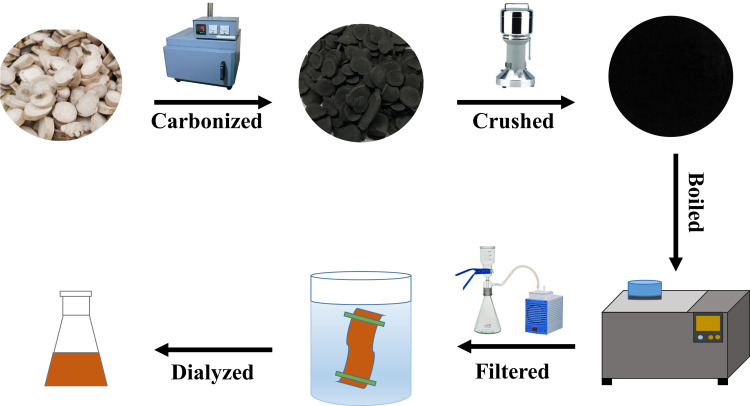
Figure 1
Figure 1
The flowchart for the preparation process of PARC-CDs.
Figure 2
Figure 2
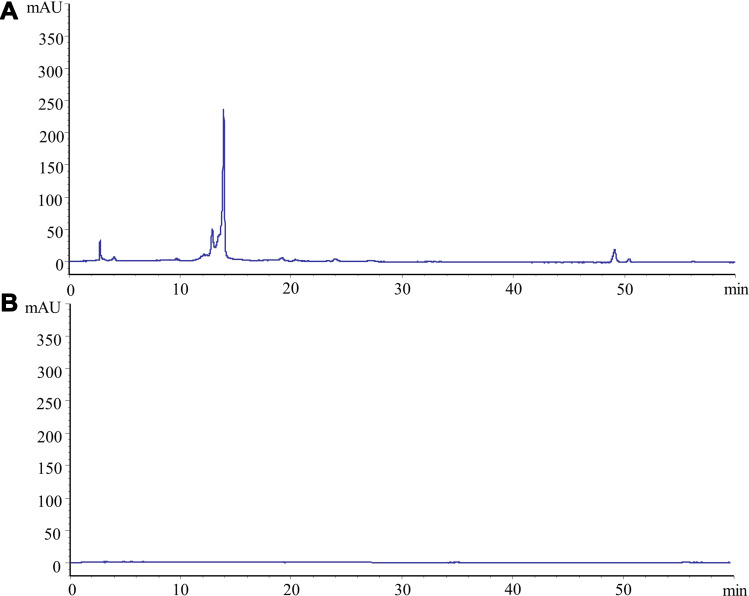
High-performance liquid chromatography (HPLC) fingerprints of (A) PRA (the dry root of Paeonia lactiflora Pall.) and (B) Paeoniae Radix Alba Carbonisata.
Figure 3
Figure 3
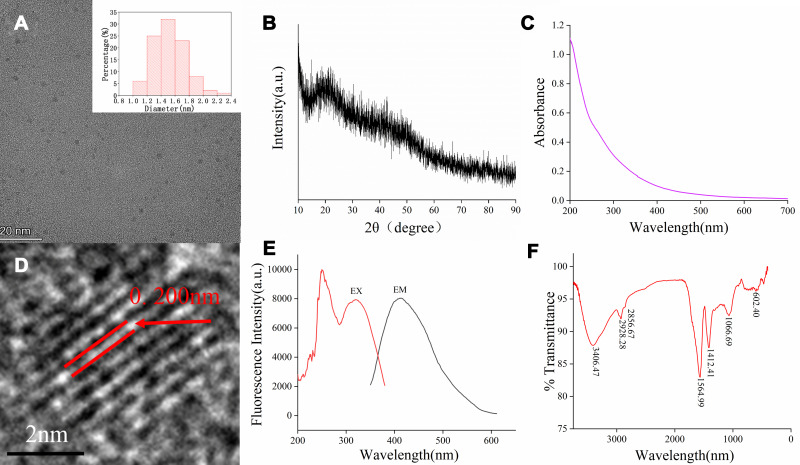
Characterization of PRAC-CDs: (A) Transmission electron microscopy (TEM) images of PRAC-CDs displaying ultrasmall particles and the TEM-determined size distribution of PRAC-CDs (upper right corner). (B) X-ray diffraction pattern. (C) Ultraviolet–visible spectrum. (D) High-resolution TEM image of PRAC-CDs. (E) Fluorescence spectrum. (F) Fourier transform infrared spectrum.
Figure 4
Figure 4
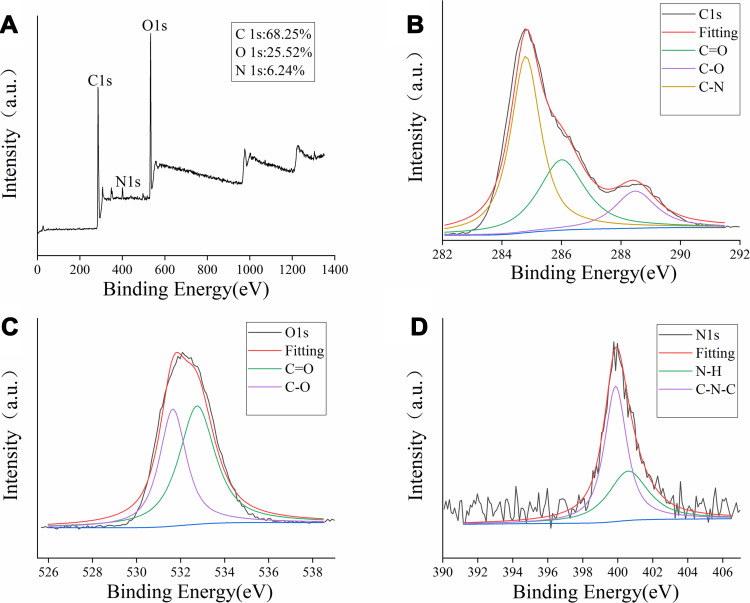
The surface composition and elemental analysis of the prepared PRAC-CDs by XPS. (A) X-ray photoelectron spectroscopic survey of PRAC-CDs. (B) C1s. (C) O1s and (D) N1s.
Figure 5
Figure 5
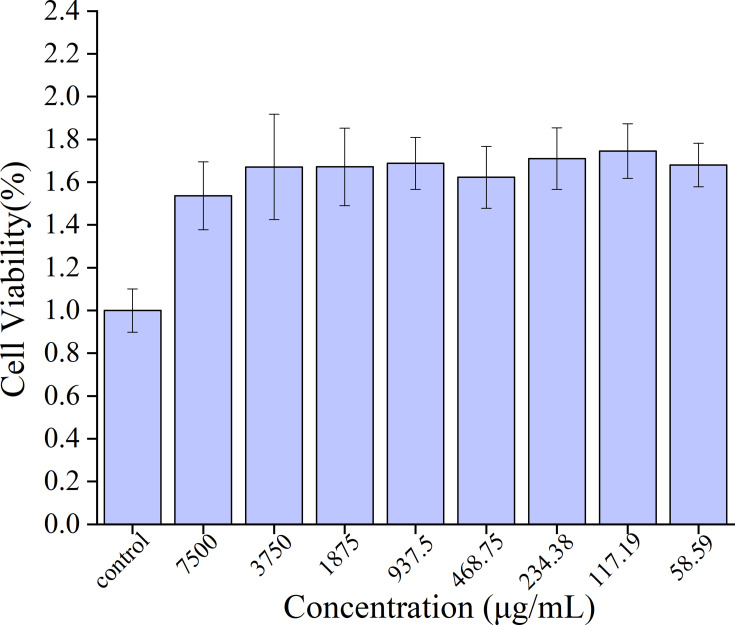
Effect of different concentrations of PRAC-CDs on the viability of RAW 264.7 cells.
Figure 6
Figure 6
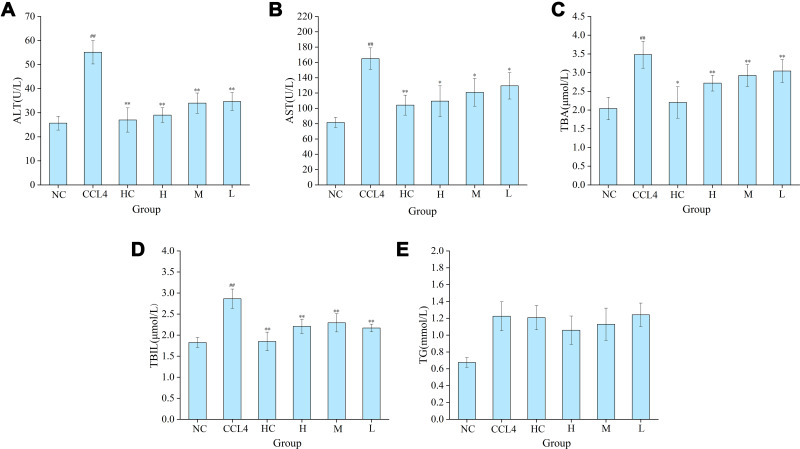
The effect of PRAC-CDs on transaminase levels and the biliary index. (A) Alanine aminotransferase (ALT), (B) Aspartate transferase (AST), (C) Total bile acid (TBA), (D) Total bilirubin (TBIL), and (E) Triglyceride (TG) levels. Analysis of mice treated with normal saline (NS), model (CCL4), bifendate (BD), and high (H), medium (M), and low (L) doses of PRAC-CDs (6.16, 3.08 and 1.54 mg/kg, respectively). Significantly different compared with the control group at ##p < 0.01, significantly different compared to the CCL4 group (n = 8) at **p < 0.01 and *p < 0.05.
Figure 7
Figure 7
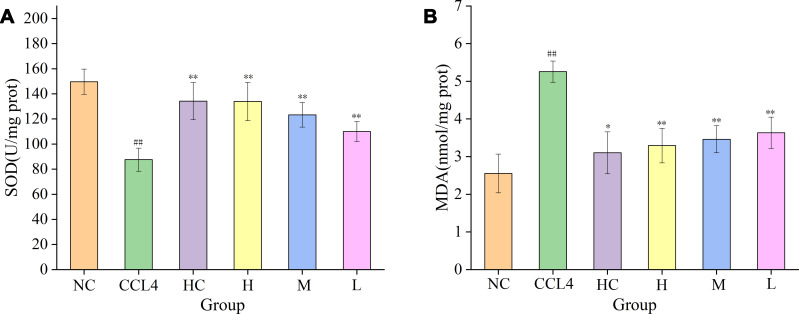
Effects on MDA and SOD levels in liver tissue of mice with CCl4-induced liver injury. (A) SOD and (B) MDA levels in mice treated with normal saline (NS), model (CCL4), bifendate (BD), and high (H), medium (M), and low (L) doses of PRAC-CDs (6.16, 3.08 and 1.54 mg/kg, respectively). Significantly different compared with the control group at ##p < 0.01, significantly different compared to the CCL4 group (n = 8) at **p < 0.01 and *p < 0.05.

References

    1. Mishra V, Patil A, Thakur S, Kesharwani P. Carbon dots: emerging theranostic nanoarchitectures. Drug Discov Today. 2018;23(6):1219–1232. doi:10.1016/j.drudis.2018.01.006 - DOI - PubMed
    1. Xu X, Ray R, Gu Y, et al. Electrophoretic analysis and purification of fluorescent single-walled carbon nanotube fragments. J Am Chem Soc. 2015;126(40):12736–12737. doi:10.1021/ja040082h - DOI - PubMed
    1. Sri S, Kumar R, Panda AK, et al. Highly biocompatible, fluorescence, and zwitterionic carbon dots as a novel approach for bioimaging applications in cancerous cells. ACS Appl Mater Interfaces. 2018;10(44):37835–37845. doi:10.1021/acsami.8b13217 - DOI - PubMed
    1. He G, Xu M, Shu M, et al. Rapid solid-phase microwave synthesis of highly photoluminescent nitrogen-doped carbon dots for Fe3+++ detection and cellular bioimaging. Nanotechnology. 2016;27(39):395706. doi:10.1088/0957-4484/27/39/395706 - DOI - PubMed
    1. Kim J, Park J, Kim H, et al. Transfection and intracellular trafficking properties of carbon dot-gold nanoparticle molecular assembly conjugated with PEI-pDNA. Biomaterials. 2013;34(29):7168–7180. doi:10.1016/j.biomaterials.2013.05.072 - DOI - PubMed

MeSH terms