


Poor Self-Reported Sleep is Related to Regional Cortical Thinning in Aging but not Memory Decline-Results From the Lifebrain Consortium
- PMID: 33236064
- PMCID: PMC7945023
- DOI: 10.1093/cercor/bhaa332
Poor Self-Reported Sleep is Related to Regional Cortical Thinning in Aging but not Memory Decline-Results From the Lifebrain Consortium
Abstract
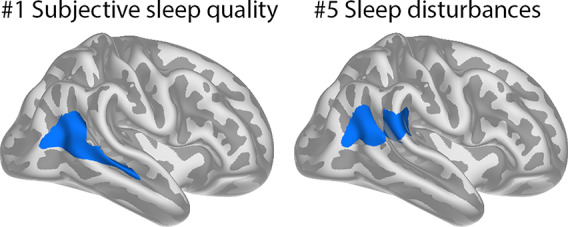
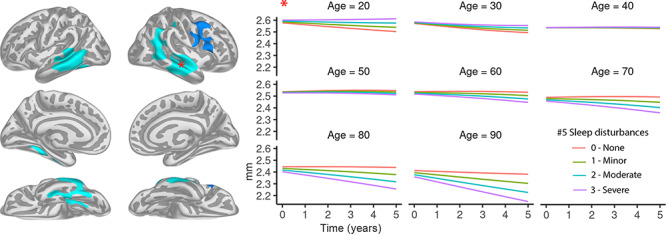
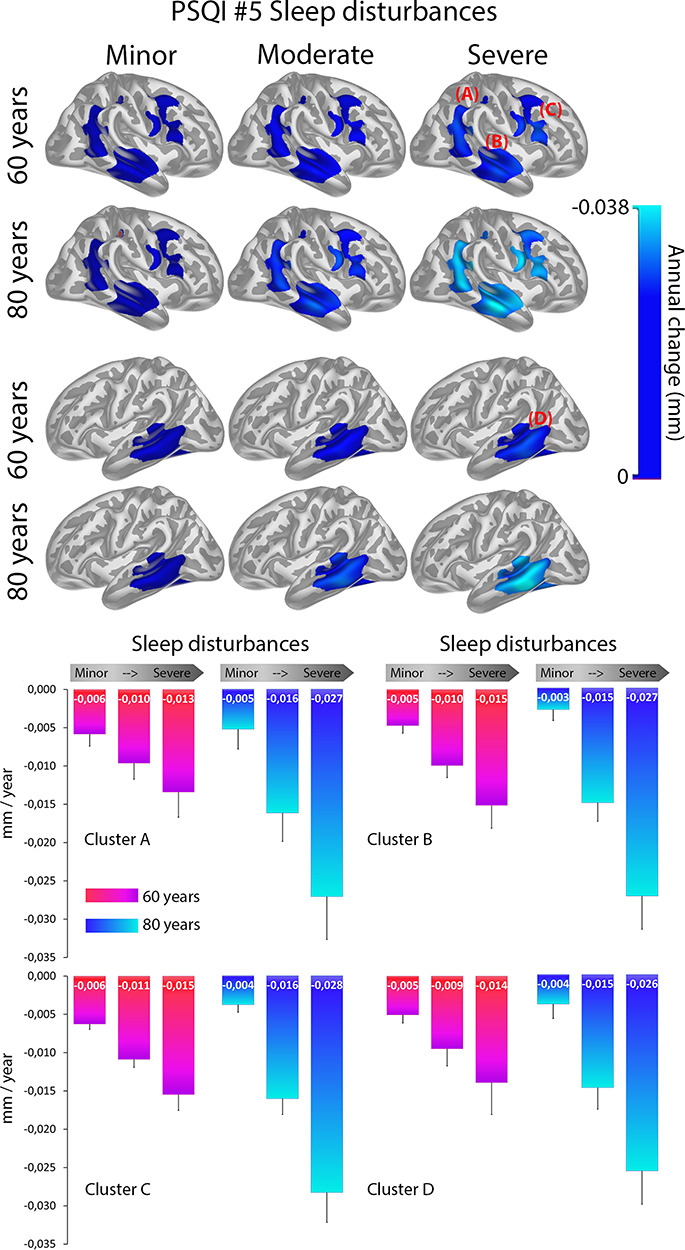
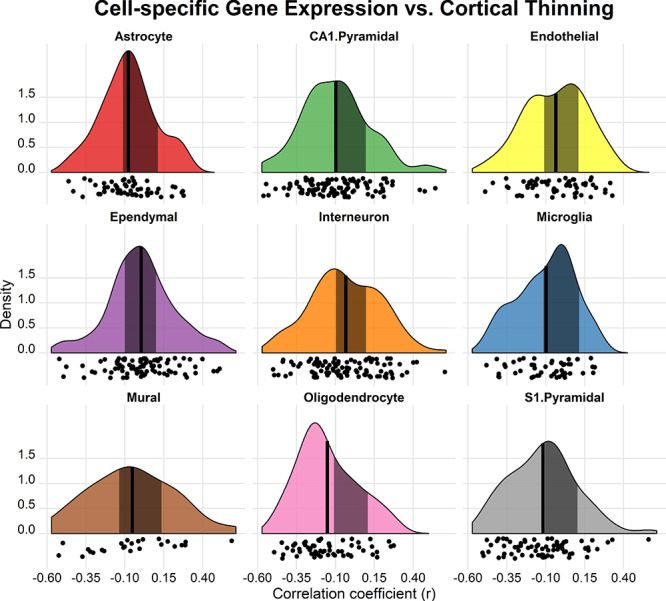
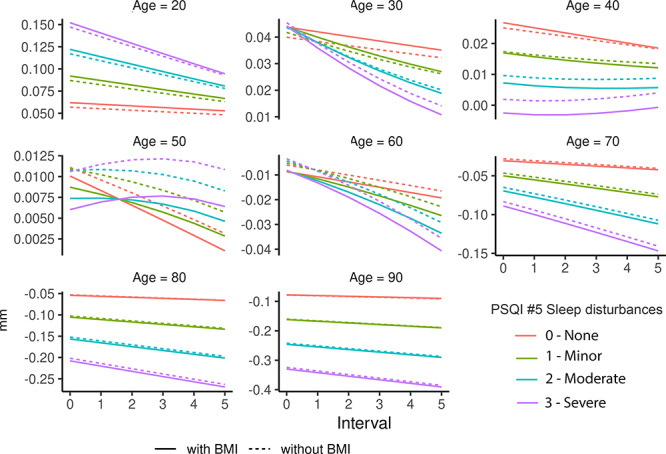
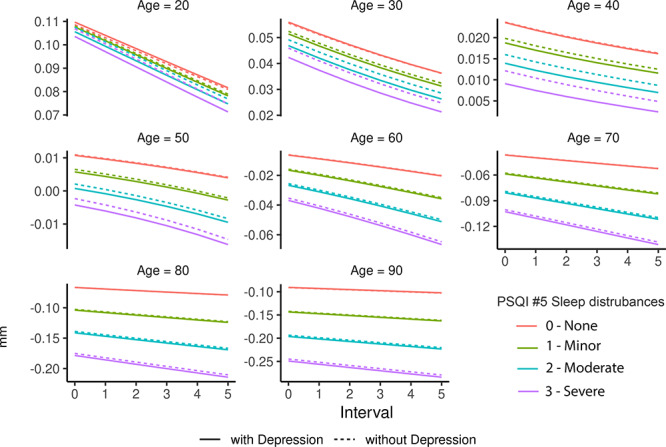
We examined whether sleep quality and quantity are associated with cortical and memory changes in cognitively healthy participants across the adult lifespan. Associations between self-reported sleep parameters (Pittsburgh Sleep Quality Index, PSQI) and longitudinal cortical change were tested using five samples from the Lifebrain consortium (n = 2205, 4363 MRIs, 18-92 years). In additional analyses, we tested coherence with cell-specific gene expression maps from the Allen Human Brain Atlas, and relations to changes in memory performance. "PSQI # 1 Subjective sleep quality" and "PSQI #5 Sleep disturbances" were related to thinning of the right lateral temporal cortex, with lower quality and more disturbances being associated with faster thinning. The association with "PSQI #5 Sleep disturbances" emerged after 60 years, especially in regions with high expression of genes related to oligodendrocytes and S1 pyramidal neurons. None of the sleep scales were related to a longitudinal change in episodic memory function, suggesting that sleep-related cortical changes were independent of cognitive decline. The relationship to cortical brain change suggests that self-reported sleep parameters are relevant in lifespan studies, but small effect sizes indicate that self-reported sleep is not a good biomarker of general cortical degeneration in healthy older adults.
Trial registration: ClinicalTrials.gov NCT01634841.
Keywords: aging; atrophy; cortex; sleep.
© The Author(s) 2020. Published by Oxford University Press. All rights reserved. For permissions, please e-mail: journals.permissions@oup.com.
Figures
References
-
- Abellaneda-Perez K, Vaque-Alcazar L, Vidal-Pineiro D, Jannati A, Solana E, Bargallo N, Santarnecchi E, Pascual-Leone A, Bartres-Faz D. 2019. Age-related differences in default-mode network connectivity in response to intermittent theta-burst stimulation and its relationships with maintained cognition and brain integrity in healthy aging. Neuroimage. 188:794–806. - PMC - PubMed
-
- Alperin N, Wiltshire J, Lee SH, Ramos AR, Hernandez-Cardenache R, Rundek T, Cid RC, Loewenstein D. 2019. Effect of sleep quality on amnestic mild cognitive impairment vulnerable brain regions in cognitively normal elderly individuals. Sleep. 42(3):zsy254. doi: 10.1093/sleep/zsy254. - DOI - PMC - PubMed
-
- Altena E, Vrenken H, Van Der Werf YD, van den Heuvel OA, Van Someren EJW. 2010. Reduced orbitofrontal and parietal gray matter in chronic insomnia: a voxel-based morphometric study. Biol Psychiatry. 67(2):182–185. - PubMed
-
- Ancoli-Israel S, Cole R, Alessi C, Chambers M, Moorcroft W, Pollak CP. 2003. The role of actigraphy in the study of sleep and circadian rhythms. Sleep. 26:342–392. - PubMed
Publication types
MeSH terms
Associated data
Grants and funding
LinkOut - more resources
Full Text Sources
Medical
